
Smartphones sold in China can appear dramatically cheaper than comparable devices in the United States. Chinese brands frequently offer large batteries, fast charging, high-refresh-rate displays and multiple cameras at prices normally associated with entry-level phones in Western markets.
The difference is not simply the result of lower wages or inferior quality. China has one of the world’s most developed electronics supply chains, a huge domestic customer base and several major manufacturers competing aggressively for the same buyers. Government subsidies and lower distribution costs can push retail prices down further.
However, comparisons are not always equal. A phone sold cheaply in China may have different software, network compatibility, warranty coverage and components from the international version. American buyers may also receive carrier trade-in promotions that make a high listed price less representative of the amount they eventually pay.
China’s Smartphone Supply Chain Is Concentrated in One Region
A major reason Chinese phones cost less is that much of the required supply chain already exists inside the country.
Smartphone manufacturing requires displays, camera modules, batteries, speakers, circuit boards, antennas, casings, connectors and thousands of smaller parts. When these suppliers operate close to assembly plants, manufacturers spend less on transportation, warehousing and long international lead times.
Shenzhen and the wider Pearl River Delta are especially important. The area contains companies involved in product design, component production, software development, assembly and testing. Shenzhen’s government describes its intelligent-terminal industry as covering smartphones, computers, wearable devices and the complete chain from research and component production to finished-device manufacturing.
This dense network also makes product development faster. A phone manufacturer can test a new camera, battery or enclosure and obtain revised parts from a nearby supplier without waiting weeks for international shipping.
The World Bank has noted that the concentration of suppliers and manufacturers around Shenzhen increases supply-chain efficiency and lowers mobile-device manufacturing and assembly costs.
American phone brands can also manufacture efficiently in Asia, but a smaller company trying to build phones primarily within the United States would face a less mature local supplier network and higher costs for many specialized components.
Chinese Brands Compete More Aggressively
China’s domestic smartphone market is highly competitive. Huawei, Xiaomi, Honor, Oppo, Vivo and their related brands regularly fight for customers across nearly every price level.
This competition forces companies to introduce new features quickly and keep profit margins under pressure. When one company launches a midrange phone with faster charging or a larger battery, competitors often respond within months.
Counterpoint Research’s market data shows how closely divided the Chinese market remains. In the first quarter of 2025, Huawei led while Vivo, Xiaomi, Oppo, Honor and Apple all competed for substantial shares. Xiaomi’s sales increased strongly as its broad product range benefited from government-supported demand.
In a market with several credible alternatives, a manufacturer cannot rely on brand recognition alone. A phone that is priced too high may immediately lose sales to another device offering similar specifications.
The United States has fewer major smartphone brands competing at scale. Apple and Samsung dominate much of the premium market, while Google, Motorola and several smaller brands compete for the remainder. Many Chinese manufacturers do not sell their full product ranges in the country, reducing the price pressure that American consumers would otherwise experience.
China Sells Far More Low-Cost and Midrange Models
The impression that all phones are cheaper in China partly comes from the kinds of phones available there.
Chinese manufacturers release numerous devices between their entry-level and flagship lines. These models may use an upper-midrange processor, a plastic frame or a less expensive camera system while retaining features that are highly visible to consumers, such as a large screen, a high-capacity battery and very fast charging.
American stores often emphasize flagship phones and premium carrier models. A customer walking into a major U.S. carrier may see iPhones, Galaxy S models, foldables and a smaller number of budget alternatives.
China’s online marketplaces and brand stores offer a much wider range of closely spaced price points. Manufacturers can reuse the same platform across several related models, changing the camera, memory or processor to reach different buyers without developing every phone from the beginning.
That strategy reduces engineering and tooling costs per device while allowing brands to advertise many choices.
Government Subsidies Can Lower the Final Price
China has used consumer subsidies to encourage purchases of smartphones and other electronics.
Under the 2025 digital-device program, qualifying buyers could receive a subsidy equal to 15 percent of the final discounted price, capped at 500 yuan for smartphones priced below 6,000 yuan.
The program continued into 2026, with eligible mobile phones and other smart devices receiving subsidies capped at 500 yuan per item.
A 500-yuan discount is modest on an expensive flagship but significant on a budget or midrange device. It can make a phone appear considerably cheaper than its equivalent in a country without the same direct subsidy.
The policy also encourages retailers and manufacturers to run their own discounts because the government support is applied after promotional pricing. The combined reduction can make major shopping periods especially competitive.
These subsidies do not explain the full price gap, and they do not apply to every phone. They are one additional factor affecting the amount a Chinese consumer pays.
Direct Online Sales Reduce Retail Costs
Chinese phone brands rely heavily on direct online launches and large e-commerce platforms.
A manufacturer can announce a phone, accept orders through its own store and ship directly from a regional warehouse. This approach reduces dependence on a nationwide physical retail network and lowers the number of distributors taking a margin from each sale.
Some brands use online-only product lines specifically to compete on price. Limited store staffing, simpler packaging and concentrated marketing allow them to offer stronger specifications without adding the expenses associated with premium retail locations.
In the United States, phones are commonly sold through mobile carriers. Carrier distribution provides financing, trade-in deals, activation support and nationwide retail coverage, but it also creates a more complicated sales structure.
The American listed price can include costs associated with regulatory testing, carrier certification, distribution, marketing and long-term customer support. Buyers may later receive bill credits, but the unlocked retail price initially appears high.
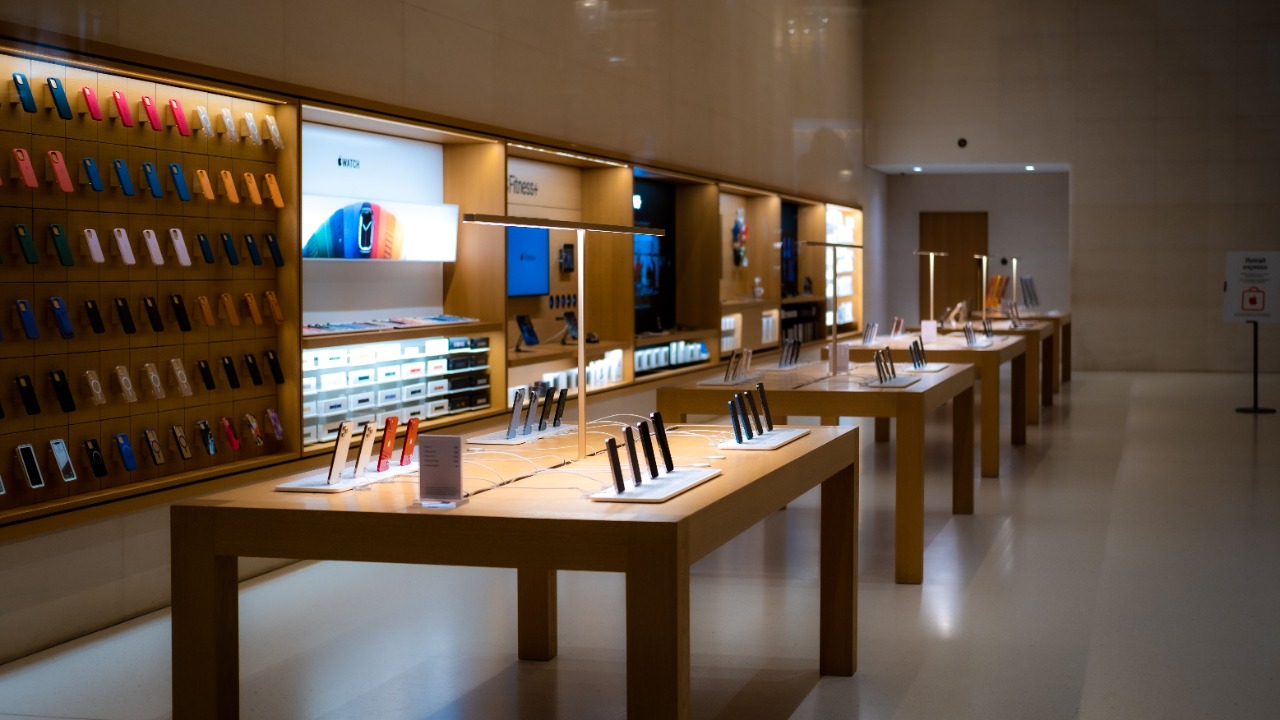
Apple’s U.S. store, for example, promotes carrier offers that can provide hundreds of dollars in trade-in credits, often spread across a long installment period.
This means Chinese prices are often presented as straightforward device prices, while American prices may be designed around financing and carrier promotions.
Chinese Brands Can Accept Lower Hardware Margins
Some manufacturers treat the smartphone as one part of a larger ecosystem.
A company may accept a relatively small profit on the phone because it expects to earn revenue through accessories, cloud services, advertising, applications, smart-home devices or future upgrades.
Xiaomi is one of the clearest examples of this broader strategy. Its phones connect users to watches, earbuds, televisions, appliances and other connected products. Competitive smartphone pricing helps bring more people into that ecosystem.
A premium-focused company may pursue a different model, earning a larger margin on each device while supporting longer software development, retail stores and extensive customer service.
Neither strategy automatically produces a better product. It explains why two phones with similar processors and displays can have very different prices.
Some Chinese Models Use Domestic Components
Chinese companies increasingly source batteries, displays, camera parts, memory, chips and other components from domestic suppliers.
Local sourcing can reduce import costs and foreign-exchange exposure. It may also give manufacturers priority access to new technology developed by partner companies.
Not every component is domestically produced. Advanced processors and specialized manufacturing equipment still involve international supply chains. Rising memory prices affected Chinese manufacturers in 2025 and 2026, leading several brands to increase prices and limiting discounts. China’s smartphone shipments fell as higher component costs reached consumers.
This demonstrates that Chinese phones are not permanently insulated from global costs. Their price advantage can shrink when memory, displays or chips become more expensive.
The Chinese Version May Not Be the Same Phone
A phone’s Chinese and international versions may share a name and exterior while differing in important ways.
The Chinese model may support different cellular bands, lack certain Google services or use software designed around local applications. An imported device may not support every 4G or 5G frequency used by an American carrier.
Features such as eSIM, satellite communication, Android Auto or contactless payments may also vary by region. Some manufacturers restrict bootloader unlocking or international software installation.
Warranty coverage can be another problem. A service center in the United States may refuse to repair a device intended for the Chinese market, even when the same brand sells other phones locally.
Shipping, import duties, reseller margins and return risks can also reduce the apparent savings. A phone that looks hundreds of dollars cheaper on a Chinese marketplace may become much less attractive after those costs are included.
Chinese Phones Are Not Always Cheaper
Premium Chinese phones can be expensive.
High-end Huawei foldables, luxury editions and advanced camera phones can cost as much as or more than major American flagships. Apple also competes strongly in China, particularly at the premium end, and led the country’s market during the fourth quarter of 2025 following strong demand for the iPhone 17 series.
The real difference is that China offers more credible devices below the flagship level. A buyer does not need to spend premium money to obtain a modern display, a large battery and fast charging.
That broader selection makes the average shopping experience feel cheaper even when the most advanced models remain expensive.
The Price Advantage Comes From an Entire System
Phones are cheaper in China because the country combines several cost advantages rather than relying on one factor.
Manufacturers operate close to component suppliers and assembly plants. The domestic market is large enough to support enormous production runs. Rival brands compete aggressively, online sales reduce distribution expenses and government subsidies can lower the final checkout price.
Chinese companies also offer more midrange models and may accept smaller hardware margins to grow their wider technology ecosystems.
The comparison still requires caution. A low Chinese price may apply to a locally configured model without American network support, Google services or international warranty protection. U.S. carrier discounts can also make an expensive phone cheaper than its advertised retail price, although those savings may require a qualifying plan and several years of bill credits.
China’s advantage is therefore not simply that workers assemble phones for less. It has built a mature smartphone ecosystem in which design, components, production and retail operate at massive scale. That complete system allows Chinese consumers to obtain strong hardware at prices that manufacturers in less competitive markets struggle to match.