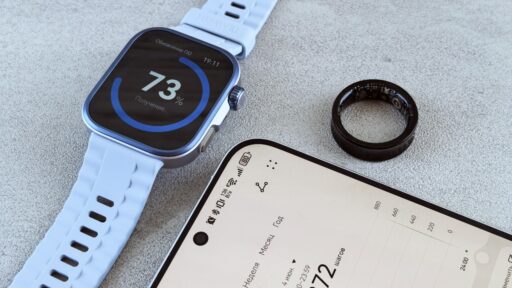
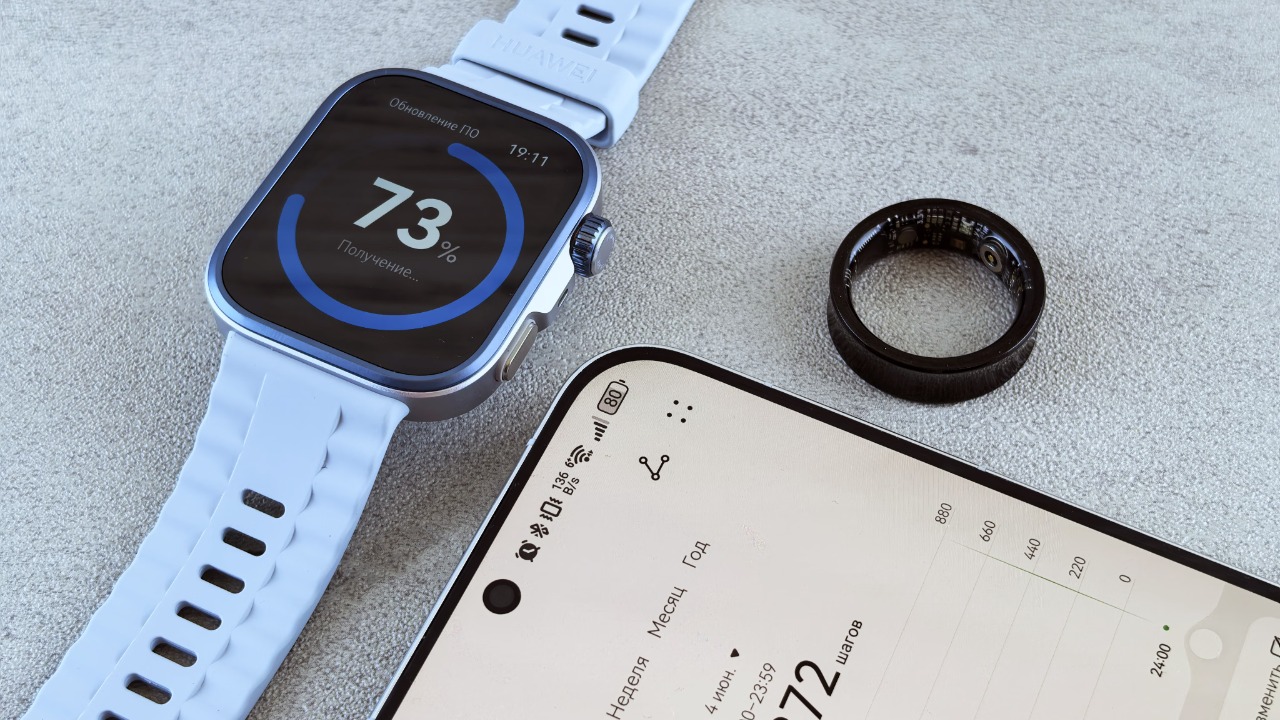

Smartwatches and smart rings often measure many of the same health signals, including heart rate, sleep, activity, skin temperature and blood-oxygen trends. However, they are designed around very different ideas.
A smartwatch is an interactive computer worn on the wrist. It provides a screen, notifications, workout controls, apps and immediate health information. A smart ring is usually a passive sensor designed to disappear into daily life, collect data continuously and present its findings later through a phone application.
Neither design is automatically better for health tracking. The right choice depends on whether the wearer prioritises workouts and real-time feedback or sleep, recovery and unobtrusive long-term monitoring.
The Biggest Difference Is How Each Device Is Used
A smartwatch expects regular interaction. Its display can show heart rate during exercise, guide a workout, deliver pace alerts, display maps and provide access to calls, messages and applications.
Modern watches also offer increasingly advanced health functions. Apple’s current Apple Watch health overview includes overnight measurements such as heart rate, respiratory rate, wrist temperature and sleep duration, while supported models and regions may add ECG, irregular-rhythm notifications and sleep-apnoea notifications.
A smart ring removes most of this interaction. It generally has no screen and provides few, if any, on-device controls. Its purpose is to collect information quietly and turn that data into app-based scores or trends.
The Oura Ring system, for example, concentrates on Sleep, Activity and Readiness scores. Samsung’s Galaxy Ring similarly records health and activity information before synchronising it with Samsung Health.
That design difference shapes almost every other comparison between the two devices.
Smartwatches Are Better for Active Exercise Tracking
A smartwatch is usually the more practical option for runners, cyclists, hikers and gym users who want information during a session.
Its screen can display distance, pace, heart-rate zones, elapsed time and workout instructions without requiring the wearer to reach for a phone. Many models include built-in GPS, allowing outdoor routes and distances to be recorded independently.
Physical controls or touchscreens also make it possible to start, pause and change activities. Some watches can provide safety functions such as emergency calling, fall detection or location sharing, depending on the model and cellular connection.
Smart rings can detect general movement and may automatically identify certain activities, but they are not usually designed to replace a dedicated sports watch. A ring cannot conveniently show pace during a run, guide interval training or display a navigation route.
Exercise can also create difficulties for rings. Weightlifting may place pressure on the device, rowing can cause rubbing, and gripping equipment may become uncomfortable. Finger movement and changing blood flow during intense exercise can also complicate optical sensor readings.
Research suggests that wearable accuracy depends heavily on the metric being measured. A 2025 review of Apple Watch studies found generally strong performance for heart rate and step counting but greater limitations when estimating energy expenditure. That means calorie figures should be treated as approximations, regardless of how professionally they appear on the screen.
Smart Rings Have an Advantage During Sleep
Sleep is one area where the ring format becomes particularly attractive.
Many people find a small ring less distracting than a watch in bed. It does not illuminate the room with a screen, press a large case against the wrist or deliver notifications beside the pillow. Because rings commonly offer several days of battery life, they are also less likely to be charging overnight.
Samsung advertises up to seven days of battery life for its Galaxy Ring, although actual endurance depends on ring size, settings and usage.
Comfort matters because a health tracker cannot record useful long-term patterns while sitting on a charger or bedside table. A device worn consistently can establish personal baselines for resting heart rate, heart-rate variability, temperature and sleep timing.
A laboratory study comparing Oura Ring Gen3, Fitbit Sense 2 and Apple Watch Series 8 with polysomnography found that all three devices detected sleep with high sensitivity. Their ability to distinguish individual sleep stages varied more substantially, however. The published sleep-tracking study found that consumer devices could provide useful estimates but should not be treated as substitutes for a clinical sleep study.
A ring may therefore be the stronger lifestyle tool for understanding sleep consistency and recovery trends. It cannot reliably diagnose the reason someone wakes repeatedly or determine whether a medical sleep disorder is present.
Rings May Be Better for Recovery and Long-Term Trends
Smart rings typically organise their data around recovery rather than immediate performance.
They combine overnight heart rate, heart-rate variability, temperature, sleep and recent activity to estimate whether the body appears ready for strain or may benefit from additional rest. These scores can make complex data easier to understand, particularly for someone who does not want to study several individual graphs.
The finger can also be a useful location for optical measurement because it contains a rich blood supply. A 2025 systematic review covering 107 smart-ring studies found encouraging results for heart rate, heart-rate variability and sleep detection, although the authors also identified differences between devices, study designs and clinical applications.
The value of a recovery score lies primarily in comparison with the wearer’s normal pattern. A sudden change in resting heart rate or temperature may be more meaningful than comparing one person’s score with another person’s.
Smartwatches can provide similar trends, and some now include daily readiness or energy assessments. The difference is that rings usually place recovery at the centre of the experience, while watches balance health tracking with communication, apps and sports features.
Smartwatches Usually Offer More Medical-Style Functions
Some smartwatches include health features that are unavailable on most smart rings.
Supported Apple Watch models can produce a single-lead electrocardiogram, and certain watches offer irregular-rhythm notifications. Availability depends on the model, country and regulatory approval. Apple also states that its Blood Oxygen feature is intended for wellness rather than medical use.
These features can help a wearer collect information to discuss with a healthcare professional. They do not turn the watch into a complete cardiac monitor, and a normal wearable reading cannot rule out a serious condition.
Most smart rings focus on wellness signals rather than on-demand ECG recording or emergency communication. Their strength is continuous passive monitoring, not urgent assessment.
The distinction between wellness technology and regulated medical functionality is important. The US Food and Drug Administration explains that digital-health products range from general wellness applications to authorised medical devices, with regulation depending on the function and intended use rather than simply whether the product is worn on the body.
A wearable should never delay medical care when symptoms such as chest pain, fainting, severe breathlessness or sudden neurological changes occur.
Battery Life Can Decide Which Device Collects Better Data
Smart rings generally last longer between charges because they have no bright display, speaker, GPS screen or large application system to power.
Smartwatches may require charging every day or every few days, depending on the model and how frequently GPS, cellular connectivity and the always-on display are used. A watch that is charged overnight may repeatedly miss sleep information.
The ring’s longer battery life supports more continuous tracking, but charging is only part of the comfort question. A ring must fit correctly. One that is too loose may produce inconsistent readings, while one that is too tight can become uncomfortable as fingers swell during heat, exercise or sleep.
Watches offer adjustable straps and can be moved slightly around the wrist. Rings require accurate sizing and may become unsuitable when finger size changes substantially.
Software and Subscriptions Matter as Much as the Sensors
Wearable value depends heavily on the companion application.
The app determines how raw measurements are translated into trends, alerts and recommendations. It also affects whether information can be shared with Apple Health, Samsung Health, Google Health Connect or another service.
Some ring platforms require an ongoing subscription for full insights, while other products include their core software without a recurring fee. Smartwatches can also involve premium coaching, fitness or analytics subscriptions even when basic health tracking remains available without one.
Compatibility deserves equal attention. An Apple Watch is built around the iPhone, while Samsung wearables generally deliver their fullest feature set within the Galaxy ecosystem. Oura supports both iOS and Android, but its experience centres on the Oura application.
A buyer should therefore evaluate the entire system rather than comparing only sensors listed on a product page.
Which Wearable Is Better for Health Tracking?
A smartwatch is usually the better choice for active athletes, people who want live workout information and those who value ECG, safety features, GPS and phone-like functions.
A smart ring is often better suited to someone focused on sleep, recovery and consistent background tracking. Its discreet shape, longer battery life and screen-free design can make it easier to wear throughout the day and night.
Some users may benefit from combining both. Samsung allows the Galaxy Ring and a compatible Galaxy Watch to coordinate measurements, with the watch acting as the primary device when both are worn. Samsung says this arrangement can also extend the ring’s battery life by disabling duplicated measurements.
The strongest health tracker is ultimately the one worn consistently and interpreted sensibly. Smartwatches provide more functions and immediate feedback. Smart rings provide a quieter experience built around continuous trends. Neither replaces professional medical assessment, but either can help reveal patterns that might otherwise go unnoticed.