
A farming experiment in northern Senegal suggests that raising fish and rice in the same fields can solve several problems at once. The fish reduced populations of snails and insects, improved soil nutrients and increased rice yields by more than 25%.
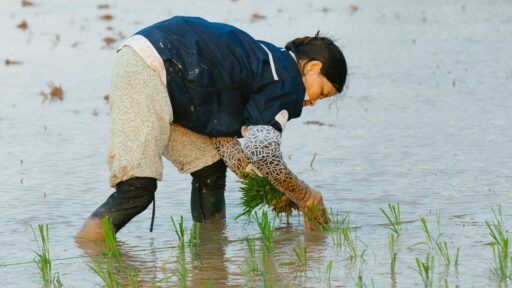
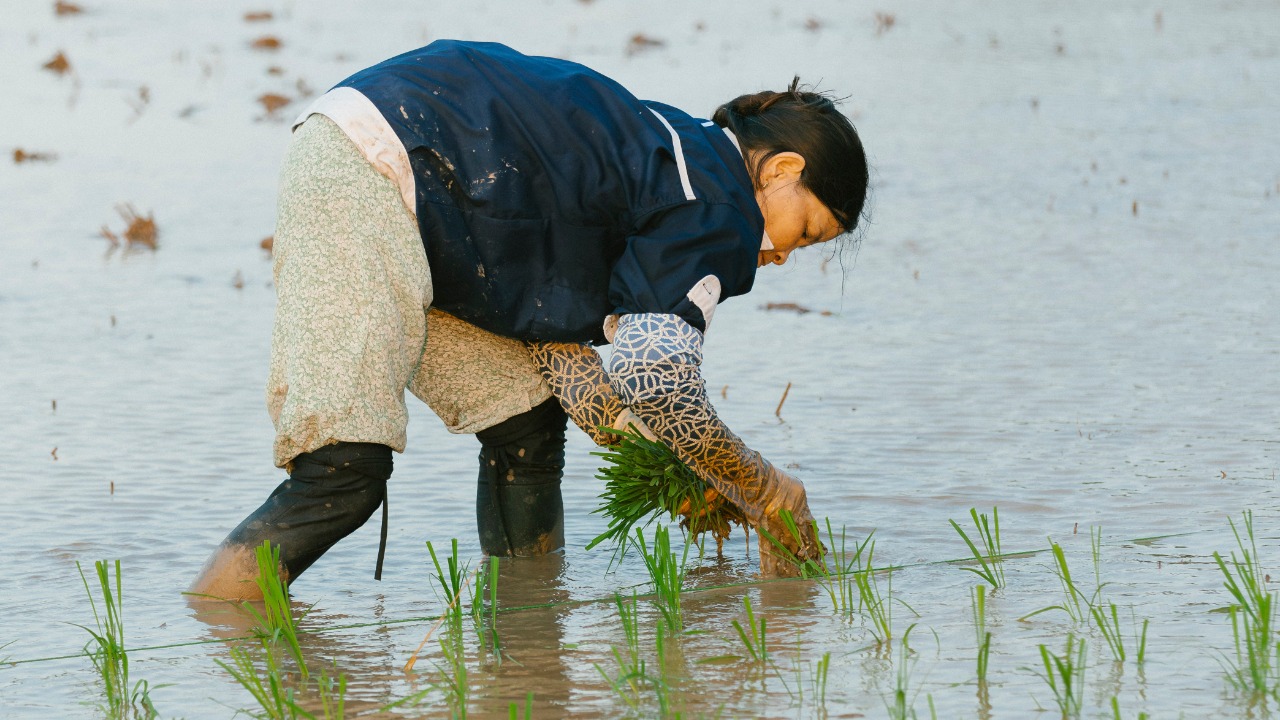
The approach may also reduce exposure to schistosomiasis, a parasitic disease transmitted through freshwater snails. Rice farmers can spend hours standing in shallow water, placing them and their families at risk when infected snails live in paddies or nearby irrigation canals.
Researchers introduced two native fish species into selected rice fields and compared the results with conventional rice cultivation. The fish survived without being given commercial feed and created an additional product that farmers could eat or sell. According to the peer-reviewed study in Nature Sustainability, the system produced estimated net benefits of $1,805 to $3,415 per hectare annually and achieved a benefit-to-cost ratio of 7.42.
Schistosomiasis Depends on Freshwater Snails
Schistosomiasis is caused by parasitic worms, but people do not usually become infected directly by another person. The parasite first uses certain freshwater snails as intermediate hosts.
Infected snails release microscopic larvae into the surrounding water. These larvae can penetrate human skin when someone farms, swims, washes or completes other activities in contaminated water. Inside the body, the parasites mature, and their eggs can cause inflammation and progressive organ damage.
The World Health Organization’s schistosomiasis fact sheet estimates that at least 253.7 million people required preventive treatment in 2024. Approximately 93.9% of those requiring treatment lived in Africa. Chronic infections can contribute to anemia, reduced childhood development, learning difficulties, liver damage, urinary problems and a reduced ability to work.
Praziquantel can treat the disease, but treatment does not permanently protect a person from becoming infected again. A farmer may receive medication and then return to the same water containing infected snails.
That is why WHO control guidance extends beyond drug distribution. It also emphasizes sanitation, safe water, behavioral changes and the control of the snails that maintain transmission.
Rice Fields Can Create an Occupational Exposure Risk
Flooded rice paddies provide moisture, food and vegetation that can support freshwater snails. Irrigation canals may also allow the animals to survive between growing seasons and recolonize fields when water returns.
An earlier open-access study in PLOS Global Public Health surveyed rice fields and irrigation canals in the Senegal River Basin during 2022 and 2023. Researchers found snails releasing human-infectious Schistosoma larvae during both growing and non-growing periods.
The snails were more abundant during rice growing and harvesting, when agricultural workers were most likely to enter the water. Researchers also found that submerged and emergent aquatic vegetation was associated with higher snail abundance.
The newer study examined data from 405 rural households. Children in rice-farming households had a higher prevalence of Schistosoma mansoni and greater intensities of Schistosoma haematobium infection than children from non-farming households. The association supported concerns that irrigated rice production can increase exposure when disease-carrying snails occupy the same water.
Researchers Added Two Native Fish Species
The researchers introduced Nile tilapia and African bonytongue into rice fields. Both species are native to the region, which is important because releasing a non-native predator could create a new ecological problem while attempting to solve another one.
The fish can influence snails in more than one way. African bonytongue can consume snails directly, while fish may also compete with them for food and disturb the shallow habitats they use. They additionally feed on insects and other invertebrates that might otherwise damage the rice crop.
Laboratory experiments conducted before the field trials had identified African bonytongue as an effective snail predator. The researchers also examined how snails responded to chemical signs of nearby fish. Although some snails moved toward vegetation or other refuge areas, their avoidance behavior did not appear strong enough to protect them completely from predation.
The field system included both Nile tilapia and African bonytongue. The fish were not actively fed, yet they survived and grew using resources already present in the rice ecosystem. This low-input design matters because expensive feed could make the practice inaccessible to small farming households.
The University of Notre Dame’s research summary reports that fields containing both fish species had fewer snails associated with the locally dominant form of schistosomiasis.
The Fish Increased Rice Yields by More Than 25%
Reducing snail populations was only part of the result. Rice production increased by more than one-quarter in the co-cultured fields.
Fish can support crop growth by recycling nutrients. Their waste returns nitrogen and other nutrients to the water and soil in forms that rice plants and microorganisms can use. Their movement can also disturb surface sediments, affecting nutrient availability and the structure of the field ecosystem.
By eating insects and other organisms, fish may reduce crop damage without requiring the same level of chemical pest control. Lower pest pressure allows more plants to survive and direct energy toward grain production.
The researchers found improved soil nutrient conditions in fields containing fish. The combination of biological pest control and nutrient recycling offers a reasonable explanation for the higher yields, although the strength of each mechanism may differ by field and season.
A 25% increase should not be interpreted as a guaranteed result for every rice farm. The trial took place under specific environmental and management conditions in northern Senegal. Fish species, water temperature, rice variety, soil quality and stocking density could all change the outcome elsewhere.
Farmers Gain a Second Harvest From the Same Land
Rice-fish farming produces two forms of food from the same field. Farmers can harvest the rice while also collecting fish for household consumption or sale.
That additional source of protein may be particularly valuable in communities where nutritious food is expensive or seasonally unavailable. Fish sales can also diversify income, reducing a household’s dependence on a single crop and one harvest price.
The economic analysis estimated an annual net benefit ranging from $1,805 to $3,415 per hectare. The calculated benefit-to-cost ratio of 7.42 means the estimated gains substantially exceeded the costs under the study’s assumptions.
However, farmers may still face initial expenses. A rice field may need a deeper refuge trench where fish can move when water becomes shallow or excessively warm. Farmers must also obtain suitable juvenile fish, control water levels and prevent fish from escaping.
The system may require different knowledge from conventional rice farming. Training, access to healthy local fish and dependable markets could determine whether the promising trial becomes a workable regional industry.
The Study Reduced Disease Risk Rather Than Proving Fewer Human Infections
The headline finding requires an important distinction. Researchers demonstrated that rice-fish cultivation suppressed snail hosts and identified an association between rice farming and human schistosomiasis. The study did not yet establish through a large, long-term clinical trial that the farming intervention reduced infection rates among people by a specific percentage.
Fewer host snails should reduce opportunities for transmission, but human infection is also influenced by sanitation, water access, irrigation canals, nearby rivers and contact with contaminated water outside the rice field.
Fish in one paddy cannot eliminate snails from an entire connected water system. Irrigation canals may continue to supply new snails when fields are flooded, particularly when aquatic vegetation remains unmanaged. Fish farming should therefore support drug treatment, sanitation and wider snail control rather than replace them.
Researchers have already stated that the next challenge is determining whether the approach can be expanded across other rice-producing regions where schistosomiasis remains endemic.
Scaling the System Requires Local Ecological Planning
Introducing fish for biological control must be done carefully. The safest species and stocking rates will vary between countries and watersheds.
A fish that is native and commercially valuable in Senegal could be invasive elsewhere. Excessively high stocking densities might reduce fish growth, damage young rice plants or alter local ecosystems. Pesticides traditionally used in paddies may also kill the fish, requiring farmers to change their pest-management practices.
Heat presents another challenge. Researchers recorded rice-field water temperatures reaching 30°C in the Senegal River Basin. Deeper refuge channels may be necessary to help fish survive when shallow water becomes hot or begins to dry.
Future studies will need to measure long-term human infection outcomes, fish survival, water use, labor requirements and performance across multiple growing seasons. They must also examine whether the financial benefits remain strong when the system is operated by farmers without research support.
A Traditional Idea Is Being Applied to a Modern Health Problem
Growing fish in flooded rice fields is not a completely new agricultural practice. Variations have existed for generations in parts of Asia and other rice-growing regions.
The Senegal research is significant because it applies the idea directly to schistosomiasis control in a high-risk African agricultural landscape. Instead of treating human health, farming and poverty as separate issues, it uses one ecological relationship to address all three.
The results suggest that healthier farming environments do not necessarily require sacrificing food production. In this trial, controlling disease-carrying snails coincided with more rice, harvestable fish, improved soil nutrients and higher estimated income.
Rice-fish farming will not eliminate schistosomiasis on its own. Yet it could become a valuable part of a broader strategy that combines medicine, sanitation, ecological management and more productive agriculture.