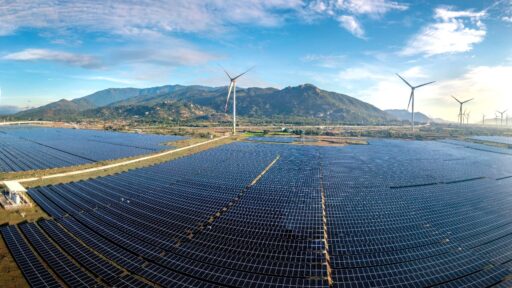
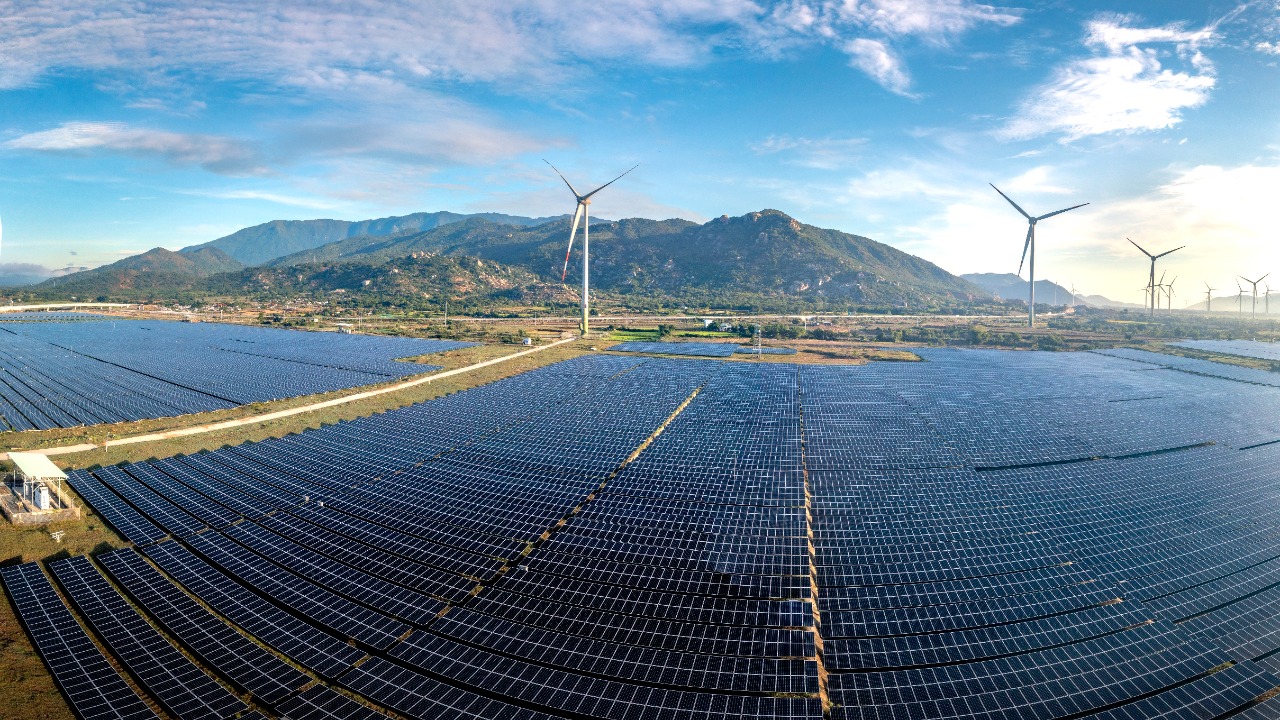

Large solar farms have an unavoidable problem that rarely appears in photographs of gleaming panels.
They need land.
Thousands of acres can be covered by panels, access roads, electrical equipment and security fencing. When those projects are built across places animals have used for generations, clean-energy infrastructure can accidentally become a wall.
A proposed solar development in southern Oregon is trying something different.
The Diamond Solar Energy Project, planned near Diamond Lake Junction, is designed with roughly 405,000 to 406,000 solar panels across about 1,560 acres. But instead of fencing the entire site into one continuous block, the project includes a roughly 600-foot-wide wildlife corridor intended to allow mule deer and elk to continue moving between seasonal habitats and important water resources.
The corridor turns an ordinary solar farm into an unusually large experiment.
Can developers generate hundreds of megawatts of renewable electricity without cutting off the migration routes wildlife already depends on?
The Solar Project Is Much Bigger Than It Sounds
A 1,560-acre solar development is not a small patch of photovoltaic panels.
It covers more than two square miles.
According to project descriptions, Diamond Solar is planned as a roughly 200-megawatt solar-plus-storage facility. Its enormous panel count would make it a significant renewable-energy installation while also placing substantial infrastructure across habitat used by large mammals.
That creates a fundamental land-use conflict.
Solar energy reduces dependence on fossil-fuel generation and produces electricity without combustion at the project site.
But utility-scale solar requires space.
If the chosen land happens to sit between winter habitat, feeding grounds and water, animals do not care that the fence blocking their route is part of a low-carbon electricity project.
They simply encounter a barrier.
The Oregon Department of Fish and Wildlife has identified wildlife movement and connectivity as important planning considerations as renewable-energy development expands across the state.
Oregon’s wildlife planning documents specifically recognize solar facilities and fencing as potential barriers to animal movement.
Why Deer and Elk Need a Route Through the Site
Large animals do not necessarily spend their entire lives inside one small territory.
Mule deer and elk can move between seasonal ranges as food availability, snow depth, temperature and breeding behavior change.
Access to water can also determine which routes remain useful.
The Diamond Solar project site contains habitat used by deer and elk and provides access to important water resources, according to reporting based on Oregon wildlife-agency information.
If an enormous fenced solar facility appears directly across those established movements, animals may have to go around it.
That detour may sound trivial on a map.
For wildlife, it can increase travel distance and energy expenditure while potentially pushing animals toward roads, human development or less suitable habitat.
Fragmentation can become particularly important during winter, when animals may already be conserving energy.
That is why the project is being split instead of treated as one uninterrupted solar block.
The 600-Foot Gap Is Essentially a Wildlife Highway
The proposed solution is straightforward.
Leave a broad section through the project without solar panels or continuous fencing.
At approximately 600 feet wide, the corridor is far more substantial than a narrow opening in a perimeter fence.
The intention is to preserve enough open space that deer and elk will still recognize and use the route.
That width matters.
Large mammals can be reluctant to enter spaces that feel constricted or expose them too closely to unfamiliar structures.
A narrow passage between tall fences might technically allow an elk to fit through while still being behaviorally unattractive.
A much wider corridor gives animals room to move in a way closer to their existing migration behavior.
Oregon’s broader Wildlife Corridor Action Plan emphasizes preserving landscape connectivity rather than looking only at isolated habitat patches.
The Diamond corridor puts that principle directly inside an energy project.
Solar Fencing Can Be a Bigger Problem Than the Panels
The panels themselves are only part of the issue.
Utility-scale solar facilities are commonly fenced for security and safety.
For a mule deer, elk or pronghorn, those fences can transform hundreds or thousands of acres into inaccessible terrain.
Wildlife biologists studying large solar developments have already documented how animals can change their movements after construction.
Research discussed by wildlife specialists found resident pronghorn altering daily and seasonal movements after a large solar facility was built. Experts consequently recommended avoiding important big-game habitat when possible and, where avoidance is impossible, incorporating corridors, better fence configurations and buffers into project design.
That principle is important.
A wildlife-friendly solar project is not necessarily one where animals wander among every panel.
Sometimes the better solution is deliberately keeping a section of the site free of development.
Nobody Knows Exactly How Well This Corridor Will Work Yet
This is what makes Diamond Solar particularly interesting.
The corridor is an experiment.
Designers can make the opening 600 feet wide.
They can align it with known movement routes.
They can avoid fencing it.
But the deer and elk still have to decide to use it.
Reporting on the project notes that there is limited real-world evidence showing precisely how large wildlife corridors should be incorporated into huge solar developments.
That means monitoring becomes crucial.
If animals continue using the route at similar rates after the panels arrive, the project could provide a useful model for future development.
If they avoid it, planners will need to understand why.
Perhaps the corridor is too narrow.
Perhaps noise or construction activity changes behavior.
Perhaps access roads or nearby infrastructure create additional barriers.
Clean-energy planning becomes better only when those results are measured rather than assumed.
Oregon Is Already Treating Wildlife Connectivity as a Solar-Siting Issue
The state is not approaching Diamond Solar in isolation.
Oregon has been updating rules governing where large photovoltaic developments can be constructed, particularly in eastern Oregon.
Those rules specifically recognize deer winter range, elk winter range and high-use wildlife migration corridors as important factors when solar projects are evaluated.
That makes sense because renewable-energy growth is likely to increase land pressure.
Developers naturally prefer areas with strong solar resources, access to transmission and enough contiguous land for large projects.
Wildlife often values those same open landscapes.
Oregon’s challenge is therefore not choosing between solar development and habitat protection.
It is determining where conflicts are unacceptable and where design changes can reduce them.
The Oregon State Wildlife Action Plan explicitly calls for identifying barriers including solar facilities, roads and fencing and improving knowledge about wildlife connectivity statewide.
Moving the Project Might Be Better Than Building a Corridor in Some Places
Wildlife corridors should not become an excuse for building solar farms anywhere developers want.
Sometimes the best conservation strategy is avoiding the habitat entirely.
Conservation organizations have warned that solar development proposed across parts of the American West overlaps important mule deer, elk, pronghorn and bighorn sheep habitat and migration routes.
That creates a hierarchy of solutions.
First, developers can try to avoid the most sensitive habitat.
If that cannot reasonably be done, projects can reduce their footprint.
Then corridors and other mitigation measures can preserve movement through or around the development.
The Diamond Solar corridor matters because it tackles the third problem.
It does not prove that every wildlife conflict can be solved by leaving a gap between panels.
Solar and Conservation Increasingly Have to Share the Same Landscape
The broader challenge is becoming impossible to ignore.
Decarbonizing electricity requires enormous amounts of new infrastructure.
Solar farms need land.
Wind farms need land.
Transmission lines need corridors.
Energy storage requires sites.
At the same time, wildlife populations already face pressure from highways, housing, agriculture and existing infrastructure.
Research into clean-energy expansion across the western United States has found substantial potential for land-use conflicts as renewable development accelerates.
The answer therefore cannot be simply building renewable projects anywhere sunlight is good.
Clean electricity still has environmental consequences.
The goal is reducing those consequences without making energy projects impossible to build.
The Corridor Could Become a Model if the Animals Actually Use It
That is why the 600-foot opening in Oregon matters beyond one solar farm.
If monitoring shows that deer and elk continue travelling through the site, other developers may gain a practical design option for projects intersecting big-game habitat.
Solar arrays could be divided into blocks.
Fences could be adjusted.
Migration routes could remain open.
Projects could potentially produce electricity while becoming less disruptive to the landscape around them.
The idea is not unprecedented. Wildlife specialists have already recommended breaking large solar facilities into smaller sections with movement corridors between them.
Diamond Solar could provide something those recommendations badly need:
real-world evidence.
The Best Solar Farm May Be One Wildlife Can Walk Through
Solar power is often discussed almost entirely in electrical terms.
Megawatts.
Panels.
Battery capacity.
Carbon emissions.
But every utility-scale project also exists somewhere physical.
Animals may already be living there.
A migration route may cross it.
A water source may sit on the other side.
Oregon’s Diamond Solar project is attempting to acknowledge that reality before construction turns it into a problem.
Roughly 405,000 solar panels may eventually occupy the site, but a 600-foot-wide section is being deliberately left open so deer and elk can keep moving through the landscape.
Nobody yet knows whether the animals will behave exactly as planners hope.
That uncertainty is precisely why the project is important.
The clean-energy transition will require more land.
Wildlife will still need to move across that land.
If both are going to coexist, future renewable projects may need to be designed not simply around where electricity should flow but around where animals need to go too.