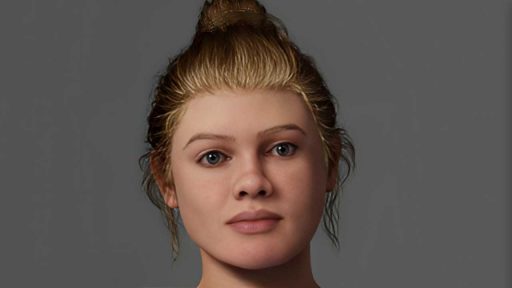
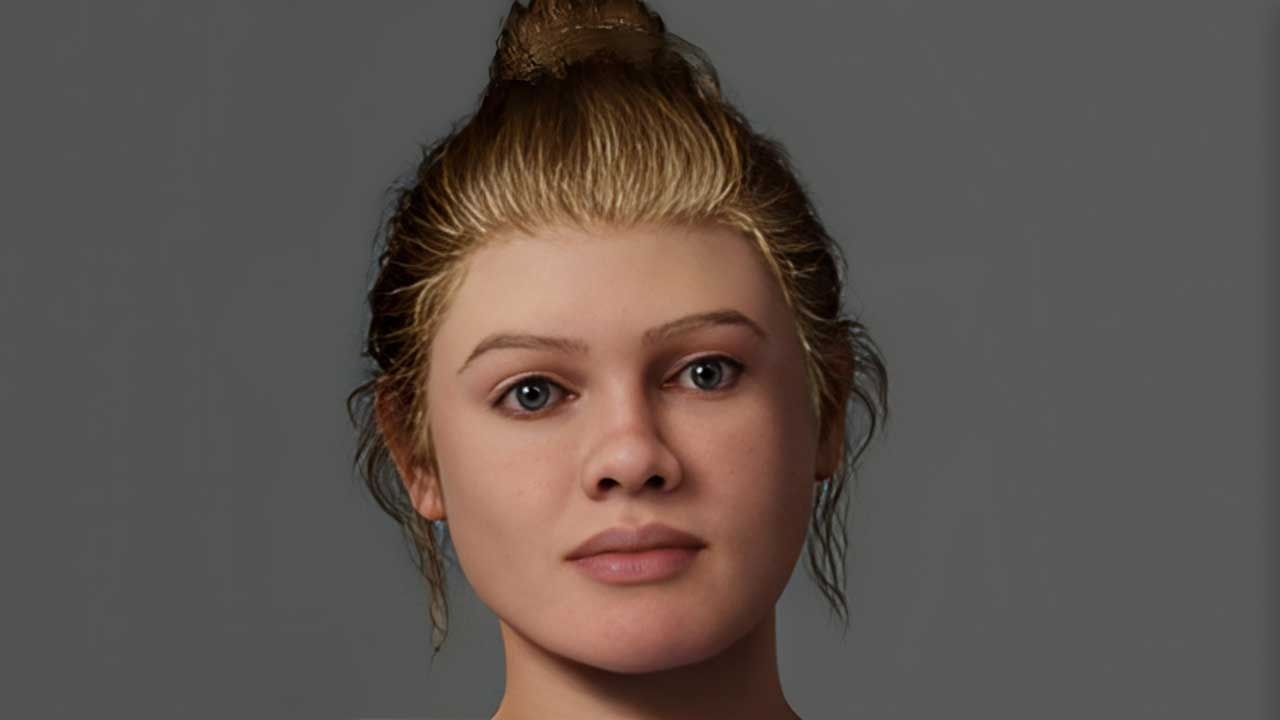

The woman whose skeleton was found on the cliffs at Beachy Head has been recast many times, from exotic outsider to symbol of Britain’s earliest Black history. A new wave of genetic research now overturns those stories, revealing a local Roman-era Briton whose life was more ordinary, and more complicated, than the myths that grew around her. The latest DNA work does not just tweak the narrative, it forces a reckoning with how I, and many others, have used single skeletons to stand in for sweeping tales about identity, migration and race.
Researchers now argue that the Beachy Head Woman was born and raised in southern Britain, living sometime between 129 and 311 in the Roman period, with physical traits that challenge earlier reconstructions. Her story has shifted because the science has changed, from early isotope readings and limited DNA to dense genomic datasets that can place one woman within the wider population of Roman England. That scientific pivot is now rippling through museums, public history and online culture, as a once-celebrated “first Black Briton” is re-situated as a local woman whose ancestry still speaks volumes about diversity in the ancient past.
The long, winding mystery of a Roman skeleton
The bones that would become the Beachy Head Woman’s remain were first uncovered on the chalk cliffs near Beachy Head and then stored for decades in Eastbourne town hall, largely unnoticed. When they were recovered in 2012, archaeologists quickly realised they were dealing with a Roman-era burial from southern England, but the individual’s origins were anything but clear, and the mystery only deepened as different techniques were applied over time. Early work focused on the context of the grave and the coastal setting, tying the find to the broader story of Roman England and its busy Channel-facing frontier at Beachy Head and Eastbourne, yet the woman herself remained an enigma.
Radiocarbon analysis later pinned her life to a calibrated window between 129 and 311, firmly within the Roman period, which meant she lived at a time when people and goods were moving across the empire at scale. That timeframe, combined with the location on the south coast, encouraged speculation that she might have come from far beyond Britain, perhaps from Saharan Africa or the Mediterranean, ideas that were repeated in exhibitions and media coverage. As the story spread, she was increasingly framed as a striking outsider in Roman England, even as the underlying evidence remained thin and the original mystery of who she was, and where she came from, was still unresolved according to early reporting.
From “first Black Briton” to local Roman Briton
Over the past decade, the Beachy Head Woman was widely promoted as a candidate for the “first Black Briton”, a label that crystallised after an earlier facial reconstruction depicted her with dark skin and tightly curled hair. That interpretation drew on limited genetic data and on assumptions about Roman mobility, and it resonated strongly in a country wrestling with how to represent Black presence in deep time. A plaque was even installed to honour this reading, and social media posts celebrated DNA evidence as proof that she came from sub-Saharan Africa, with one viral account insisting that “DNA EVIDENCE PROVES” she was a migrant from Saharan Africa rather than a local, a claim echoed in online commentary.
The new genetic work overturns that narrative. A comprehensive analysis of her genome now indicates that the Beachy Head Woman’s ancestry was rooted in Britain, with her genetic profile clustering with local populations in southern England rather than with people from Saharan Africa or the Mediterranean. Researchers at a nationwide team have concluded that she originated from southern Britain, reframing her not as a distant newcomer but as a Roman-era individual embedded in local communities, a finding set out in detail in a university release. That shift does not erase the presence of Africans in Roman Britain, which is well documented elsewhere, but it does mean that this particular woman can no longer carry the burden of representing that entire history on her own.
How new DNA and multiproxy science changed the story
The reason the Beachy Head Woman’s story has changed so dramatically lies in the science. Earlier genetic work relied on sparse data from degraded DNA, which limited how precisely researchers could place her ancestry within known ancient populations. In the latest study, scientists used state-of-the-art DNA techniques and newly published genomes to build a dataset around ten times denser than what was available in 2017, allowing them to compare her genetic markers across a much broader reference panel. One team member described how, by using these advanced DNA techniques, they were finally able to determine the ancestry of the Beachy Head Woman with far greater confidence, a point underscored in new museum coverage.
Crucially, the researchers did not rely on DNA alone. The latest work is explicitly multiproxy, combining genomic data with isotopic analysis, radiocarbon dating and detailed osteological study to build a holistic picture of her life. The peer-reviewed study on her origins explains how Radiocarbon dating yielded a calibrated date of between 129 and 311 calCE, while phenotypic predictions from the genome suggest she had intermediate skin pigmentation, brown eyes and dark hair, and that she was of local British ancestry, findings laid out in the Journal of Archaeological. By integrating these lines of evidence, the team could show that her diet included a lot of seafood, consistent with a coastal upbringing in Britain, a detail highlighted in the press material that accompanied the study.
Inside the landmark genetic study
The landmark genetic study that has reset the Beachy Head Woman’s identity was built around a nationwide collaboration led by Dr William Marsh, who focused on extracting and sequencing as much ancient DNA as possible from the Roman-era remains. The team obtained a dataset that was not only denser but also cleaner, thanks to improved methods for filtering out contamination and for targeting informative regions of the genome. According to a detailed account of the work, this time they were able to generate a dataset around ten times denser than in 2017, which allowed them to test competing hypotheses about her ancestry rather than relying on broad guesses, a leap in resolution described in a technical summary.
When they compared her genome to both ancient and modern reference populations, the results consistently placed her among local British groups rather than among individuals from the eastern Mediterranean or North Africa. A focused section of the study notes that phenotypic predictions suggest she had intermediate skin pigmentation and that she was of local British ancestry, a conclusion supported by the phenotype analysis. Additional isotopic work on her teeth and bones indicated that she grew up in southern Britain, with no strong signal of long-distance migration, aligning with the view that she was local to southern England, as summarised in a recent feature.
Rewriting public history, from museum displays to social media
The scientific pivot has immediate consequences for how the Beachy Head Woman is presented to the public. Museums that once framed her as a migrant from Saharan Africa or the Mediterranean are now revising labels, educational materials and digital reconstructions to reflect her British origins. One major institution has already described how the identity of this mysterious Roman-era skeleton from southern England has been reinterpreted after re-examining its DNA with new techniques, a shift outlined in updated museum guidance. The team behind her facial reconstruction is now working to update her digital likeness, using the new genetic data on skin tone and other traits to move away from the earlier, much darker depiction, a process described in a recent briefing.