
A catastrophic flash flood along the Nepal-Tibet border has become one of the deadliest Himalayan disasters in recent years, with hundreds confirmed dead and an enormous search operation underway for those still missing.
Nepali police reported 359 deaths by Thursday, August 27, while roughly 1,000 people remained unaccounted for across the disaster zone. The numbers are changing rapidly as rescue teams reach previously isolated communities. A later Thursday update reported by Dawn put the combined death toll above 360, while the Associated Press reported more than 1,400 people missing across Nepal and China.
The disaster appears to have begun with something far more violent than an ordinary period of heavy rain: a massive glacial collapse high in the Himalayas.
What Happened in Nepal?
The disaster struck early Wednesday in the mountainous region connecting Nepal with Tibet.
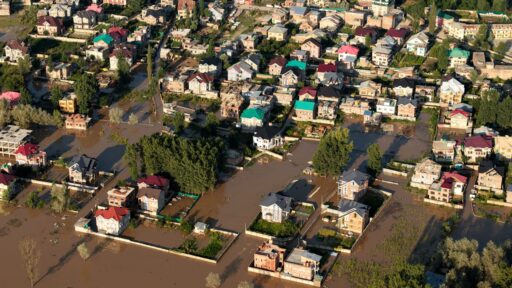
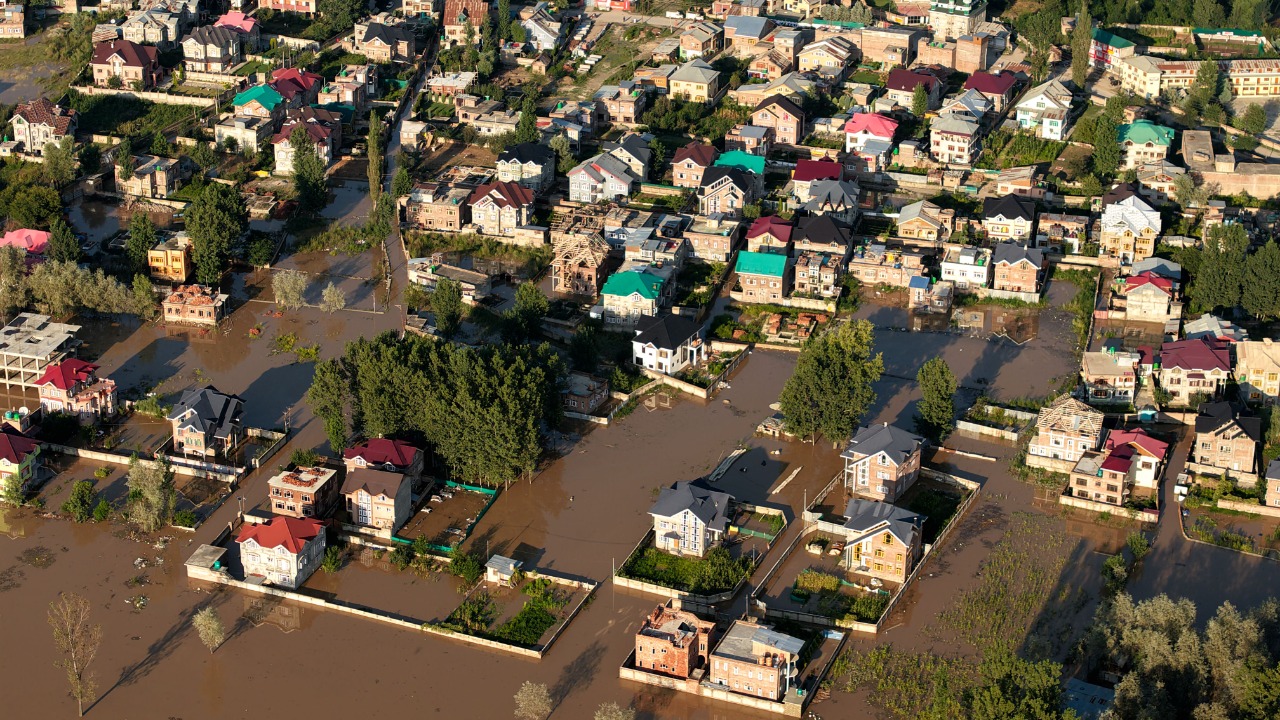
A huge mass of ice and rock apparently broke away in the mountains, sending water, mud, rocks, and debris racing downstream. The resulting flash flood swept through settlements, roads, bridges, tourism routes, and border infrastructure.
Surveillance footage from the Chinese side reportedly showed an enormous wall of mud and debris overwhelming a multi-story building as people ran from the approaching flood. Images from Nepal show homes buried in sludge, broken bridges, destroyed roads, and residents attempting to recover possessions from damaged buildings.
This was not simply water rising gradually through a river valley.
It was a fast-moving debris flow capable of carrying rocks, trees, mud, and structural debris with tremendous force.
That helps explain both the scale of destruction and the extraordinary number of people still missing.
A Glacier Collapse May Have Triggered the Disaster
Initial reports created some confusion because seismic instruments detected what appeared to be an earthquake.
The U.S. Geological Survey later said the signal was probably generated by the enormous glacier collapse itself. Dawn reported that the event was powerful enough to register as the equivalent of a magnitude 5.2 seismic event.
Scientists examining the disaster believe a huge mass of ice and rock may have collapsed into the Lhende Khola river system.
That material could have temporarily blocked the river.
Water then accumulated behind the blockage.
When the natural dam failed, an enormous amount of water and debris was suddenly released downstream.
That sequence can turn a remote glacier failure into a devastating flood many kilometers away.
Why Was the Flood So Destructive?
Mountain valleys naturally concentrate flowing water.
When a sudden surge enters a narrow Himalayan valley, there may be nowhere for that energy to spread.
Instead, the flood accelerates downstream.
Now add mud.
Boulders.
Ice.
Trees.
Collapsed buildings.
The result behaves less like an ordinary river flood and more like a moving wall of debris.
Satellite imagery taken before and after the disaster shows extensive areas transformed by sediment and flood damage. Roads, bridges and power infrastructure were destroyed or severely damaged.
That destruction is now making rescue operations much harder.
Hundreds of Foreign Visitors Are Missing
The tragedy has become international because the affected region is also used by tourists, workers and religious pilgrims.
Many of those missing are foreign nationals.
The Associated Press reported that people from more than 30 countries were unaccounted for, including large numbers of Indian pilgrims as well as visitors from the United States, Ukraine, Malaysia, Australia, Britain, Canada, South Korea and other countries.
Many had been traveling toward Mount Kailash, a sacred Himalayan destination that attracts pilgrims from several religious traditions.
Indian nationals make up one of the largest groups.
AP reported 288 Indians missing in the latest figures available Thursday, many of whom were pilgrims.
The international nature of the disaster is complicating efforts to determine exactly who is missing and who has already reached safety.
Why Do the Missing-Person Numbers Differ?
You may see very different figures depending on which report you read.
Dawn’s headline reported around 1,000 missing.
Reuters reported more than 1,000 missing across Nepal and China.
Later AP reporting placed the figure above 1,400.
That does not necessarily mean one report is wrong.
The situation is changing quickly.
Communication networks have been disrupted.
Entire communities have been cut off.
Tourists may have crossed borders or moved between hotels and pilgrimage routes.
Foreign embassies are also trying to determine whether citizens reported missing are actually trapped, hospitalized, evacuated, or simply unable to communicate.
In a disaster of this scale, missing-person lists can initially contain duplicates or people who later turn up safely.
The final toll may therefore take considerable time to establish.
Rescue Teams Are Using Helicopters
With roads and bridges destroyed, reaching some communities by vehicle is impossible.
Nepalese military helicopters are being used to search affected areas, evacuate survivors and deliver supplies to communities cut off by the flooding.
Rescue workers have also used heavy machinery to move through mud and debris.
Photographs from Nuwakot district show excavators clearing enormous deposits of sludge, while other images show stranded residents being transported from flooded areas using bulldozers and rescue vehicles.
The geography makes every part of the operation more difficult.
Helicopters have limited landing areas.
Weather can change quickly.
Road access is unreliable.
And victims may be spread across many kilometers of river valley.
Another Flood Threat Has Emerged
The immediate flood may have passed through many areas, but authorities are concerned about another danger.
Debris has blocked waterways and created new lakes.
Reuters reported particular concern about a rapidly filling lake formed by blocked river flow. If one of these natural dams suddenly fails, another destructive flood could travel downstream.
That is why authorities cannot simply focus on recovering from Wednesday’s disaster.
They also have to monitor unstable slopes, blocked rivers and temporary lakes.
A mountain disaster can create the conditions for a second disaster.
Entire Communities Have Been Cut Off
Flooding has destroyed infrastructure that remote Himalayan communities depend on.
Roads have disappeared.
Bridges have collapsed.
Electricity infrastructure has been damaged.
Communications have been interrupted.
Some settlements are now accessible primarily by air or on foot.
That creates problems beyond the immediate search for survivors.
People need drinking water.
Food.
Medicine.
Shelter.
Fuel.
Electricity.
Medical care.
A family whose house survived may still be effectively stranded if the only bridge connecting its village to the outside world has disappeared.
Hospitals Are Under Pressure
The enormous number of casualties is also straining local facilities.
Reuters reported that hospitals were struggling to accommodate recovered bodies while emergency services dealt simultaneously with injured survivors and continuing search operations.
In major disasters, hospitals face a difficult combination of problems.
They must treat trauma patients while normal medical emergencies continue.
Transportation routes may be damaged.
Staff members may themselves have affected families.
Electricity and supplies can become unreliable.
The humanitarian consequences therefore extend well beyond the headline death toll.
Climate Change Is Part of the Bigger Himalayan Risk
Scientists are being careful about attributing one individual collapse directly to climate change.
But the broader trend is difficult to ignore.
Himalayan glaciers are retreating as temperatures rise, and warming can destabilize ice, permafrost and steep mountain slopes. AP reports that scientists view the Nepal disaster as another warning about growing glacier-related hazards in a warming Himalayas.
Reuters reports that Nepal has lost nearly a third of its glacial ice during the past three decades.
When glaciers retreat, they can leave behind unstable terrain and growing glacial lakes.
Ice that previously helped hold rock in place disappears.
Permafrost can thaw.
Slopes can weaken.
That can increase the potential for landslides, ice avalanches and sudden releases of water.
Himalayan Communities Face a Difficult Problem
The danger is not simply that glaciers are melting.
It is that people live downstream.
Roads follow river valleys because mountainous terrain offers few alternatives.
Hydropower projects use those rivers.
Bridges cross them.
Villages sit beside them.
Tourism infrastructure depends on them.
Pilgrimage routes pass through them.
So an event beginning high on a remote glacier can eventually reach populated areas and critical infrastructure far below.
Wednesday’s disaster demonstrates how quickly that can happen.
Nepal Has Experienced Major Disasters Before
Nepal’s geography makes it particularly vulnerable to earthquakes, landslides, monsoon flooding and glacial hazards.
The country is still deeply marked by the 2015 earthquake, which killed nearly 9,000 people.
The current flood is very different geologically, but it again presents Nepal with the challenge of conducting large-scale rescue operations across difficult mountainous terrain.
Reuters described the catastrophe as another major test of the country’s disaster-response capabilities.
There is an additional challenge this time: the disaster crosses an international frontier.
China is simultaneously carrying out rescue operations in Tibet.
The Search Is Far From Over
The current casualty numbers should be treated as provisional.
On Thursday afternoon, the reported death toll stood at 359.
By Thursday evening, Dawn reported at least 362 deaths, while AP was reporting more than 360 across Nepal and Tibet.
The missing figure remains even more uncertain.
Some people will hopefully be found alive or discovered to have evacuated without being registered.
Others may be trapped in isolated communities.
And rescue teams are still trying to reach areas buried beneath enormous quantities of mud and debris.
The scale of the search means a definitive accounting could take days or longer.
The Disaster Is Still Developing
For families waiting for news, the distinction between 1,000 and 1,400 missing matters less than the reality behind those numbers.
Hundreds of people remain unaccounted for.
Entire communities have been damaged.
Foreign pilgrims and tourists are among the missing.
Critical roads and bridges have been destroyed.
And unstable natural dams mean authorities are still watching for further flooding.
What began high in the Himalayas as a massive collapse of ice and rock appears to have triggered a chain reaction that transformed valleys far downstream within minutes.
The disaster is another reminder that Himalayan glacier hazards are not confined to remote mountaintops.
When enormous quantities of ice, rock and water begin moving downhill, communities many kilometers away can suddenly find themselves directly in the path.