
Zombie movies rarely struggle for attention. The genre has produced enormous franchises, television phenomena, video games, comedies, and enough post-apocalyptic stories to make another infected-person outbreak seem almost impossible to make fresh.
Yet one of the more unusual zombie films of the last decade has remained surprisingly easy to overlook.
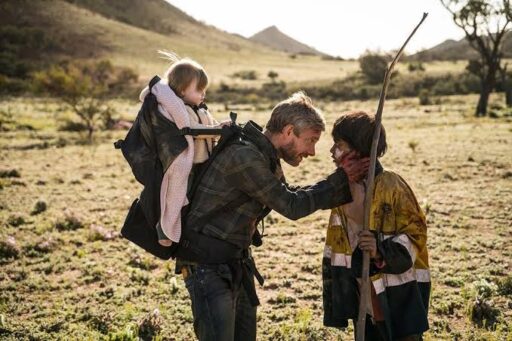
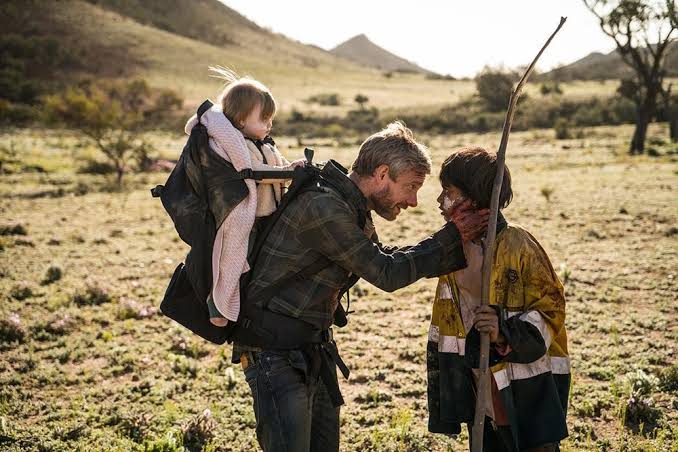
Cargo, starring Martin Freeman, arrived internationally on Netflix in 2018 after being adapted from an acclaimed Australian short film. Instead of filling its runtime with armies of zombies, elaborate weapons, and survivors fighting over the last fortified city, it builds its story around something considerably smaller.
A father has been infected.
He knows what he is going to become.
And before that happens, he needs to find someone who will protect his infant daughter.
Netflix currently describes the film as a story about a father searching the Australian wilderness for someone willing to care for his child during a terrifying pandemic. The service categorizes it as zombie horror, post-apocalyptic, dystopian, dark, and—perhaps most importantly—bittersweet.
That last description explains why Cargo feels so different.
It is technically a zombie movie. But zombies are not really what the movie is about.
Cargo Gives Its Hero a Terrifying Deadline
Martin Freeman plays Andy, who is traveling through rural Australia with his wife Kay and their baby daughter Rosie as a mysterious infection tears civilization apart.
Their attempt to remain isolated does not last.
After a sequence of increasingly disastrous events, Andy becomes infected himself. The disease gives him only a limited amount of time before he loses control and becomes one of the creatures roaming the country.
That transforms the usual zombie-movie objective.
Andy is not searching for a cure.
He is not trying to reach a military evacuation point so he can survive.
His central concern is what happens to Rosie after he can no longer safely be around her.
The film therefore becomes a countdown.
Every encounter matters because Andy has less time available to find a person he can trust with his daughter.
The setup immediately gives Cargo emotional stakes that many larger zombie movies struggle to create.
Martin Freeman Is Exactly the Kind of Actor This Story Needs
Freeman may seem like an unusual choice for a post-apocalyptic horror protagonist.
That is precisely why he works.
His best-known characters are often ordinary people forced into extraordinary situations. Whether playing Bilbo Baggins in The Hobbit films or John Watson in Sherlock, Freeman has built much of his career around characters whose humanity remains visible even when circumstances become absurdly dangerous.
Andy belongs in that tradition.
He is not presented as a trained soldier who suddenly discovers an arsenal.
He is a frightened father.
His decisions are driven by exhaustion, fear, desperation, and the knowledge that his own body is becoming dangerous.
That vulnerability gives the film much of its tension.
The audience does not need to wonder whether Andy can defeat every infected person he encounters.
It needs to wonder whether he can remain himself long enough to save Rosie.
Critics responded positively to that approach. Cargo currently holds an 88% Tomatometer score from 74 reviews on Rotten Tomatoes, whose consensus specifically praises the film’s character-driven approach, Australian setting, and Freeman’s lead performance.
For a supposedly forgotten Netflix zombie movie, that is an impressive critical record.
Australia Makes the Apocalypse Feel Completely Different
The setting may be Cargo‘s greatest visual advantage.
Most zombie stories eventually begin to resemble one another.
There are abandoned cities, dark corridors, barricaded houses, empty highways, and convenience stores that have already been looted.
Cargo moves much of its story into rural Australia.
The enormous landscape creates an unusual contradiction.
Andy frequently has huge amounts of physical space around him, yet nowhere feels safe.
The environment can appear beautiful and threatening simultaneously. Distance becomes its own obstacle because finding help means crossing enormous areas while Andy’s biological clock continues ticking.
The film’s relatively small scale works especially well here.
Rather than attempting to create the impression that viewers are watching the entire collapse of civilization, directors Ben Howling and Yolanda Ramke remain close to a handful of people trying to survive within it. The feature was adapted from their 2013 short film of the same name, with Ramke writing the screenplay for the expanded version.
The result feels more intimate than spectacular.
That is intentional.
This Isn’t Really a Movie About Killing Zombies
Someone expecting World War Z may wonder where all the action went.
Cargo is considerably slower.
Violence exists, but the movie is far more interested in grief, parenthood, trust, exploitation, and what people owe one another after normal social structures disappear.
That makes it closer in spirit to The Road than to a conventional action-heavy zombie film. A contemporary review from AVForums made the same comparison, describing Cargo as a small-scale Australian post-apocalyptic drama whose location and emotional approach distinguish it from familiar genre material.
That slower pace will not work for everyone.
Someone looking primarily for gore, elaborate zombie attacks, and nonstop survival action may find the film restrained.
But that restraint is also why Cargo has aged surprisingly well.
The zombie genre was already saturated by 2018.
Another film about heavily armed survivors shooting infected people would have had difficulty standing apart.
A story about a doomed father desperately trying to arrange his daughter’s future has a much more durable emotional hook.
The 48-Hour Idea Changes Everything
The infection in Cargo is particularly effective because it turns transformation into something approaching a terminal diagnosis.
Andy knows roughly what is coming.
That knowledge changes how the audience experiences every scene.
A conversation that would ordinarily seem calm still contains tension because time is disappearing.
A delay becomes dangerous.
A wrong decision costs more than convenience.
Even moments of temporary safety cannot truly feel safe because the greatest threat is already inside Andy.
That produces a different type of zombie horror.
Most infected stories encourage viewers to fear what is outside.
Cargo asks what someone would do if he knew he was gradually becoming the thing his child needed protection from.
That is considerably harder to solve with a weapon.
The Indigenous Storyline Gives Cargo Another Layer
The movie also incorporates Aboriginal characters and perspectives into its post-apocalyptic setting.
A young Indigenous girl named Thoomi becomes central to Andy’s journey, and the film contrasts different ways characters respond to the devastation around them.
That element gives Cargo a distinctly Australian identity rather than simply placing a generic zombie narrative against Australian scenery.
David Gulpilil, Simone Landers, Natasha Wanganeen, Anthony Hayes, Susie Porter, and Caren Pistorius appear alongside Freeman in the film’s ensemble. Netflix’s current listing highlights the broader Australian production and describes the movie as critically acclaimed.
The film is not flawless in how every theme is developed, but it clearly wants its apocalypse to mean something beyond survival mechanics.
The collapse exposes greed in some characters and community in others.
Andy has to determine which kind of person deserves his trust.
The Zombies Are Strange Without Becoming the Entire Attraction
Even the infected are handled differently.
Cargo does not spend enormous amounts of time explaining the pathogen through scientists and exposition.
Instead, viewers learn its characteristics largely through observation.
The physical deterioration is disturbing, but the movie avoids turning every infected person into an elaborate special-effects showcase.
That choice helps maintain the melancholy atmosphere.
These creatures were people.
Andy is becoming one of them.
The infection is frightening precisely because the boundary between survivor and monster is temporary.
The movie’s horror therefore comes from inevitability rather than simply surprise.
Andy cannot permanently outrun what is happening.
He can only decide what he accomplishes before it finishes.
Cargo Has Quietly Developed an Audience Years Later
The description of Cargo as a little-discussed gem is difficult to quantify, but its reputation has clearly persisted beyond its initial release.
Years after the film arrived, horror communities continued producing posts from viewers who had only recently discovered it. In one Reddit discussion, users repeatedly described the movie as underrated, emotional, and a refreshing variation on an overused genre.
That type of delayed discovery fits Cargo unusually well.
It never became the sort of Netflix phenomenon that dominates popular culture for several weeks.
It did not launch a giant franchise.
There was no Cargo 2 arriving two years later with twice as many zombies.
Instead, the movie simply remained available for viewers to stumble across.
And because its strongest element is the relationship between a father and his child rather than a fashionable special-effects gimmick, it does not feel particularly dependent on the year in which it was released.
Why Didn’t Cargo Become a Bigger Hit?
Timing probably did not help.
By 2018, zombie fatigue was real.
The Walking Dead had already spent years dominating television. World War Z, Train to Busan, 28 Days Later, Dawn of the Dead, Zombieland, and countless lower-budget productions had explored almost every obvious variation of the premise.
Another zombie movie could easily disappear into the category.
Cargo also lacks the ingredients that normally generate blockbuster attention.
Its story is intimate.
Its pace is deliberate.
Its protagonist spends more time worrying about his daughter than performing heroic action sequences.
Its Australian landscape is expansive, but the story remains small.
Those characteristics may have limited its mass appeal.
They are also what make it worth revisiting.
Cargo Understands That the Best Zombie Stories Aren’t About Zombies
The enduring strength of zombie fiction has never really been the monsters.
The infected create pressure.
What humans do under that pressure creates the story.
Cargo understands this unusually well.
Its apocalypse strips away almost everything Andy once relied upon and leaves him with one responsibility he refuses to abandon.
He cannot guarantee his own survival.
He cannot restore civilization.
He cannot even guarantee that the people he encounters will help him.
What he can do is keep moving long enough to give his daughter a chance.
That turns a familiar genre premise into something unexpectedly personal.
More than eight years after Netflix released it internationally, Cargo remains available on the platform in multiple regions, including Canada, and its 88% critical score still reflects how warmly reviewers received its character-focused approach.
There are louder zombie movies.
There are bloodier ones.
There are certainly ones with bigger budgets.
But few take such a simple question and make it feel this devastating:
If he knows he is going to become the monster, can a father use his final hours as a human to make sure his child survives him?
That is why Cargo deserves another look.