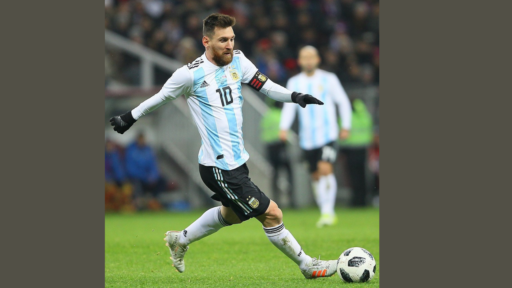
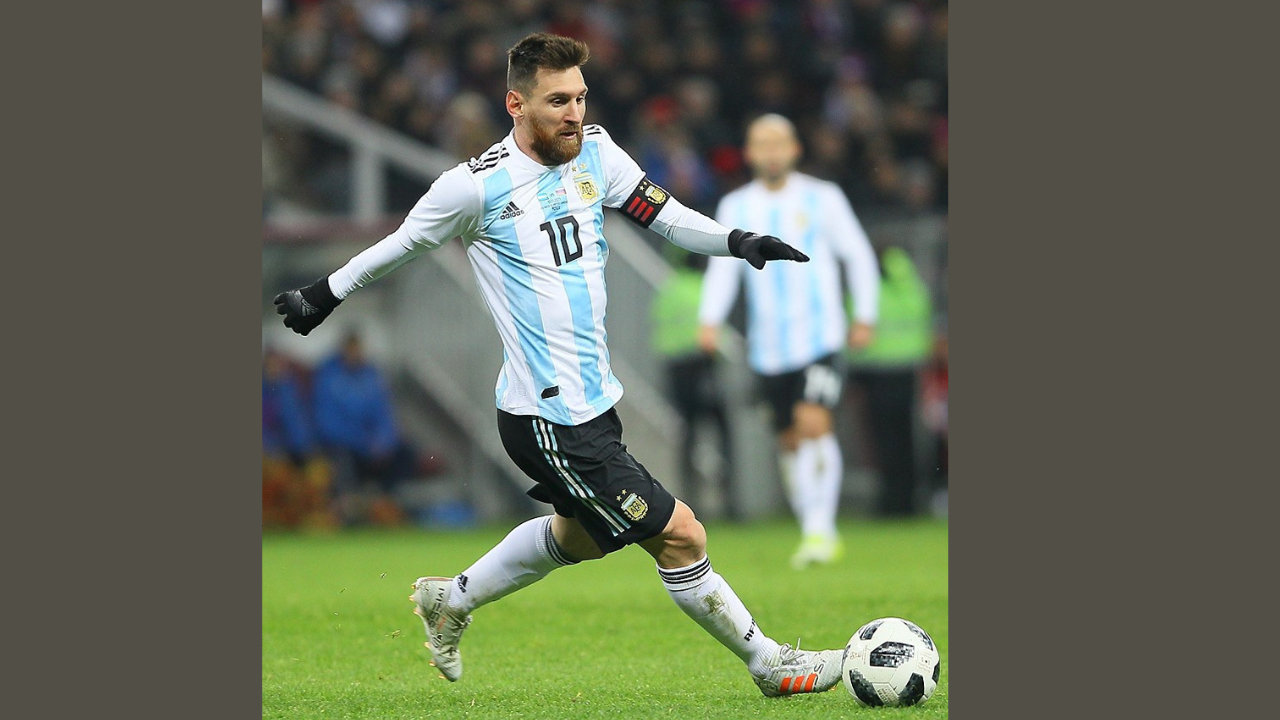

Lionel Messi delivered another night that bends World Cup history, scoring a hat trick for Argentina against Algeria to pull level with the men’s tournament goals record. The 39-year-old captain now stands alongside Miroslav Klose at the top of the all-time list, turning an ordinary group match into a landmark in the sport’s record book.
Argentina’s win over Algeria secured far more than three points, confirming that Messi remains the defining figure of this World Cup. He is still deciding games and rewriting milestones even in what many expected to be his final appearance on this stage.
How Messi’s hat trick reshaped the World Cup record book
Messi’s three goals against Algeria came in a performance that combined ruthless finishing with the sense of inevitability that has followed him for two decades. His first strike arrived early, a low finish after he drifted into space between the lines and punished Algeria’s high defensive line. The second came from the penalty spot, the result of sustained Argentine pressure that forced mistakes in the box. His third, a curled effort from the edge of the area, sealed the result and confirmed his share of the record for most goals in the men’s World Cup.
Video of the match captured how each goal built on the last, with the Argentine captain orchestrating attacks, dropping deep to link play, then arriving in the box at the decisive moment, a pattern highlighted in match footage. The hat trick did not simply pad the scoreline; it lifted him to a share of the all-time lead in World Cup goals, a mark that had belonged to Klose alone since 2014.
In reaching that total, Messi has stretched his World Cup scoring run across an unprecedented span of tournaments. Earlier in the group stage he became only the second player to score in five separate World Cups, a feat that matched Cristiano Ronaldo and was detailed when he struck early against Algeria in Argentina’s opener, as reported in coverage of his. That continuity, from his teenage breakthrough to his late thirties, has turned his World Cup career into a bridge between eras.
The significance of tying Klose’s record is not just numerical. Klose built his total across four tournaments as a classic penalty-box striker, while Messi has reached the same summit while serving as Argentina’s primary creator and finisher, a dual role that has required him to carry far more of his team’s attacking burden. Reports on his scoring record have emphasized how many of his World Cup goals have come in knockout rounds or decisive group matches, as noted in analysis of his record-tying tally.
The hat trick against Algeria also extended a run of form that began in the last World Cup, when he led Argentina to the title and collected the Golden Ball. Rather than a gentle fade, his international career has entered a second peak, with his national team now structured entirely around his strengths. That context helps explain how he can still be delivering multi-goal performances at this stage of his career.
Why this record-tying night carries extra weight right now
Messi’s latest milestone lands at a moment when his presence at this World Cup was not guaranteed. In the months leading up to the tournament, his father Jorge Messi underwent medical treatment that raised questions about whether the forward would step away from the national team to focus on family. Reporting on that period detailed how the elder Messi’s health shaped the family’s plans and how the player balanced training with visits to his father, as described in accounts of Jorge Messi’s treatment.
That backdrop adds emotional depth to what happened against Algeria. Each goal carried the weight of a player who chose to keep competing at the highest level while managing personal strain, and who has spoken repeatedly about wanting his family to see him enjoy his final years in the sport rather than simply endure them. The celebration after his third goal, when teammates surrounded him near the corner flag, looked less like a routine group-stage moment and more like a shared acknowledgment of everything that had to align for him to be on the pitch.
On the field, the record also reshapes the stakes for Argentina in this tournament. As long as Messi is healthy and productive, Argentina enter every match with an advantage that goes beyond tactics. Opponents must devote extra defenders to track his movements between midfield and attack, which opens space for others. Analysts pointed out that Algeria’s attempts to double-mark him left gaps for Argentina’s wingers and overlapping fullbacks, a pattern that helped produce the penalty that led to his second goal and was detailed in breakdowns of Argentina’s attacking shape.
The historical context also matters. By tying the men’s World Cup scoring record, Messi strengthens his case in the long-running comparison with Ronaldo and other greats. Ronaldo’s achievement of scoring in five World Cups set a benchmark for longevity, and Messi’s matching of that feat, discussed in evaluations of his five-tournament scoring streak, now sits alongside a record that Ronaldo never reached. For fans and commentators who weigh trophies, individual awards, and statistical dominance, this hat trick becomes another data point in that debate.
Beyond the individual comparison, there is the symbolic value for Argentina. The country has produced Diego Maradona and a line of attacking stars, yet no Argentine had ever claimed the men’s World Cup goals record. Messi’s climb to the top of that list, combined with the World Cup title he delivered earlier in the decade, cements his place in the national mythology in a way that feels definitive. Many supporters already saw him as the equal of Maradona; matching Klose’s total gives them another argument that he has surpassed every contemporary and most of the legends who came before.
What this means for Argentina’s campaign and Messi’s future
With the group stage win over Algeria secured, Argentina’s path through the tournament now looks far more manageable. The victory, built around Messi’s hat trick, keeps them in control of their group and avoids the kind of early slip that can complicate knockout-round seeding. Tactical analysis of the match emphasized how Argentina’s pressing and quick transitions were designed to maximize Messi’s touches in central areas, a plan that paid off repeatedly as shown in reports from the.
Looking ahead, every additional match offers Messi a chance to move clear of Klose and claim the men’s World Cup scoring record outright. Even a single goal in the remaining group fixtures or the knockout rounds would give him sole possession of the mark. That pursuit will inevitably become a storyline around Argentina, although those inside the camp insist that team objectives come first. For a player who has already lifted the trophy, the record now appears as a bonus rather than a burden.
There is also the question of whether this truly is Messi’s final World Cup. At 39, the assumption has long been that he would use this tournament as a farewell. Yet his performance level, both for club and country, has remained high enough that some observers have started to wonder if he might extend his international career further than expected. Coverage of his scoring form across five World Cups, including the early strike that set the tone against Algeria, has framed him as a player who continues to adapt his game rather than simply rely on fading physical gifts, a theme echoed in analysis of his evolving role.
For Argentina’s younger generation, sharing the field with this version of Messi offers both opportunity and pressure. Forwards and midfielders must adjust to playing alongside a teammate who still commands the ball in key moments, yet they also benefit from the attention he draws. The Algeria match showed how that dynamic can work at its best, with teammates using his movement as a reference point rather than waiting passively for him to solve every situation.