
The Great Pyramid of Giza has long been treated as a monument of the Bronze Age, a masterpiece of engineering raised about 4,500 years ago for a Fourth Dynasty pharaoh. A new and highly controversial line of research now argues that the structure could be closer to the end of the last Ice Age, potentially making it roughly 10,000 years older than standard timelines allow. If that claim holds, it would not just tweak Egyptian chronology, it would force a wholesale rethink of when complex societies first emerged.
I want to unpack what this new work actually says, how it tries to rewrite the pyramid’s biography, and why most specialists are treating it with extreme caution. The debate sits at the intersection of geology, archaeology and popular fascination, and it is unfolding just as Egypt prepares fresh revelations from inside the monument itself.
What mainstream archaeology says about the Great Pyramid’s age
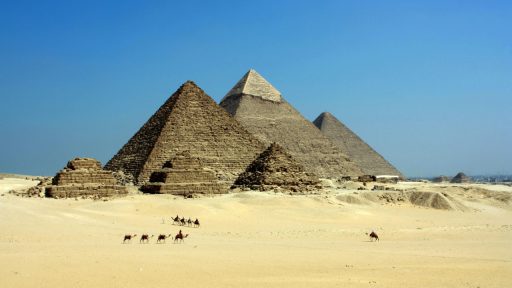
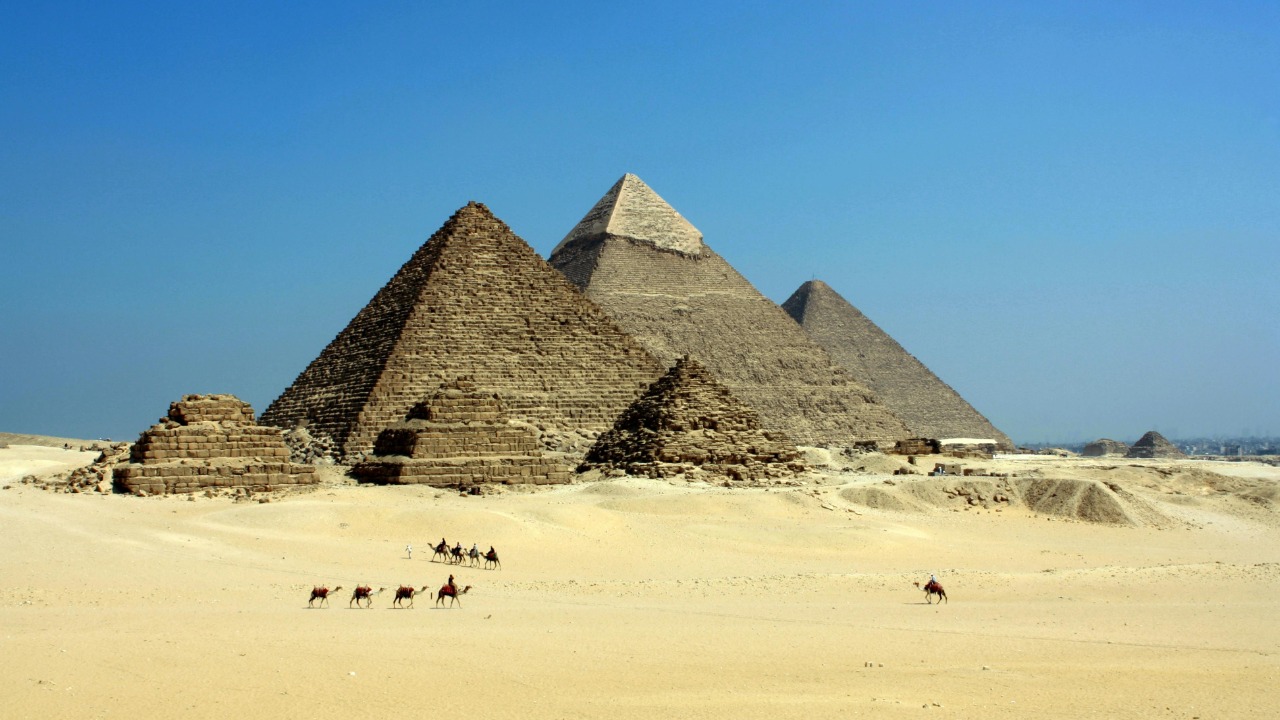
Before weighing radical new dates, it is worth recalling how conventional scholarship anchors the Great Pyramid in time. The structure dominates the Giza Plateau alongside other royal tombs and temples that form part of the wider Giza complex, a planned funerary landscape tied to Egypt’s Old Kingdom. Textual evidence, including king lists and inscriptions naming Khufu, aligns with radiocarbon tests on organic material in the mortar to place construction in the mid third millennium BCE. On that basis, the Age section for The Great Pyramid gives a figure of about 4,600 years.
Archaeologists also situate the monument within a broader building tradition. The Pyramids of Giza are described as monumental tombs that rose on the desert’s edge and were constructed some 4,500 years ago, part of a sequence that includes earlier step pyramids and later refinements in design. Accounts of How the Pyramids of Giza were built emphasize the organized labor, quarrying and transport systems that fit what is known about Old Kingdom state power. In that framework, the Great Pyramid is not an anomaly from a lost civilization, it is the apex of a well documented royal building program.
The radical new claim and the Relative Erosion Method
The new controversy centers on a non peer-reviewed report that tries to date the Great Pyramid not through texts or radiocarbon, but through the weathering of its stone. The work, discussed in detail in a piece on Could the Great, suggests that erosion patterns on the limestone blocks are more consistent with exposure stretching back to the late Paleolithic period. The author, identified in coverage as Donini, proposes that the monument’s core could predate dynastic Egypt by many millennia, with later pharaohs reusing or modifying an already ancient structure.
To reach that conclusion, the study introduces what it calls the Relative Erosion Method, or REM. This technique compares the degree of weathering on two limestone surfaces at the same location, one that has been exposed since antiquity and another whose exposure time is better constrained. By calibrating the erosion rate on the known surface, the method then extrapolates an age for the unknown one. Descriptions of the Relative Erosion Method stress that it relies on local comparisons rather than absolute dating, which is part of why many geologists are skeptical of its precision.
From 10,000 extra years to a 20,000-Year and 40,000-year debate
The headline-grabbing figure, that the Great Pyramid could be 10,000 years older than we thought, comes from applying REM to the monument’s casing and core stones. One analysis framed the result as 10,000 extra years, which would push the structure’s origins back toward the end of the last Ice Age. The same coverage notes that the study is controversial and highlights a range of limitations, from uncertainties in local climate history to the difficulty of knowing how much of the observed erosion is due to human activity rather than natural weathering.
Other commentators have pushed the envelope even further. A feature on the debate describes an Origins of the argument that speaks of a New 20,000-Year Claim for Egypt’s Great Pyram, again based on erosion and again explicitly labeled as non peer-reviewed. A separate report on Egypt’s pyramids goes even further, suggesting they could be 40,000 years old and noting that this is far more than current estimates, which place the construction of the Great Pyramid during Egypt’s Fourth Dynasty. That piece on Egypt’s pyramids underlines how far these numbers sit outside accepted chronologies.
Why most experts are unconvinced
Professional archaeologists have heard claims of extreme pyramid antiquity before, and they tend to respond with the same core objection: extraordinary ages require extraordinary evidence. On a widely read discussion of whether the Great Pyramid is older than 10,000 years old, archaeologist Matt Riggsby, who is listed with an MA in Archaeology from Boston Uni, answers the question “Are archaeologists in denial that the Great Pyramid is older than 10,000 years old?” with a blunt “No.” He argues that the monument fits comfortably into the mid third millennium BCE, supported by inscriptions, settlement patterns and the broader material culture of the Old Kingdom, as summarized in the Matt Riggsby exchange.
That same discussion, captured in a second Are thread, stresses that there is no sign of the kind of intensive construction and social organization required for a project on this scale in the Paleolithic or even early Neolithic record of the Nile Valley. In other words, to accept a 10,000 year or 20,000-Year revision, one would have to posit not only a much older pyramid, but an entire advanced civilization in Egypt that left almost no trace apart from a single stone mountain. For most specialists, that is a leap too far.
Inside the study’s own caveats and the official pushback
Even the researchers promoting the new dates acknowledge that their approach is probabilistic rather than exact. In a section explicitly labeled “Probability, Not Precision,” Donini is quoted as saying that REM is not intended to provide an exact construction date, instead it estimates a range of possible ages based on comparative erosion. That nuance is highlighted in a follow up discussion of Probability, Not Precision, which notes that the method invites further measurements and collaboration rather than claiming to settle the question. Another passage on the same work explains that the paper released in Jan is a preliminary attempt that explicitly calls for more data, as summarized in the overview of uncertainty.
Egyptian authorities, for their part, have not been shy about rejecting the most extreme timelines. The Egyptian Antiquities Ministry is reported to have refuted the claim that the Great Pyramid belongs to a vastly older, advanced civilization, a stance detailed in coverage of the Egyptian Antiquities Ministry response. The same reporting reiterates that the new 20,000-Year argument is non peer-reviewed and contrasts it with the peer-reviewed work that underpins the standard 4,600 year date. A companion analysis of the Upended claim notes that the Relative Erosion Method, while intriguing, has not yet been validated across multiple sites or by independent teams, which is the minimum threshold most scientists would expect before rewriting a cornerstone of world chronology.