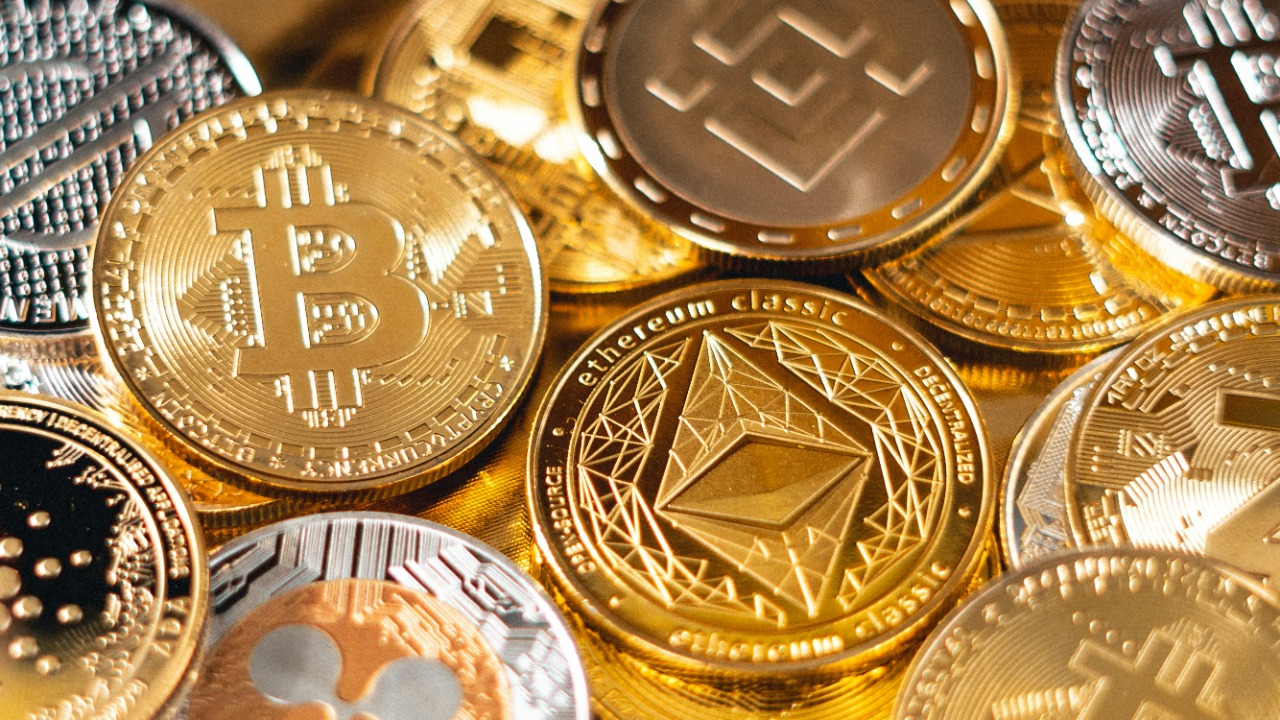

Cryptocurrency was once marketed as an alternative to the physical financial system. Now some of its most enthusiastic developers are trying to connect blockchain tokens directly to some of the oldest assets in human commerce: metals.
Gold is the obvious starting point.
But the experiment is expanding much further.
Companies are now developing or trading blockchain-based tokens linked to copper, uranium, nickel, cobalt and even metals that have not yet been mined. The idea is to give investors digital access to commodities that are normally difficult, expensive or highly regulated to trade directly. Mining companies, meanwhile, see tokenization as a possible new source of financing.
The result is an unusual collision between two worlds.
On one side are mines, warehouses, commodity traders and physical materials measured in tonnes and pounds.
On the other are digital wallets, smart contracts and blockchain networks capable of moving tokens almost instantly.
The question is whether combining them actually makes metals easier to own—or merely adds another layer of complexity.
Tokenized Gold Shows How the Model Can Work
Gold is already the most mature example.
Companies such as Tether and Paxos have issued digital tokens designed to represent ownership of physical bullion. With products such as Tether Gold and Pax Gold, a token represents a claim linked to real gold rather than a purely digital asset such as Bitcoin.
The attraction is straightforward.
Someone can potentially trade gold exposure through a crypto wallet without opening a commodity-futures account, buying a large bar or arranging private storage.
Some products also allow qualifying investors to redeem tokens for physical bullion.
Yet tokenized gold remains small compared with traditional investment vehicles. The Financial Times reports that Tether Gold and Pax Gold have market values of roughly $2.7 billion and $1.9 billion respectively, while conventional gold-backed exchange-traded funds collectively hold vastly more money.
That gap reveals an important problem.
Gold investors already have easy ways to buy gold.
A person using a brokerage account can purchase a gold ETF without learning about private keys, blockchain networks or cryptocurrency exchanges.
Tokenization therefore needs to offer something more than novelty.
Uranium Is Where Tokenization Gets More Interesting
Uranium is a very different commodity.
Retail investors cannot normally walk into a dealer and buy a few pounds of uranium oxide to keep in a cupboard.
The market is highly regulated, physical settlement is complicated and much of the industry’s trading historically takes place through long-term contracts or specialist transactions.
That makes uranium unusually suited to fractional digital ownership.
Platforms such as Uranium.io offer tokenized exposure to physical uranium through xU3O8, where digital tokens represent fractional interests associated with actual U3O8 holdings.
The physical material remains stored and regulated.
The investor trades the digital representation.
That distinction makes something previously inaccessible to many investors much easier to obtain exposure to.
The Financial Times reports that Metals.io has also issued uranium, nickel and cobalt tokens. Holders can theoretically redeem them for physical metal if they possess the necessary regulatory approvals, although no investor has yet taken physical delivery of uranium through the platform.
For most buyers, that is probably not the objective anyway.
They want the price exposure, not a radioactive shipment arriving at home.
Copper Could Become a Much Bigger Tokenization Market
Copper creates a different opportunity.
Unlike gold, copper is primarily an industrial material.
It is essential to electricity grids, renewable-energy infrastructure, electric vehicles, buildings, electronics and data centers.
That gives it strong strategic importance as electrification expands.
But direct copper investing is not particularly convenient for ordinary retail investors.
Commodity futures require specialist knowledge. Mining shares introduce company-specific risk. Holding physical copper at meaningful scale creates obvious storage and transportation problems.
A token linked directly to copper could theoretically provide simpler exposure.
This is part of what companies such as Datavault AI are exploring. The company plans to tokenize metals including copper and antimony and, unusually, wants to issue tokens against material that may still be in the ground before extraction.
That changes the nature of the investment completely.
The token would no longer represent only metal sitting safely inside a warehouse.
It could become a form of financing for the mining process itself.
Tokenizing Unmined Metal Looks More Like Project Finance
Suppose a mining company owns a deposit containing copper but needs hundreds of millions of dollars to expand extraction.
Traditional financing could come from banks, bond investors, equity markets or commodity traders.
Tokenization proposes another route.
The miner could create digital claims connected with part of the future metal production and sell those claims to investors.
The proceeds help finance extraction.
If the metal is eventually produced, qualifying holders may be able to redeem tokens against the underlying commodity or trade them earlier.
Datavault AI chief executive Nathaniel Bradley described the concept to the Financial Times as being somewhat comparable to a future, while arguing that blockchain can remove layers of administrative infrastructure such as transfer agents and conventional settlement procedures.
That sounds efficient.
It also introduces much greater risk than tokenizing metal that already exists.
A Token Cannot Make Mining Risk Disappear
If a token represents a gold bar in a vault, proving that the gold exists is conceptually straightforward.
An independent auditor can inspect it.
A custodian can verify storage.
The token supply can be compared with the quantity of metal held.
An unmined deposit is different.
The metal might be underground, but turning a geological resource into a commercially saleable commodity requires permits, equipment, financing, workers, processing infrastructure and years of execution.
Commodity prices can fall.
Costs can rise.
Governments can change regulations.
A mine can experience technical problems.
Estimated reserves can change.
The token may operate perfectly on its blockchain while the underlying mining project fails.
That is one reason specialists interviewed by the Financial Times question whether ordinary retail investors will understand the full complexity of the mining value chain they are effectively financing.
Blockchain can simplify settlement.
It cannot simplify geology.
Blue Gold Shows How Complicated the Underlying Asset Can Become
Gold miner Blue Gold offers another example of the tension.
The Nasdaq-listed company has promoted a “mine-to-wallet” model and issued thousands of digital tokens as part of its financing strategy.
Yet its underlying mining business has faced difficulties, including a dispute with the Ghanaian government after the licence for its only mine was revoked in 2024.
This illustrates why investors must separate two questions.
Is the token technically legitimate?
And is the asset behind the token economically reliable?
A perfectly functioning blockchain cannot guarantee that a mine will receive permits, maintain production or generate profits.
Tokenization changes how ownership claims are represented.
It does not transform weak assets into strong ones.
Why Crypto Investors Are Interested in Real Metals
The enthusiasm makes more sense when viewed from the crypto side.
Crypto markets have matured beyond speculative tokens whose value depends almost entirely on demand from other traders.
One of the industry’s biggest themes is now real-world assets, commonly shortened to RWAs.
The idea is to bring assets such as government bonds, private credit, real estate and commodities onto blockchain systems.
For crypto investors, metals offer something attractive: exposure to an asset whose value does not depend entirely on the crypto ecosystem.
Uranium prices respond to nuclear-power demand.
Copper responds to industrial production and electrification.
Gold often responds to monetary conditions and investor demand for safe assets.
That creates diversification.
The Financial Times reports that Metals.io has attracted both crypto-native capital seeking exposure to real-world assets and institutional investors, although the platform remains relatively small, with cumulative trading of around $24 million and approximately 9,000 token holders since late 2024.
That is real activity.
It is not yet a commodity-market revolution.
Physical Redemption Is More Complicated Than the Token Makes It Look
One of blockchain’s strongest selling points is simplicity.
A token can change wallets in seconds.
Physical metal cannot.
Copper may need transportation.
Gold must be stored securely.
Nickel quality can vary.
Uranium is heavily regulated.
That means the token may move instantly while the underlying commodity remains tied to warehouses, custodians, regulations and delivery requirements.
Industrial metals create an additional problem: fungibility.
An ounce of investment-grade gold is highly standardized.
A tonne of an industrial metal may differ by form, grade, location or contractual specification.
Those differences matter to actual users of the commodity.
Token designers therefore have to make sure a supposedly interchangeable digital asset is genuinely tied to a sufficiently standardized physical product.
Otherwise, blockchain simplicity can obscure real-world complexity.
Regulation May Decide Whether the Market Becomes Mainstream
Tokenized metals also sit at the intersection of commodities law, securities regulation and crypto rules.
That can make classification difficult.
A simple token representing allocated gold may be treated differently from a token financing an undeveloped mine.
The second product begins to resemble an investment security far more closely.
Regulators are increasingly addressing these questions as tokenization expands.
The United Kingdom, for example, is developing a framework around digital gold as it attempts to modernize financial markets while preserving London’s importance in global bullion trading.
Regulatory clarity could help the industry.
Institutional investors are unlikely to commit significant capital if they are uncertain about custody rights, bankruptcy protection, redemption procedures or whether a particular token complies with securities laws.
Crypto technology can move faster than regulation.
Commodity ownership cannot always afford to.
The Blockchain Part May Ultimately Become the Least Interesting Part
The most intriguing possibility is that tokenization eventually becomes ordinary infrastructure.
An investor may stop thinking about whether an asset is “on-chain” in the same way he no longer thinks deeply about the electronic systems that settle a conventional stock trade.
He may simply care that he can purchase fractional exposure to uranium, gold or copper easily and know that the underlying asset is properly verified.
If that happens, the winning platforms may not be those with the most exciting crypto branding.
They may be the ones with the best custody, audits, regulation and connection to real commodity markets.
That is the irony of the metals-crypto fusion.
The more successful tokenized commodities become, the more important traditional commodity disciplines become too.
Warehouses matter.
Auditors matter.
Mining licences matter.
Custodians matter.
Geology matters.
The blockchain is only one layer.
Digital Metals Could Become Useful Without Replacing ETFs or Futures
Tokenized metals do not need to destroy the existing commodity market to succeed.
Gold ETFs remain easier for many traditional investors.
Futures will remain essential for producers, traders and sophisticated financial institutions.
Physical ownership will still appeal to people who specifically want possession of bullion.
Tokens can occupy another niche.
They can provide fractional ownership, 24-hour digital trading, integration with crypto portfolios and potentially easier access to commodities traditionally unavailable to ordinary investors.
Uranium may be the clearest example.
Buying shares in a uranium miner is not the same as owning exposure to uranium itself.
A properly structured token linked to physical U3O8 can reduce that difference.
The same logic may eventually work for other specialized commodities.
Crypto Is Trying to Become a Bridge to the Physical Economy
The earliest cryptocurrency narrative was about escaping traditional assets.
The latest one increasingly involves putting traditional assets onto blockchain rails.
That is a major change.
Gold, copper, uranium, nickel and cobalt have value because someone ultimately needs or wants the physical material.
A token does not create that value.
It creates a new way of packaging ownership around it.
If the structure is transparent, properly regulated and genuinely backed, that packaging could expand access and improve settlement.
If it is poorly designed, investors could discover that a digital token is only as trustworthy as the mine, warehouse and legal contract sitting behind it.
That is why this new market is more interesting than simply “crypto meets metals.”
It represents a test of whether blockchain can finally become invisible financial infrastructure connecting digital capital with real physical assets.
And if it succeeds, the next generation of crypto investors may not just hold Bitcoin in their wallets.
They may hold fractions of gold bars, copper inventories and even drums of uranium stored thousands of miles away.