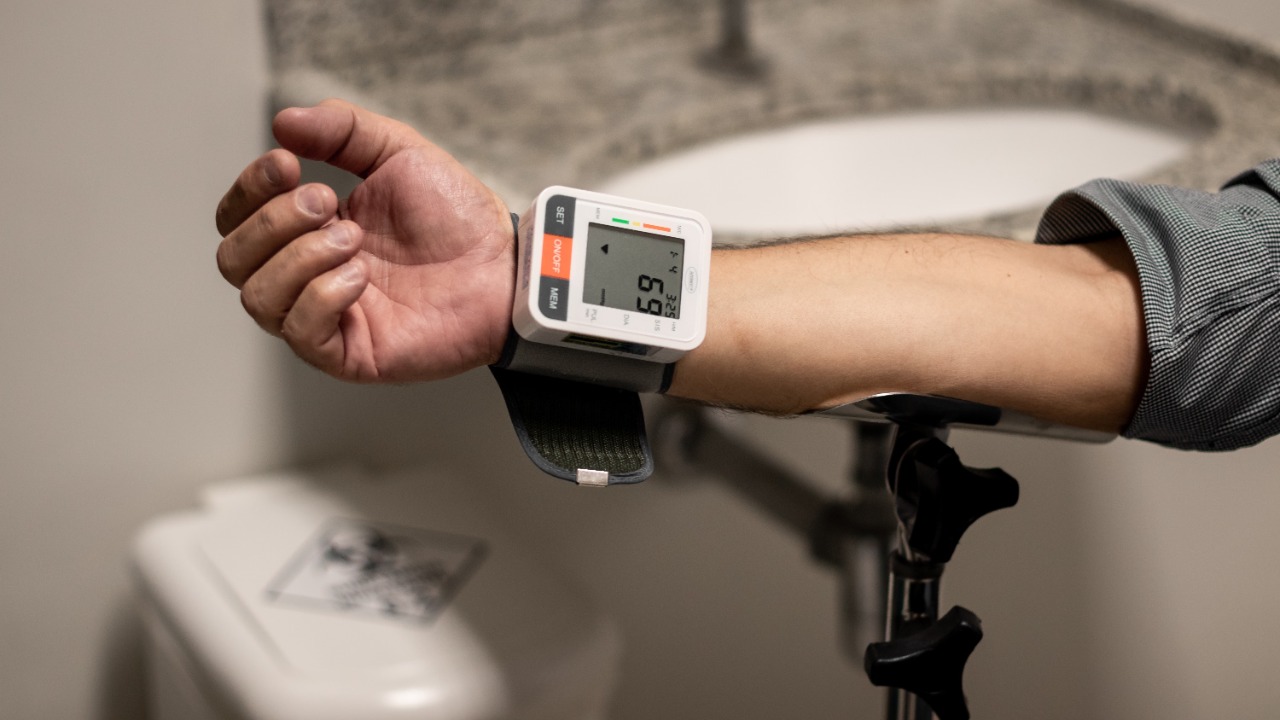

A routine blood-pressure check at the eye doctor uncovered a hidden medical crisis among adults with diabetes, showing that many patients who arrive for vision care may also be carrying dangerous cardiovascular risk. In a new study of adults with type 1 or type 2 diabetes visiting an ophthalmology clinic, about one in 10 had blood pressure in the hypertensive crisis range.
The study, published in JAMA Ophthalmology, measured blood pressure in 172 adults with diabetes who were already attending University of Virginia eye clinics. The findings were striking: only 8.1% had normal blood pressure, roughly half had stage 2 hypertension, and 10.5% had readings in the hypertensive crisis range.
That means a quick check before an eye exam caught a potentially dangerous problem in patients who may not have realized how high their blood pressure had become. For people with diabetes, this matters because high blood pressure does not only threaten the heart. It can also damage the kidneys, brain, blood vessels, and eyes.
Why the Eye Doctor Became a Warning System
People with diabetes are already encouraged to get regular eye exams because diabetes can damage the small blood vessels in the retina. This condition, called diabetic retinopathy, can lead to vision loss if it is not caught and treated early.
That makes the eye clinic a natural place to spot broader vascular problems. The retina is one of the few places where doctors can directly see small blood vessels without surgery. If diabetes and high blood pressure are damaging the body’s circulation, signs may appear in the eyes.
The new research suggests that ophthalmology clinics may also be useful places to catch uncontrolled hypertension. The eye appointment becomes more than a vision check. It becomes a window into systemic vascular health.
What “Hypertensive Crisis” Means
A hypertensive crisis usually refers to a blood pressure reading of 180/120 mm Hg or higher. At that level, blood pressure can become dangerous enough to require urgent medical evaluation, especially if symptoms or organ damage are present.
The American Heart Association advises people to seek emergency care if very high blood pressure comes with symptoms such as chest pain, shortness of breath, back pain, numbness, weakness, vision changes, or difficulty speaking. Without proper attention, extremely high blood pressure can raise the risk of stroke, heart attack, kidney damage, and other emergencies.
In the eye-clinic study, 10.5% of the diabetic patients had blood pressure readings in that crisis range. Not every high reading in a clinic automatically means a patient is having an emergency, because anxiety, pain, caffeine, recent activity, or measurement conditions can temporarily raise readings. But numbers that high should never be ignored.
Why Diabetes and High Blood Pressure Are a Dangerous Pair
Diabetes and hypertension often travel together. Diabetes damages blood vessels through high blood sugar, inflammation, oxidative stress, and changes in circulation. High blood pressure adds more force against vessel walls, making damage progress faster.
The Centers for Disease Control and Prevention warns that people with diabetes are more likely to develop heart disease and that high blood pressure is one of the major risk factors that makes cardiovascular complications more likely.
This combination can harm the heart, brain, kidneys, legs, and eyes. A patient may come to the eye doctor worried about blurry vision or diabetic retinopathy, but the same blood-vessel disease may also be raising the risk of stroke or heart attack.
Why the Findings Were So Surprising
The study did not find a small number of outliers. It found uncontrolled blood pressure across much of the group. Roughly half of the patients had stage 2 hypertension, defined under 2017 heart guidelines as systolic pressure of 140 mm Hg or higher or diastolic pressure of 90 mm Hg or higher.
Even among patients who said they believed their hypertension was well controlled, 52% still had stage 2 hypertension. Another 8% of that “controlled” group had readings in the hypertensive crisis range.
This gap between perception and reality is one of the study’s most important messages. Many patients thought their blood pressure was fine. The eye-clinic measurement told a different story.
Why Blood Pressure Can Be “Hidden”
High blood pressure is often called a silent condition because many people have no obvious symptoms. A person may feel normal while their arteries, heart, kidneys, brain, and eyes are under strain.
That silence is especially dangerous in diabetes. Patients may already be juggling blood sugar, medications, diet, kidney labs, neuropathy, cholesterol, eye exams, and foot care. Blood pressure can become one more number that is assumed to be under control until it is measured.
The eye-clinic study shows that hidden hypertension can remain hidden even in patients already connected to medical care. That is why opportunistic screening can be valuable.
Why Eye Clinics Usually Do Not Focus on Blood Pressure
Ophthalmology clinics are built around eye care. Their workflow focuses on vision tests, eye pressure, dilation, retinal imaging, injections, lasers, cataract evaluations, glaucoma checks, and surgical planning. Blood pressure has not always been part of routine eye visits.
But people with diabetes often see eye doctors regularly, especially if they have diabetic retinopathy or diabetic macular edema. That creates repeated opportunities to check blood pressure.
The new study suggests that adding a simple blood-pressure measurement may identify patients who need urgent follow-up with primary care or cardiology. It does not turn the eye doctor into a hypertension specialist. It turns the eye visit into a safety net.
Patients Accepted the Screening
One concern with adding blood-pressure checks to eye visits is whether patients would find it strange, unnecessary, or inconvenient. The study found the opposite. About 93% of patients considered blood-pressure screening at the eye doctor reasonable and acceptable.
That matters because screening programs only work if people are willing to participate. In this case, most patients understood the connection between blood pressure and eye health. About 74% already knew that high blood pressure can damage vision.
For patients, the logic is simple. If diabetes and blood pressure both affect the eyes, checking blood pressure at an eye appointment makes sense.
Immediate Action Was Often Needed
The blood-pressure readings did not simply go into a chart. They changed care. In the study, 59.9% of patients were advised to contact their primary care provider. Another 11.6% needed follow-up within one to two days, and one patient was referred to the emergency department.
That shows why the screening mattered. It did not only generate data. It identified people who needed medical attention.
For patients with diabetes, this kind of early warning can prevent serious complications. A blood-pressure crisis caught in an eye clinic may lead to medication adjustment, urgent evaluation, home monitoring, or emergency care before a stroke or heart attack occurs.
Why One Reading Is Not Always the Final Diagnosis
A single high blood-pressure reading should be taken seriously, but it is not always enough to diagnose long-term hypertension or decide a full treatment plan. Blood pressure can rise temporarily because of stress, pain, caffeine, exercise, missed medication, poor sleep, or white-coat effect.
That is why follow-up matters. A high reading at the eye doctor should usually lead to repeat measurements, home monitoring, medication review, or primary-care follow-up. If the reading is extremely high or comes with symptoms, urgent care may be needed.
The point is not that ophthalmology clinics should manage every case. The point is that they can catch dangerous readings and connect patients to the right next step.
Why Home Monitoring Is Important
Home blood-pressure monitoring can help patients and doctors understand whether clinic readings reflect everyday blood pressure. It can also reveal masked hypertension, where clinic readings look normal but home readings are high.
The American Heart Association recommends using a validated upper-arm cuff, measuring at consistent times, sitting quietly before readings, and sharing results with a healthcare professional.
For people with diabetes, home monitoring can be especially useful because blood pressure targets are often part of long-term heart, kidney, and eye protection. A patient who checks only at occasional doctor visits may miss patterns that require treatment changes.
How High Blood Pressure Damages the Eyes
High blood pressure can damage tiny retinal blood vessels. It can cause narrowing, leakage, bleeding, swelling, and changes in blood flow. In people with diabetes, those vessels are already vulnerable.
Diabetic retinopathy happens when high blood sugar damages retinal vessels. High blood pressure can worsen this damage and increase the risk of diabetic macular edema, a swelling of the central retina that can blur vision.
The National Eye Institute explains that diabetic retinopathy is a leading cause of vision loss and that controlling blood sugar, blood pressure, and cholesterol can reduce the risk of vision problems.
That is why a blood-pressure check at the eye doctor is not random. It is directly connected to eye outcomes.
Why This Could Change Eye-Care Workflow
If more clinics adopt blood-pressure screening for patients with diabetes, it could add only a few minutes to the visit while creating an important health checkpoint. Clinic staff could measure blood pressure before dilation, document results, repeat high readings after rest, and give patients clear follow-up instructions.
The workflow would need rules. Clinics would need to know when to repeat a reading, when to notify the ophthalmologist, when to call a primary-care provider, when to advise urgent follow-up, and when to send someone to emergency care.
This kind of protocol matters because a screening program should not simply produce alarming numbers. It should produce safe, consistent action.
Why Retina Clinics Are Especially Important
Retina clinics see many patients with diabetic eye disease, including diabetic retinopathy and diabetic macular edema. These patients are often at higher vascular risk than the general population because the eye findings already show that diabetes is affecting small blood vessels.
That makes retina visits a high-yield opportunity for blood-pressure screening. A person receiving eye injections or retinal imaging may also need better blood-pressure control to protect vision and reduce systemic risk.
In that sense, the retina clinic can become a bridge between eye care and whole-body vascular care.
Why Primary Care Still Matters Most
Eye clinics can catch high blood pressure, but long-term treatment belongs with primary-care doctors, cardiologists, endocrinologists, nephrologists, or other clinicians managing the patient’s overall health.
Treatment may involve medication changes, lifestyle counseling, kidney testing, cholesterol management, sleep apnea evaluation, weight management, smoking cessation, and diabetes control. Patients may also need help with medication access, side effects, home monitors, and follow-up visits.
The eye doctor can raise the alarm. The larger healthcare team must help lower the risk.
What Diabetic Patients Should Do Before Eye Visits
Patients with diabetes should know their recent blood pressure, blood sugar control, medications, and kidney status before eye visits when possible. They should bring a list of medications, including blood-pressure drugs, diabetes medicines, eye drops, supplements, and over-the-counter products.
If a clinic offers blood-pressure screening, patients should not treat it as an unrelated extra. It may reveal something important. If the reading is high, they should ask what level was measured, whether it should be repeated, and what follow-up is recommended.
Patients should also tell the clinic if they have symptoms such as chest pain, shortness of breath, severe headache, weakness, confusion, or vision changes. These symptoms can change how urgently high blood pressure should be handled.
Why Medication “Control” Can Slip
Many patients with hypertension take medication but still have high readings. Control can slip for many reasons. Doses may be too low. A medicine may not last all day. A patient may miss doses. Side effects may lead to skipped medication. Other drugs, pain, sleep apnea, kidney disease, high salt intake, weight gain, stress, or alcohol can raise blood pressure.
Diabetes can add complexity because kidney disease and vascular stiffness can make hypertension harder to control. That is why a patient who was controlled last year may not be controlled now.
The study’s finding that many patients believed their blood pressure was controlled but had stage 2 readings is a reminder that hypertension management requires repeated measurement, not assumption.
Why Eye Doctors May Save More Than Vision
Eye doctors already help prevent blindness from diabetic retinopathy, glaucoma, macular degeneration, and other conditions. But in patients with diabetes, they may also be positioned to identify broader health danger.
A blood-pressure reading takes little time, costs little, and can catch a major risk factor for stroke, heart attack, kidney failure, and vision loss. If clinics build clear referral pathways, an eye visit could become a point of prevention for whole-body disease.
This is not about adding unnecessary testing. It is about using an existing healthcare touchpoint more intelligently.
What the Study Does Not Prove
The study was a prospective case series at one academic eye-care setting, and it included 172 adults with diabetes. That means the findings may not apply perfectly to every clinic or every diabetic population. Patients attending retina or ophthalmology clinics may have more complications than people with diabetes who are not in specialty eye care.
The study also measured clinic blood pressure, which can be affected by temporary factors. It did not prove that eye-clinic screening reduces strokes, heart attacks, kidney failure, or blindness over time. Larger studies would be needed to show those outcomes.
Still, the findings are strong enough to suggest that routine screening is feasible and may catch serious hidden risk.
Why the Finding Should Not Be Ignored
Even with limitations, the results are difficult to dismiss. When only 8.1% of diabetic patients have normal blood pressure and 10.5% fall into a hypertensive crisis range, clinics are seeing a major unmet need.
The study points to a practical solution. The eye clinic is already seeing these patients. The blood-pressure cuff is simple. The follow-up pathways can be built. The potential benefit is large.
For a condition that is often silent until it causes damage, more measurement can mean more prevention.
Final Takeaway
A blood-pressure check at the eye doctor uncovered dangerous hidden hypertension in adults with diabetes. In a JAMA Ophthalmology study of 172 diabetic patients visiting eye clinics, only 8.1% had normal blood pressure, about half had stage 2 hypertension, and 10.5% had readings in the hypertensive crisis range.
The finding matters because diabetes and high blood pressure together can damage the eyes, kidneys, heart, brain, and blood vessels. Many patients believed their blood pressure was controlled, but the clinic readings showed otherwise. Most patients also accepted blood-pressure screening as a reasonable part of eye care.
The study does not mean one eye-clinic reading is the final diagnosis, and it does not replace primary care. But it shows that a simple cuff at the eye doctor could catch a silent crisis early, especially in diabetic patients already at high risk for vision loss and cardiovascular disease.