
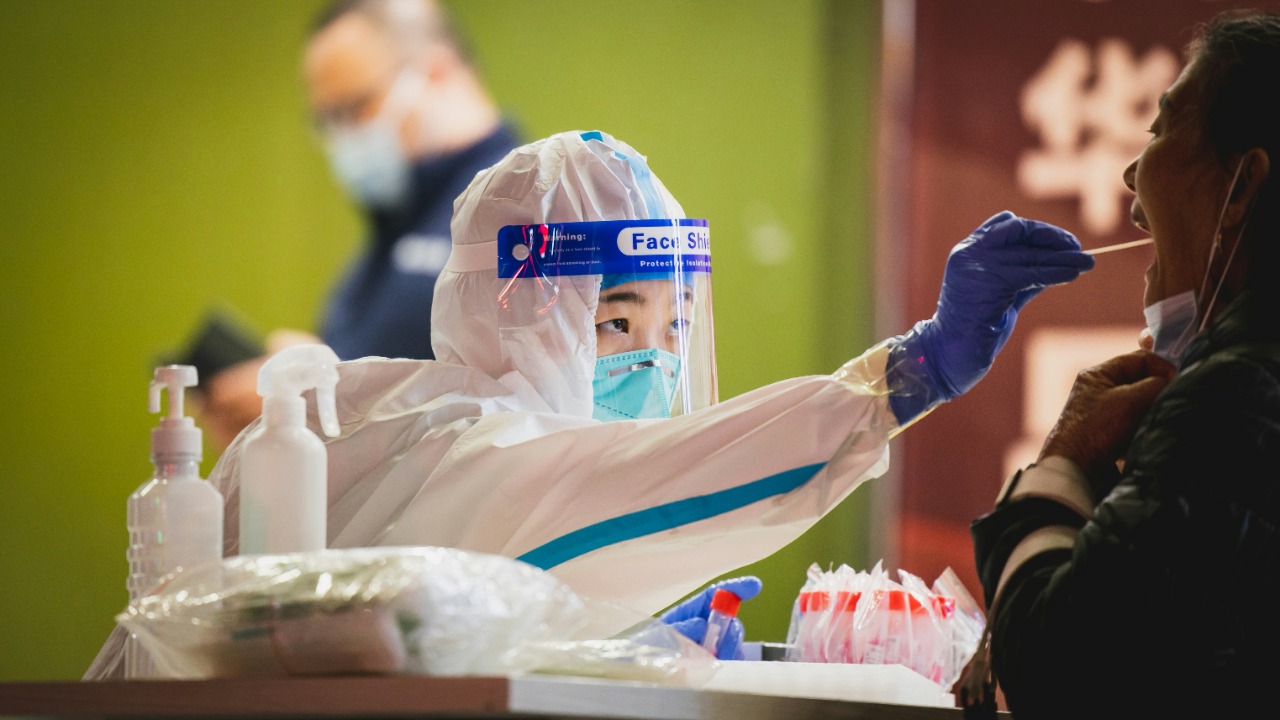

COVID-19 activity is rising again across China, with the virus recently overtaking influenza as the most frequently detected respiratory pathogen among patients attending sentinel outpatient clinics.
During the week of July 13 to 19, 2026, 16.3 percent of respiratory samples collected from people with influenza-like illness tested positive for SARS-CoV-2. That was 4.3 percentage points higher than the previous week and above the 12.6 percent positivity recorded for influenza. China’s health authorities described national COVID-19 activity as being at a moderate transmission level.
The increase deserves attention, especially among older adults and people with underlying medical conditions. However, the available evidence does not currently suggest that China is facing a return to the severe nationwide crisis seen after zero-COVID restrictions ended in late 2022.
The rise appears to be another periodic wave caused by declining population immunity, widespread circulation of the NB.1.8.1 Omicron lineage and social conditions that allow the virus to spread efficiently during summer.
What China’s Latest COVID Numbers Actually Show
China no longer attempts to identify every COVID-19 infection through population-wide testing. The most useful indicators now come from hospital reports, fever-clinic attendance, laboratory positivity rates and genomic surveillance.
The latest China CDC respiratory surveillance report found that COVID-19 was the leading pathogen among outpatient influenza-like illnesses during epidemiological week 29. The 16.3 percent positivity rate does not mean that 16.3 percent of China’s population had COVID-19. It means that roughly one in six respiratory samples collected from a specific group of symptomatic clinic patients tested positive.
Among hospitalised patients with severe acute respiratory infections, SARS-CoV-2 positivity stood at 5.9 percent. That figure was one percentage point lower than the previous week, an important sign that the increase in outpatient infections had not yet been matched by a similar rise in this particular severe-disease indicator.
China officially recorded 79,000 confirmed infections during June, including 130 severe cases and one reported death involving a patient who also had an underlying illness. Fever-clinic attendance increased from approximately 58,000 visits on June 1 to 65,000 on June 30.
These totals almost certainly do not represent every infection because many people with mild symptoms do not seek medical care or receive a laboratory test. The trends are therefore more informative than the absolute number of reported cases.
The Wave Followed Eight Months of Relatively Low Activity
China CDC’s July public-health risk assessment states that the country experienced an eight-month interval of relatively low COVID-19 activity before infections began increasing in late May. By mid-June, transmission had returned to what officials described as a low epidemic level and continued climbing into July.
A long period of limited circulation can create the conditions for a new wave. Protection against infection acquired through earlier illness or vaccination decreases over time. That does not mean immune protection suddenly disappears, but a larger proportion of the population gradually becomes susceptible to reinfection.
Once a transmissible variant begins circulating among people whose last infection or vaccine dose occurred many months earlier, cases can rise quickly. Previous immune exposure generally continues to provide better protection against severe disease than against becoming infected, which helps explain why mild cases can increase without immediately producing an equivalent rise in deaths.
NB.1.8.1 Is Driving Most Infections
The dominant lineage behind the current rise is NB.1.8.1 and its related sublineages.
During June, China sequenced 3,741 locally acquired cases, all of which belonged to the Omicron family. NB.1.8.1 and its descendants accounted for more than 95 percent of sequences in each of the final four reporting weeks of the month. China CDC said it had found no new variant presenting an additional public-health risk.
NB.1.8.1 is not a completely new virus. It is a descendant of the wider JN.1 Omicron family and has circulated internationally since 2025. Certain mutations may help it bind efficiently to human cells and evade some existing antibody protection, giving it an advantage when competing against other lineages.
The World Health Organization’s NB.1.8.1 risk evaluation found no evidence that the lineage caused more severe illness than other variants circulating at the time. WHO also expected available vaccines to continue protecting against symptomatic and severe disease, although protection can vary according to the vaccine, time since vaccination and an individual’s health.
The variant’s ability to spread and partially bypass infection-blocking antibodies is therefore more relevant to the current wave than any demonstrated increase in virulence.
Why COVID Is Spreading During the Summer
COVID-19 does not follow the same predictable winter pattern as many traditional respiratory infections.
Cold weather can support transmission because people spend more time together indoors with limited ventilation. Similar conditions can develop during hot summers when people remain in air-conditioned homes, offices, restaurants, shopping centres and public transportation.
Summer holidays also increase domestic travel and social contact. Large numbers of people moving between cities can introduce the virus into communities where population immunity has declined.
Experts quoted in recent reporting have said that the conditions supporting COVID-19 transmission in summer and winter are becoming increasingly similar. Unlike seasonal influenza, SARS-CoV-2 has repeatedly produced waves during different parts of the year, particularly when a more competitive lineage emerges or immunity has had time to decline.
Is the Spike Something to Worry About?
The wave is a reason for caution, but current data do not support panic.
Most reported patients have experienced mild illness, and no unusually dangerous variant has been detected. China’s official risk assessment also found that the country recorded approximately 188,000 confirmed cases during the first half of 2026, which was 82.1 percent lower than the number reported during the same period in 2025.
The comparison shows that infections are rising from a relatively low starting point. A sharp percentage increase can look alarming while the overall burden remains considerably below an earlier wave.
The main indicators to watch are not simply outpatient test positivity or online reports of people becoming sick. Hospital admissions, severe cases, intensive-care demand, deaths and changes in the virus’s genetic characteristics provide a clearer picture of whether the wave is becoming more dangerous.
Those indicators can lag behind infections by several weeks. Continued monitoring is therefore necessary before concluding that the wave has peaked or that it will remain mild.
Some People Face a Higher Risk
COVID-19 does not affect everyone equally. Older adults, people with weakened immune systems and those living with chronic heart, lung, kidney or metabolic conditions remain more likely to develop serious complications.
China CDC has advised vulnerable people to use masks in hospitals, crowded public spaces and public transport. Its latest guidance also recommends ventilation, hand hygiene, avoiding close contact while symptomatic and receiving relevant vaccines according to local recommendations.
A high-risk person who develops compatible symptoms may benefit from testing and prompt medical advice because antiviral treatment is generally most useful when started early. Anyone experiencing difficulty breathing, persistent chest pain, confusion or another serious deterioration should seek urgent medical care rather than relying only on home treatment.
People travelling to China do not currently need to assume that the country is facing an exceptional new health emergency. Sensible precautions in crowded indoor environments can nevertheless reduce the likelihood of infection, particularly during the present rise.
The Situation Could Change
China’s surveillance data contain limitations. Testing behaviour can change, many mild infections are never confirmed and official case reports cannot provide a complete count of community transmission.
However, several independent indicators are pointing in the same direction. Fever-clinic attendance increased during June, outpatient COVID-19 positivity rose for several consecutive weeks and SARS-CoV-2 became the most commonly detected respiratory pathogen in the latest sentinel report.
For now, the most likely explanation is a periodic endemic wave involving NB.1.8.1, declining immunity and increased indoor and travel-related contact. There is no current evidence of a novel pathogen or a variant causing unusually severe disease.
The wave should therefore be treated seriously without being mistaken for a return to the earliest stages of the pandemic. For most healthy people, it is likely to mean another period of increased infections and generally mild illness. For vulnerable groups, it is a reminder that COVID-19 continues to carry meaningful risks and that vaccination, masking in high-risk settings and early treatment still matter.