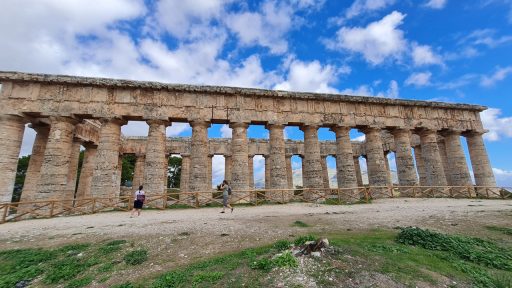
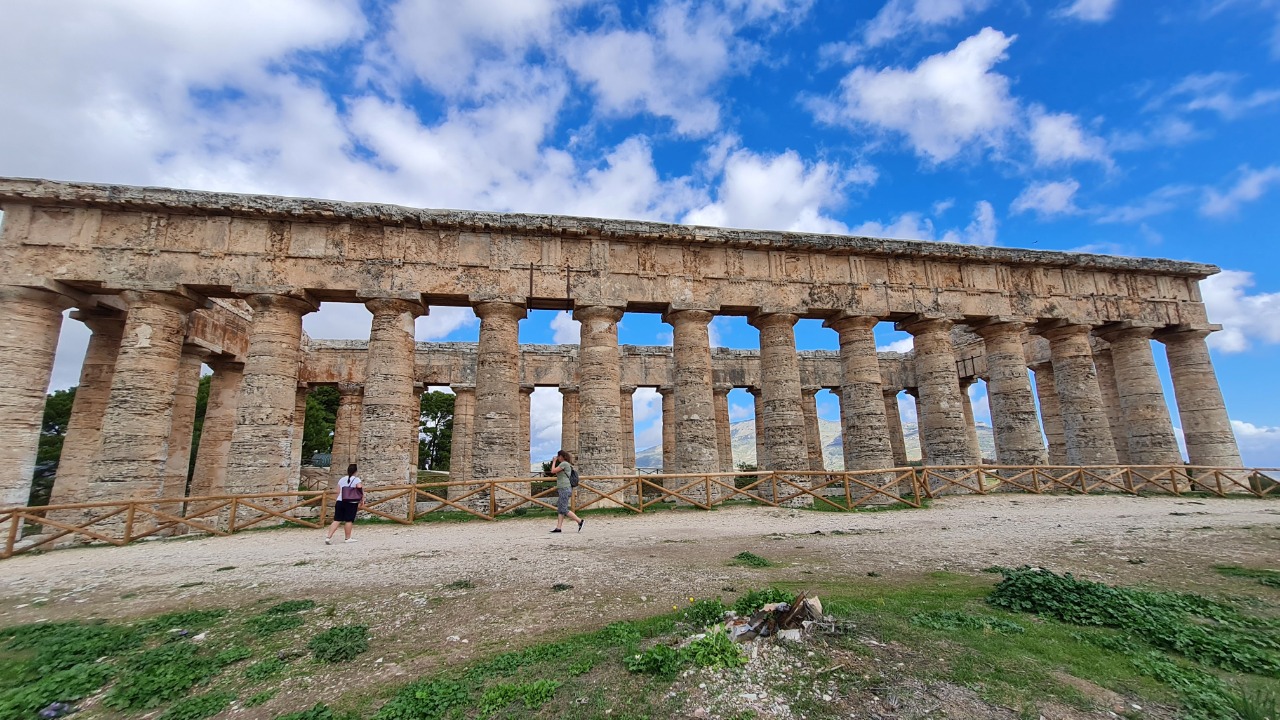

A newly uncovered sanctuary on a Greek island has stunned researchers, not only because the structure is around 2,000-year-old, but because its inner rooms were still crowded with offerings of gold, jewels and finely worked ritual objects. The discovery gives an unusually intimate look at how worshippers moved through a sacred landscape, leaving behind valuables that somehow escaped looters and centuries of rebuilding. For archaeologists, it is a rare chance to walk into an ancient Greek temple that still feels busy with the gifts and anxieties of its last visitors.
What makes this find even more striking is how it slots into a wider pattern of spectacular temple and sanctuary discoveries across the eastern Mediterranean. From other Greek islands to the deserts of Israel and the submerged ruins of Egypt, excavations are revealing that sacred spaces were not austere stone shells, but densely furnished environments where wealth, trade and belief converged.
The 2,000-year-old sanctuary on Evia
The newly reported temple stands on the Greek island of Evia, where excavations have exposed a sanctuary complex whose core building dates to around 2,000-year-old and was still in use when the Roman world was reshaping the Mediterranean. Archaeologists describe storerooms and cult rooms packed with valuables, including gold ornaments, gemstones and finely crafted ritual vessels, all preserved beneath later collapse. According to the Greek Ministry of Culture, the density of offerings and the preservation of architectural details make this one of the most informative sacred sites of the Hellenistic and early Roman eras in Greek island archaeology.
Reports on the Evia project emphasize that the temple was not an isolated shrine, but part of a broader sacred precinct that drew pilgrims from across Ancient Greek communities. Excavators have linked the discovery to a wider campaign of research on the island, which has already revealed altars, processional routes and ancillary buildings that framed the main cult structure. In parallel coverage, the same complex is described as a 2000-year-old temple filled with gold and jewels, a description that underlines how unusually rich the deposit is even by the standards of Greek sanctuaries in Greece.
Gold, jewels and the choreography of worship
What emerges from the Evia reports is not just a list of treasures, but a sense of how worship unfolded inside the sanctuary. Excavators describe clusters of offerings around specific platforms and low stone tables that were likely used as altars, suggesting that worshippers moved through a carefully choreographed sequence of spaces before depositing their gifts. Accounts of the dig note that some of these stone features were probably reused or reconfigured over time, yet the pattern of valuables around them remained consistent, which hints at a stable ritual script that endured even as the architecture shifted.
Coverage of the same excavation underlines that the hoard of valuables was not limited to a single chamber, but spread across several rooms that functioned as cult spaces and treasuries. One report on the project, framed under the heading Ancient Greek Temple, highlights how the distribution of Gold Jewels and other offerings helps researchers reconstruct the flow of processions and the hierarchy of sacred zones. Another account, titled Archaeologists Just Discovered, stresses that the density of finds in some rooms suggests restricted access, perhaps limited to priests or elite donors whose gifts were meant to remain close to the cult statue.
Other Greek temples rewriting the map of ancient worship
The Evia sanctuary is not the only recent discovery to change how I think about Greek religious architecture. In central Greece, Archaeologists have uncovered a sprawling temple complex that dates back 2,600 years, with foundations and outbuildings that stretch across a wide plateau. Work by the Swiss School of Archaeology has shown that this earlier sanctuary already featured monumental colonnades, auxiliary altars and storage areas, indicating that large, multi-building sacred campuses were a feature of Greek religion long before the classical marble temples that dominate tourist postcards.
On another Greek island, excavators have identified a 2,700-year-old temple with a distinctive horseshoe-shaped altar that was literally overflowing with offerings when it was first uncovered. Reports on this 2,700-year-old structure describe jewel-studded objects, miniature figurines and other dedications piled around the altar, which appears to have been the focal point of a long-lived cult. When I set that scene alongside the Evia finds, a pattern emerges of island sanctuaries that were not peripheral outposts, but major nodes in religious and economic networks, drawing in wealth that rivalled mainland centers.
Lessons from the hunt for the lost Temple of Artemis
The shock of walking into a treasure-filled sanctuary on Evia is easier to understand when set against the painstaking search for other major cult sites. The long-running excavation of a site identified with the lost Temple of Artemis has shown how elusive such complexes can be, even when ancient texts describe them in detail. As archaeologists peeled back layers of later construction at that site, they gradually exposed a dense scatter of offerings, eventually recovering a trove of more than 700 objects that had been buried within the ruins. The slow accumulation of finds at the Temple of Artemis underscores how unusual it is to encounter a sanctuary where so many valuables remain in situ.
For me, the contrast highlights two complementary truths about sacred sites. On the one hand, temples were magnets for wealth, as the Artemis excavations and the Evia hoard both demonstrate. On the other, most of that wealth was either removed in antiquity or scattered by later building, so archaeologists usually reconstruct cult life from fragments. The Evia temple, with its intact clusters of offerings, offers a rare control case that can be set against more disturbed sites like the Artemis complex, helping researchers test assumptions about how dedications were arranged, which deities attracted which kinds of gifts, and how worshippers navigated the boundary between public ritual and restricted inner spaces.
Beyond Greece: sacred hoards from Israel to a sunken Egyptian city
The pattern of treasure-laden sanctuaries is not confined to Greek soil. In Israel’s Negev desert, a 2,500-year-old burial site has revealed dozens of tombs that collectively map out ancient trade routes linking the Levant, Arabia and Egypt. Excavators at this cemetery have catalogued flint arrowheads, imported ceramics and an amulet depicting the Egyptian god Bes, all of which point to long-distance exchange and the movement of ideas as well as goods. The assemblage from the 2,500-year-old burial site is not a temple hoard in the strict sense, but it shows how funerary and religious spaces functioned as repositories of both wealth and cultural contact, much like the Evia sanctuary.
Farther west, in the submerged ruins of a city sometimes described as a kind of Egyptian Atlantis, underwater archaeologists have entered collapsed temple precincts that lay hidden beneath the Mediterranean for more than a millennium. Inside one of these sanctuaries, they found a collection of gold and silver ritual objects, alabaster perfume jars and delicate jewelry that had remained untouched for over two thousand years. The report on this site notes that Inside the flooded temple, the arrangement of objects still reflected ancient ritual routines, much as in the Evia complex. When I place these discoveries side by side, a consistent picture emerges of sacred spaces across the eastern Mediterranean as heavily furnished environments where ritual, trade and political power intersected.