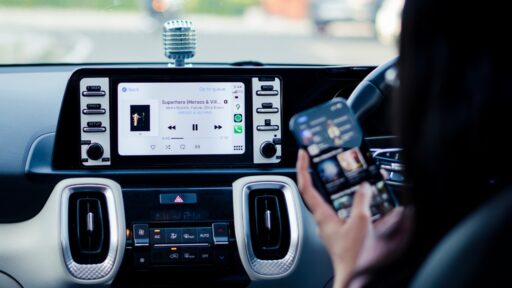
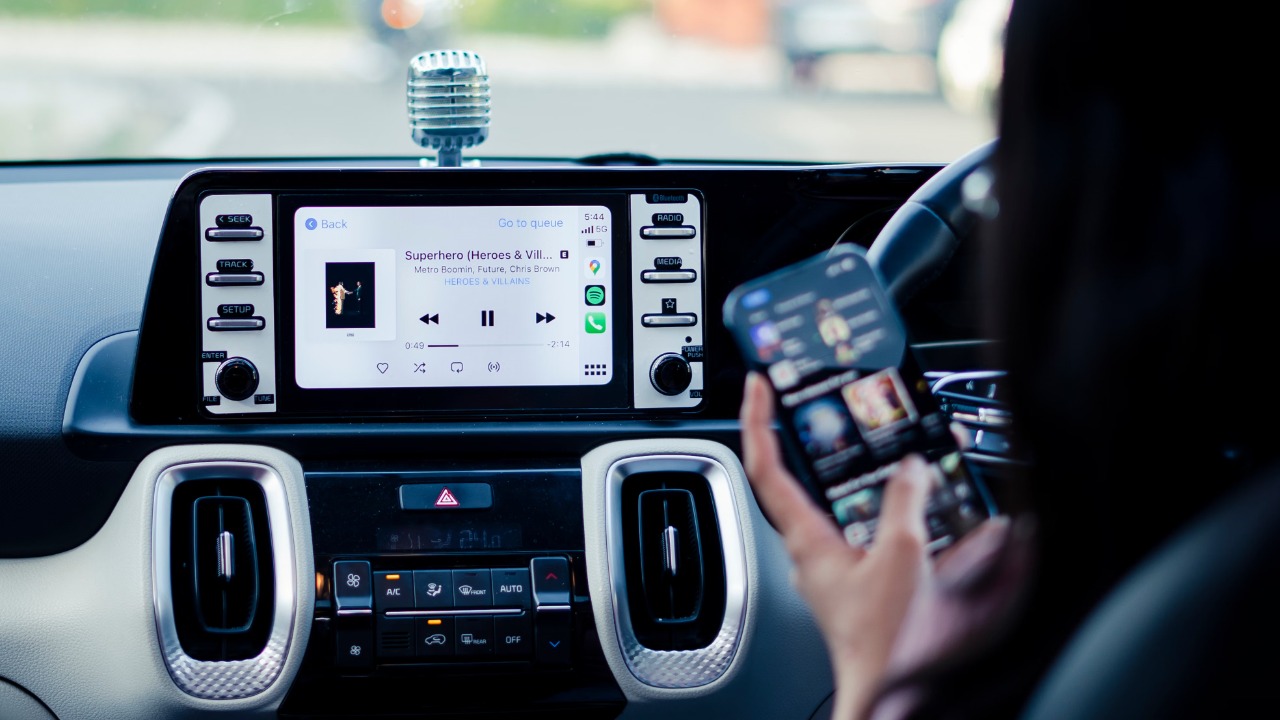

Apple CarPlay and Android Auto have become so ordinary in cars that many drivers barely think about them anymore. They get into a vehicle, connect a phone, and immediately have familiar navigation, music, messages, and other supported apps on the dashboard.
Boats have largely remained outside that ecosystem.
That is beginning to change in a much more visible way in 2026. Crest and Balise Pontoons have announced that upcoming 2027 Crest Conquest, Crest Caribbean, and Balise models will come standard with Apple CarPlay and Android Auto compatibility, paired with marine-navigation app Savvy Navvy. The new models are due to launch in 2026.
It sounds like a simple infotainment upgrade, but it could represent something larger for recreational boating. Instead of learning an entirely separate digital environment every time someone steps from his car onto his boat, the familiar smartphone interface can follow him directly to the helm.
So why has something so normal in cars taken this long to become standard equipment on boats?
A Boat Dashboard Has Traditionally Worked Very Differently
Modern boats can already contain sophisticated electronics.
A well-equipped helm may include chartplotters, sonar, radar, engine monitoring, VHF communications, weather information, stereo controls, and other vessel systems. The technology can be extremely capable.
The problem is that it often exists across different devices and interfaces.
Someone may plan a trip on his phone before leaving home, then manually recreate or synchronize that route with the marine electronics installed on the boat.
For an experienced boater, that may not be particularly difficult.
For someone accustomed to smartphone simplicity, it can feel unnecessarily complicated.
That is exactly the problem Savvy Navvy has tried to solve. Its navigation platform combines marine charts with routing, weather, tide information, and trip planning in a consumer-friendly interface. Savvy Navvy
The new integration takes that philosophy one step further.
The phone does not have to stop being useful once someone reaches the helm.
The Navigation App Is the Feature That Makes This Interesting
Putting Spotify on a boat’s display is convenient.
Putting proper marine-navigation information there is considerably more important.
The new integration allows Savvy Navvy to appear through the CarPlay or Android Auto environment on compatible helm displays. Boaters can access nautical charts, active GPS tracking, smart routing, weather information, and tidal data. Day, night, and satellite viewing options are also available.
That is very different from simply opening a road-navigation application near the water.
Marine navigation has its own requirements.
Depth matters.
Tides matter.
Channels matter.
Shoals and other underwater hazards matter.
A route that looks perfectly reasonable on an ordinary geographic map may be completely inappropriate for a particular vessel.
Savvy Navvy already provides route planning based around marine navigation and incorporates information intended to help boaters understand those conditions. Its route-planning pages, for example, incorporate tides, weather, waterways, hazards, and navigational considerations rather than treating a boat like a car that happens to be traveling across blue areas of a map.
That makes bringing the application to the helm much more useful than merely mirroring a smartphone.
Plan at Home, Then Find the Route Waiting on the Boat
Perhaps the most attractive part of the system happens before the boat even leaves the dock.
A user can plan his journey on a phone and then access that information when he steps aboard.
Savvy Navvy CEO Jelte Liebrand described the objective as allowing boaters to plan a trip away from the vessel and then have it available at the helm without complicated synchronization.
That is exactly the type of continuity CarPlay helped normalize in automobiles.
Someone can look up a destination on his phone while sitting inside a restaurant, walk to his car, and continue navigating from the dashboard.
Recreational boating has often required more deliberate preparation between devices.
Removing that friction could make sophisticated marine navigation more approachable, particularly for newer boat owners.
It also changes expectations.
Once consumers experience this type of continuity on one boat, older systems requiring several manual steps may begin to feel dated surprisingly quickly.
CarPlay Doesn’t Suddenly Turn Google Maps Into a Marine Chart
There is an important distinction.
CarPlay and Android Auto are the interface layers connecting the smartphone and compatible display. They do not magically convert every automotive application into safe marine-navigation software.
The important component here is Savvy Navvy’s support within those environments.
That matters because navigation on water cannot be treated exactly like driving.
Roads are relatively fixed and clearly defined.
Waterways are affected by tides, currents, depths, weather, shifting conditions, vessel characteristics, and local restrictions.
A skipper still needs appropriate marine charts, situational awareness, and suitable safety equipment.
Even Savvy Navvy’s own route information emphasizes the importance of watching local markers, monitoring weather, maintaining communication equipment, and using appropriate navigation resources.
CarPlay therefore makes the interface familiar.
It does not eliminate the responsibilities of operating a boat.
Music and Entertainment Become Easier Too
Navigation may be the serious reason to want smartphone integration, but entertainment will probably be the feature passengers notice first.
Boats are already major environments for music.
Instead of relying entirely on a separate marine stereo interface, compatible CarPlay and Android Auto systems can provide access to supported smartphone applications through a familiar dashboard layout.
That could make changing playlists, selecting podcasts, or using voice controls significantly more intuitive.
Marine aftermarket systems with CarPlay functionality already exist, and specialist installers have been offering CarPlay-equipped marine stereos before this latest factory integration.
That is why saying CarPlay has literally never worked on a boat before would be misleading.
What is changing is its factory-standard integration into these new pontoon models, combined with a marine-navigation application designed to make the smartphone-to-helm transition genuinely useful.
The First Boats Will Be Crest and Balise Pontoons
The rollout is starting with pontoon boats rather than enormous yachts or offshore commercial vessels.
That makes considerable sense.
Pontoons are heavily associated with recreational use, family outings, lake cruising, entertainment, and relatively accessible boating.
Their buyers are also likely to be familiar with CarPlay and Android Auto from their cars.
Under the announced partnership, the technology will be standard on new Balise, Crest Conquest, and Crest Caribbean models launching in 2026 as 2027-model-year boats. Buyers will also receive access to Savvy Navvy Premium.
That premium service expands the navigation functionality available to owners.
Instead of asking customers to discover and configure an entirely new ecosystem after buying the boat, the manufacturers are integrating the service into the ownership experience from the beginning.
Why Has the Automotive Industry Been So Far Ahead?
Cars have one major advantage when it comes to consumer technology: scale.
Millions of new vehicles are sold every year, and buyers increasingly expect sophisticated infotainment systems as standard equipment.
Apple and Google therefore had enormous incentives to develop automotive platforms.
The marine industry is smaller and dramatically more fragmented.
A boat may combine engines from one manufacturer, navigation equipment from another, a stereo from another, and specialized systems from several additional suppliers.
The environment is harsher too.
Displays must cope with sunlight, moisture, vibration, temperature changes, and potentially saltwater exposure.
A touchscreen that performs perfectly inside an air-conditioned sedan cannot simply be mounted on an exposed helm and expected to survive.
That helps explain why marine electronics have traditionally evolved along their own path.
But smartphones have changed consumer expectations.
People increasingly expect their digital lives to follow them everywhere.
Boats are becoming another place where manufacturers have to respond.
CarPlay Could Make Boating More Accessible to Beginners
Marine electronics can be intimidating.
A first-time boat owner may be comfortable with smartphones, GPS, and digital navigation but still feel overwhelmed by a traditional multifunction marine display.
A familiar interface reduces that psychological barrier.
Someone who already understands how to launch an app, select a destination, zoom a map, control audio, or use voice commands does not have to relearn those interactions simply because he is now on the water.
That does not make him an experienced navigator.
But it makes the technology itself less intimidating.
There is a meaningful difference between simplifying navigation and oversimplifying seamanship.
The first can encourage safer use of technology.
The second can create dangerous overconfidence.
Manufacturers will need to make sure users understand that familiar software does not make unfamiliar waters automatically safe.
Dedicated Marine Electronics Aren’t Going Away
CarPlay enthusiasts should not expect every chartplotter, radar screen, and sonar unit to disappear.
Dedicated marine electronics exist for good reasons.
Serious offshore navigation requires capabilities far beyond playing music and displaying a smartphone navigation application. Radar, depth sounders, AIS, sonar, engine data, VHF communications, autopilot systems, and detailed vessel information remain important.
A phone-dependent interface also creates obvious limitations.
Phones can lose connectivity.
Software can crash.
Wireless connections can fail.
Devices can overheat or run out of power.
A boat operating far offshore needs resilient systems rather than dependence on one consumer smartphone.
The most realistic future is therefore not CarPlay replacing marine electronics.
It is CarPlay becoming another layer within the helm.
The Bigger Change Is What Boaters Will Start Expecting
The first factory installations may appear on only a limited selection of boats, but consumer expectations can spread quickly.
CarPlay followed a similar trajectory in automobiles.
It began as an interesting feature available in selected vehicles. Eventually, buyers started asking why a new car costing tens of thousands of dollars did not support the phone interface they already used every day.
Boating could experience something similar.
Once someone can plan a marine journey on his couch, step onto the boat, connect his phone, and find the route waiting on the helm display, returning to a more fragmented workflow may feel unnecessarily complicated.
Other boat manufacturers will notice if buyers respond positively.
Marine electronics companies will notice too.
That could encourage wider support for smartphone-based marine applications and tighter integration between consumer devices and dedicated vessel systems.
Your Boat Is Starting to Behave More Like Your Car
That may ultimately be the most important part of the announcement.
Cars have spent the past decade becoming extensions of smartphones.
Boats are beginning to move in the same direction.
The 2027 Crest and Balise models will allow compatible CarPlay and Android Auto displays to work with Savvy Navvy, putting marine charts, route planning, GPS tracking, weather, tides, and familiar smartphone functionality directly at the helm.
It does not eliminate traditional marine electronics.
It does not make Google Maps a substitute for proper nautical navigation.
And it certainly does not mean a smartphone can replace good seamanship.
What it does eliminate is some of the unnecessary separation between planning a journey and actually taking it.
For years, drivers have been able to plan somewhere on their phones, get into a car, and continue almost seamlessly.
In 2026, boat manufacturers are finally beginning to ask an obvious question:
Why should stepping onto the water make that convenience disappear?