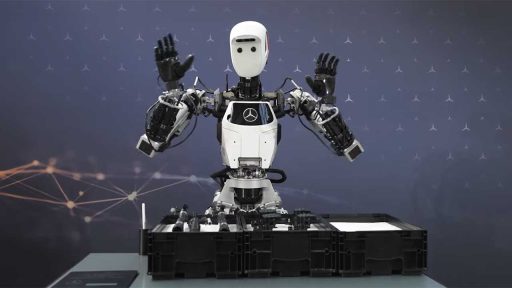
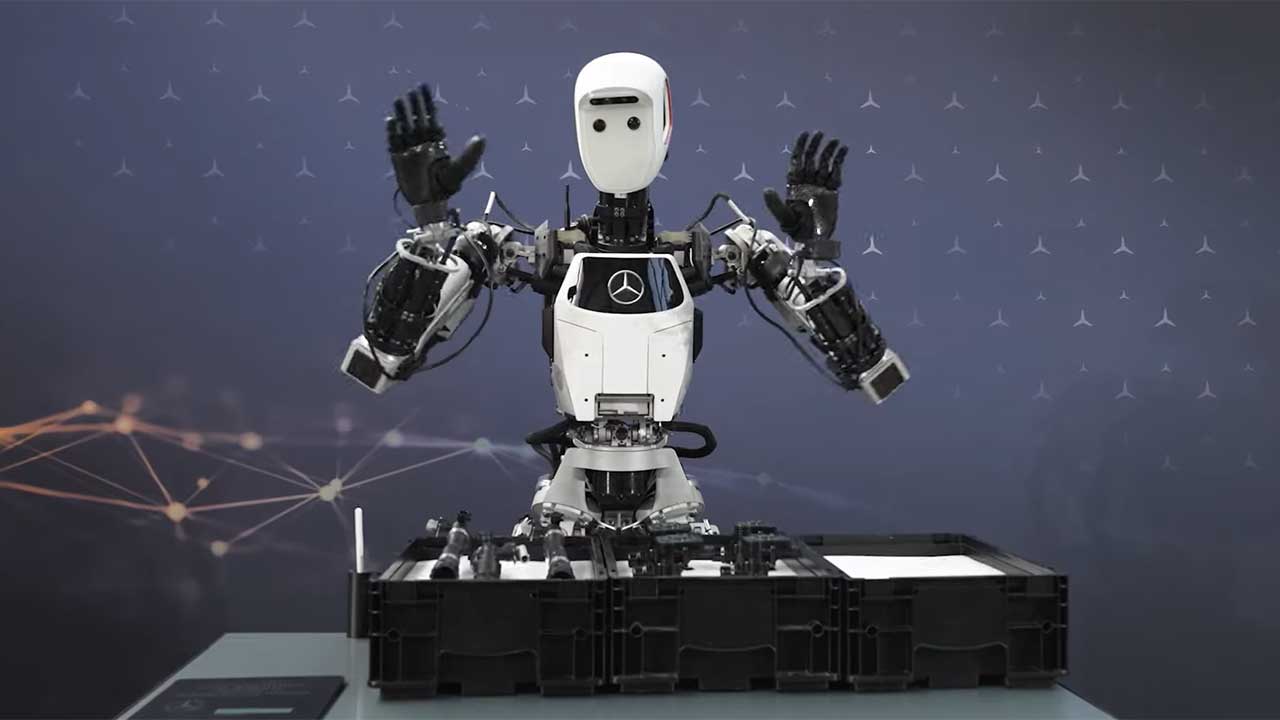

Humanoid robots were once the stuff of science fiction, but Apollo is being built to clock in for a shift on the factory floor and then, one day, strap in for a ride beyond Earth. The machine is emerging as a bridge between industrial automation and space exploration, designed to work in the same environments and with the same tools as humans. Its creators see the factory as a proving ground for the far harsher conditions of the Moon and, eventually, deep space.
That dual mandate is reshaping how I think about robots: not as single-purpose arms in cages, but as mobile co-workers that might eventually walk around a lunar habitat. Apollo’s evolution from warehouse helper to off-world operator captures a broader shift in robotics, where the line between terrestrial industry and extraterrestrial missions is starting to blur.
The humanoid bet: why Apollo looks like us
The decision to make Apollo a humanoid is not an aesthetic flourish, it is a strategic choice. A bipedal form lets the robot move through spaces built for people, climb stairs, and reach shelves without forcing companies or space agencies to redesign their infrastructure. The team behind Apollo, Austin-based Apptronik, frames it as a general-purpose platform that can eventually operate in factories, logistics hubs, and orbital or planetary habitats that already assume human dimensions.
That humanlike shape also aligns with how NASA is thinking about future missions. The agency’s interest in humanoids such as Apollo is rooted in the idea that a robot that can walk, grasp, and manipulate tools like a person can take over hazardous tasks outside a spacecraft while astronauts supervise from a safe internal location. Humanoid designs allow robots to use human tools and interfaces, which is far easier than redesigning every valve, handle, and control panel for a different kind of machine.
Specs built for factories, tested for space
On paper, Apollo looks less like a sci-fi android and more like a carefully tuned industrial athlete. The robot stands about 5 feet 8 inches tall and weighs 160 pounds, roughly the size of an average adult, and it is designed to carry up to 55 Lbs in its arms. An updated version that Apptronik is rolling out keeps that same basic profile, with a focus on reliability and ease of maintenance so it can run long shifts in industrial settings.
Under the shell, Apollo relies on liquid-cooled robotic actuator technology that is meant to deliver high power without overheating in tight spaces. That Liquid cooling approach is particularly relevant for space, where vacuum and extreme temperatures complicate heat management. The robot’s creators describe it as a HUMANOID ROBOT built from experience with more than ten earlier machines, including systems developed with NASA, which gives Apollo a direct lineage from research labs to real-world deployment.
From assembly lines to Artemis
Before Apollo can take a step on lunar regolith, it has to prove itself on Earth. The robot is being deployed in factories and logistics centers to handle what one partner describes as “an array of simple, repetitive intralogistics” tasks, such as moving totes, loading carts, and shuttling parts between workstations. In one project, Apollo is even being tested on an assembly line that produces more robots, a recursive trial that forces the system to navigate tight spaces and coordinate with human workers.
Those industrial trials are not an end in themselves, they are a rehearsal for the Moon. Apptronik is one of the partners working with NASA on humanoid designs, and the company explicitly describes Earth as a proving ground for future missions. The current architecture for NASA’s Artemis program, which aims to return humans to the Moon and eventually support crewed missions deeper into the solar system, anticipates a role for robotic helpers that can set up infrastructure, perform maintenance, and extend the reach of astronauts during hazardous operations.
NASA’s long game: robots as off-world co-workers
NASA is not just dabbling in humanoids, it is actively teaming up with companies that can translate research into field-ready machines. The agency has partnered with the Austin-based firm behind Apollo to explore how such robots could support astronauts on future missions and help build a sustainable presence beyond Earth. In that vision, Apollo-like systems would handle tasks such as unloading cargo, deploying power systems, and inspecting habitats while human crews focus on science and high-level decision making.
Images released earlier this year show Photos of Apollo in industrial environments, but the same hardware is being evaluated for the cramped interiors of spacecraft and the rugged surfaces of extraterrestrial environments. NASA’s interest in humanoids like Apollo reflects a long game in which robots and humans work side by side, each taking on the tasks that best match their strengths.
A crowded humanoid field, with Apollo aiming for orbit
Apollo is not the only humanoid vying for attention, but it occupies a distinct niche. The broader market now includes platforms such as Tesla’s Optimus Gen 2, which is Designed as a general-purpose robotics platform for factories and, eventually, consumer environments. Against that backdrop, Apollo’s pitch is less about being a household assistant and more about being a rugged, energy-efficient worker that can transition from warehouse aisles to lunar regolith without a fundamental redesign.
Apptronik’s own framing of Apollo as “We Have Poured Our Humanity Into This Machine” captures the ambition to make the robot both capable and manufacturable at scale, with a focus on energy efficiency and practical deployment rather than flashy demos. The company’s public materials describe Apollo as a platform that can evolve as mission requirements become more complex, from simple pick-and-place jobs to intricate maintenance tasks in orbit or on the Moon. In that sense, the robot’s journey from factory floors into space is less a leap and more a carefully staged climb, one repetitive task and one mission at a time.