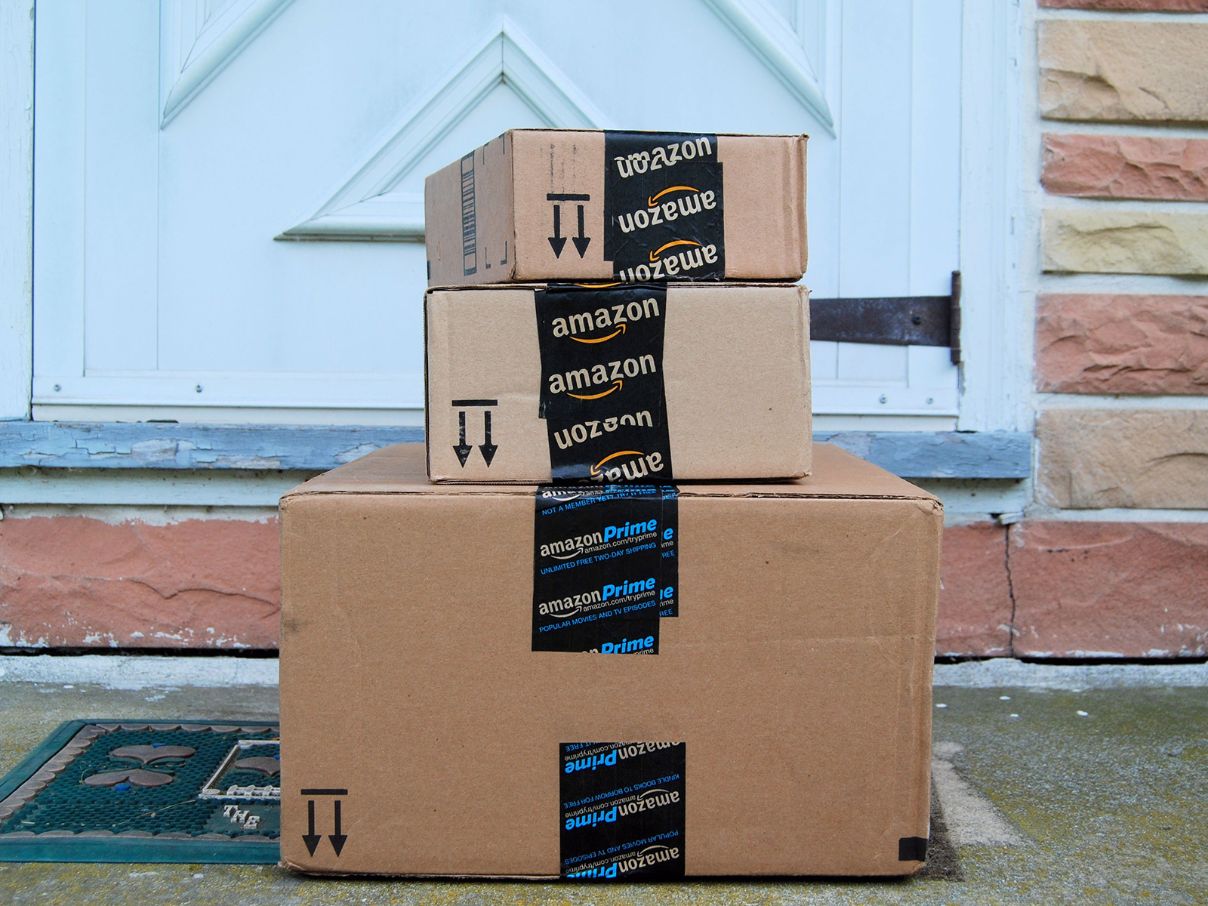

Amazon Prime normally costs $14.99 per month or $139 per year in the United States.
But some customers can get essentially the same Prime membership for $6.99 per month.
That is more than 50% off the standard monthly price.
There is an important catch, though.
Amazon is not offering everyone a half-price Prime subscription. The discount comes through a program called Prime Access, and customers must meet specific eligibility requirements before Amazon will give them the reduced rate.
There is also another roughly half-price version of Prime aimed at young adults and higher-education students.
So when someone sees Amazon advertising “50% off Prime,” the first question should be:
Which discounted Prime program are they talking about?
Prime Access Costs $6.99 Per Month
Prime Access is Amazon’s discounted membership for qualifying customers receiving government assistance or meeting its income-verification requirements.
The normal monthly Prime membership is $14.99.
Prime Access costs $6.99.
That means someone using Prime Access saves $8 every month compared with paying for regular Prime monthly.
Over 12 months, regular monthly Prime would cost $179.88, while Prime Access would cost $83.88.
That is a $96 annual difference.
Amazon describes the program as providing all of Prime’s benefits at more than 50% off its regular monthly price.
Amazon Prime Access eligibility and signup
Who Actually Qualifies?
Prime Access is not restricted to one particular assistance program.
As of Amazon’s August 2026 eligibility update, customers can qualify either by verifying their income or by showing participation in one of 13 recognized government-assistance programs.
Those programs include SNAP EBT, Medicaid, WIC, Supplemental Security Income, Temporary Assistance for Needy Families, Low Income Home Energy Assistance Program, the National School Lunch Program, Social Security Disability Insurance, Federal Public Housing Assistance and several others.
This makes the discount available to a broader group than someone might assume from seeing advertisements mentioning SNAP or Medicaid.
Those are examples of qualifying programs, not the only two ways to qualify.
You Can Also Qualify Based on Income
This is an important newer aspect of Prime Access.
Someone does not necessarily have to participate in one of Amazon’s listed government programs.
Amazon now also allows customers to verify eligibility based on income.
That could make Prime Access relevant to people whose household income meets Amazon’s requirements but who are not enrolled in SNAP, Medicaid or another recognized assistance program.
Amazon performs the verification during enrollment.
This also means customers cannot simply select the cheaper membership option from a menu and start paying $6.99.
Eligibility has to be established first.
How Does Verification Work?
The process is relatively straightforward.
A customer visits Amazon’s Prime Access enrollment page and selects the method he wants to use to verify eligibility.
Depending on the qualification method, Amazon may request documentation showing participation in an eligible assistance program or information necessary to verify income.
Amazon says customers can upload documentation confirming eligibility for a selected program.
After verification, the customer enters payment and billing information.
Eligible new Prime customers can receive a 30-day free trial before the $6.99 monthly membership charge begins.
Existing Prime Members Don’t Necessarily Have to Start Over
What if someone already pays $14.99 every month for Prime and then discovers that he qualifies for Prime Access?
He can switch.
Amazon says existing Prime members who meet the eligibility requirements can update their membership to Prime Access.
That is worth checking because an eligible customer could otherwise continue paying roughly twice as much for essentially the same core membership.
There is little reason to keep paying the standard monthly rate purely because the Prime account already exists.
Do Prime Access Members Get a Stripped-Down Version of Prime?
This is probably the biggest misconception.
Prime Access is not simply “Prime Lite.”
Amazon says Prime Access includes the same Prime benefits available to regular members.
That includes eligible fast and free delivery, Prime Video entertainment, Prime shopping deals, grocery benefits and other services included with Prime.
Amazon says Prime currently provides free Prime shipping across more than 300 million eligible items in over 35 categories in the U.S., with tens of millions available for Same-Day or Next-Day Delivery.
Prime Access members can therefore use the membership for much more than shipping.
Prime Video Is Included Too
Paying the reduced Prime Access price does not mean losing the entertainment portion of the membership.
Prime Video remains included as part of Prime.
That gives eligible members access to movies, television shows, live sports and other programming included with the Prime subscription.
This can make the $6.99 price particularly attractive for someone who would otherwise subscribe to a separate streaming service anyway.
He is effectively receiving streaming plus Amazon’s delivery and shopping benefits through the same discounted membership.
Of course, not everything displayed inside Prime Video is necessarily included free with Prime.
Rentals, purchases and third-party channel subscriptions can still cost extra.
SNAP EBT Doesn’t Pay for the Prime Subscription
Here is another detail that can cause confusion.
Being eligible through SNAP does not mean someone uses SNAP benefits to pay the $6.99 Prime membership fee.
The SNAP program establishes eligibility for the discount.
It is not the membership payment method.
Amazon requires another supported payment method for the membership charge.
SNAP EBT can separately be used for qualifying grocery purchases on Amazon.
Amazon says customers across the United States can use SNAP EBT for eligible products on Amazon.com and, where available, Amazon Fresh and Whole Foods Market.
Interestingly, customers do not actually need Prime to shop with SNAP EBT on Amazon.
Prime Access simply adds the wider Prime benefits at the reduced membership price.
There’s Another 50% Prime Discount for Younger Customers
Prime Access is not Amazon’s only discounted membership.
Amazon also offers Prime for Young Adults.
Eligible customers ages 18 through 24, as well as higher-education students, can receive Prime at approximately half the normal membership price.
The current price is $7.49 per month or $69 per year.
The introductory offer is even more generous.
Eligible new members can receive a six-month trial at $0 before the discounted subscription begins.
So a 20-year-old college student does not need to qualify for government assistance to obtain roughly half-price Prime.
The young-adult program provides another route.
Prime for Young Adults Can Be Cheaper Than Prime Access Annually
There is an interesting pricing difference between the two programs.
Prime Access costs $6.99 per month.
Prime for Young Adults costs slightly more monthly at $7.49.
But Prime for Young Adults also offers a $69 annual option.
That works out to about $5.75 per month when averaged over the year.
Prime Access, meanwhile, is presented by Amazon as a $6.99 monthly membership.
For someone eligible for both programs, it is therefore worth comparing the available membership options rather than automatically assuming Prime Access provides the lowest total annual cost.
Students of Any Age May Qualify
The “Young Adults” name can also be slightly misleading.
Someone does not necessarily need to be under 25 if he is attending college.
Amazon says higher-education students can qualify regardless of age, while non-students can qualify based on being 18 to 24.
Amazon may verify student status through an educational email address or alternative enrollment documentation.
That makes the program relevant to older students returning to college as well as traditional undergraduate students.
Why Does Amazon Offer Prime So Cheaply?
There is an obvious business reason.
Prime members tend to use Amazon’s ecosystem.
Free shipping reduces the psychological barrier to placing another order.
Prime Video gives members another reason to maintain their subscription.
Grocery services expand Amazon’s role in everyday household spending.
Exclusive deals encourage shopping during events such as Prime Day.
The membership therefore does more than generate subscription revenue.
It strengthens the customer’s relationship with Amazon.
Discounting Prime can make economic sense if someone who would never pay $14.99 per month becomes a frequent Amazon shopper at $6.99.
The reduced membership can therefore benefit both sides.
The customer receives cheaper access.
Amazon gains another long-term Prime household.
The Discount Is Particularly Valuable If You Pay Monthly
The “more than 50% off” claim is based on comparing Prime Access with Amazon’s $14.99 monthly Prime price.
That distinction matters.
Regular Prime also has a $139 annual plan.
Someone paying annually already receives a discount compared with paying $14.99 twelve times.
Regular monthly Prime:
$14.99 × 12 = $179.88
Regular annual Prime:
$139
Prime Access for 12 months:
$6.99 × 12 = $83.88
So Prime Access is still substantially cheaper than the regular annual membership, but the percentage difference is smaller than when comparing monthly plans.
The advertising claim is accurate; understanding the comparison simply makes it clearer.
Don’t Confuse Prime Access With a Temporary Amazon Sale
Amazon regularly runs discounts on products.
Prime members can receive exclusive sale prices.
Prime Day creates temporary deals.
Prime Video can also offer promotional prices on certain content.
Those promotions are completely different from Prime Access.
Prime Access reduces the membership fee itself.
It is designed for eligible customers rather than being a short-term 50%-off coupon available to everyone.
That means someone seeing a headline about Amazon’s “50% Prime discount” should check whether it refers to Prime Access, Prime for Young Adults or simply a temporary promotional offer.
Which Discounted Prime Option Should You Choose?
The distinction is fairly simple.
If someone receives qualifying government assistance or meets Amazon’s income-verification requirements, Prime Access at $6.99 per month is the relevant program.
If someone is 18–24 or qualifies as a higher-education student, Prime for Young Adults at $7.49 per month or $69 annually may be available instead.
Everyone else generally pays the regular U.S. Prime price of $14.99 monthly or $139 annually.
The important point is that Amazon’s 50% discount is not a trick where customers receive half of Prime’s features.
Eligible customers receive the core Prime membership at a substantially reduced price.
The discount is on the subscription cost, not on the membership itself.
And for someone who already qualifies but is still paying full price, checking eligibility could potentially save close to $100 a year compared with paying for regular Prime month by month.