
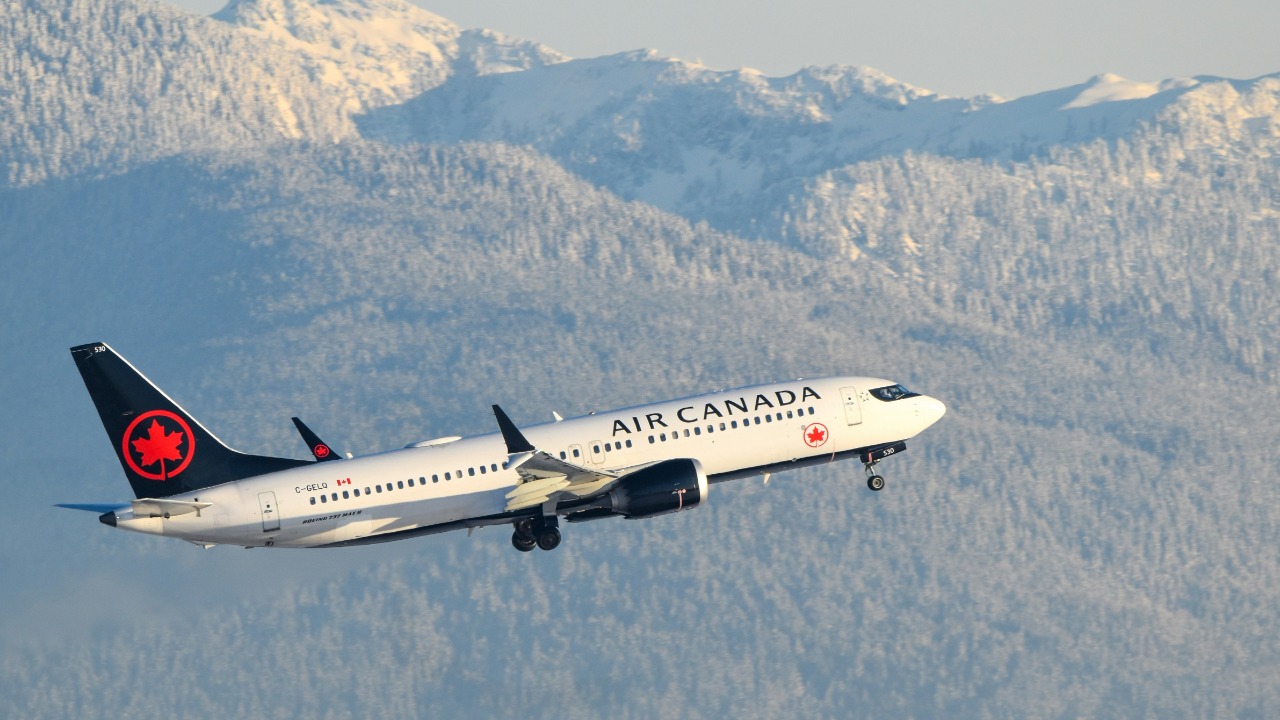

Air Canada and PAL Airlines are extending and expanding their commercial agreement for regional flights, with PAL set to operate more aircraft under the partnership through 2032. The move doubles down on Air Canada’s regional strength at a time when the flag carrier is planning capacity cuts in parts of its United States network, shifting emphasis toward domestic connectivity. The expanded deal builds on their existing collaboration to enhance links between smaller Canadian communities and major hubs.
Background of the Air Canada-PAL Partnership
Air Canada has for several years relied on PAL Airlines as a key regional operator providing feeder flights that connect smaller communities to its main hubs, particularly in Eastern and Western Canada. Under the existing capacity purchase arrangement, PAL operates flights under the Air Canada Express banner, using its own crews and aircraft while Air Canada controls scheduling, pricing, and distribution, a structure that allows the larger carrier to serve thin routes that would be uneconomical with mainline jets. The partnership has been especially important in linking remote and mid-sized markets to larger centers such as Toronto, Montreal, Halifax, and Vancouver, ensuring that passengers in those regions can access Air Canada’s broader domestic and international network.
The original agreement focused on PAL providing capacity with a fleet of regional aircraft, primarily serving short-haul routes in Atlantic Canada and select Western provinces. Reporting on the relationship notes that PAL’s operations have concentrated on communities in Newfoundland and Labrador, the Maritimes, and smaller points in Quebec, while also supporting services in Western Canada where demand patterns favor turboprops and regional jets. According to industry coverage, the earlier deal emphasized efficient, high-frequency operations that could feed passengers into Air Canada’s mainline flights, a model that has become a cornerstone of the carrier’s strategy for serving low-density markets without sacrificing network breadth.
Key Details of the Contract Extension
The new agreement between Air Canada and PAL Airlines extends their partnership through 2032, providing a long planning horizon and revenue visibility for both sides. By locking in a multi-year term, Air Canada gains assurance that it can continue to rely on PAL to support its regional network, while PAL secures a stable stream of flying that underpins its business model and employment base. Reporting on the updated arrangement indicates that the extension is framed as a long-term commercial agreement rather than a short incremental renewal, signaling that both carriers view the relationship as central to their future strategies.
As part of the extension, PAL Airlines will increase its fleet commitment to Air Canada, adding more aircraft that will be dedicated to regional routes within the national network. Coverage of the deal explains that the expanded capacity will support additional frequencies and new destinations, particularly in domestic markets where smaller aircraft are best suited to demand patterns. One report on the planned expansion through notes that the revised commercial terms are designed to cover a larger volume of flying, giving Air Canada more flexibility to adjust schedules while ensuring PAL can justify investments in aircraft, maintenance, and training. For passengers, the practical effect is expected to be more options on regional routes and better alignment of departure times with long-haul connections.
Strategic Drivers Behind the Expansion
Air Canada is pursuing this growth in regional flying in part to offset upcoming capacity reductions in its United States operations, refocusing on domestic and near-domestic connectivity where it can leverage its brand and hub structure. According to reporting on the carrier’s network plans, Air Canada is trimming some transborder capacity while simultaneously increasing its reliance on regional partners to sustain and grow traffic flows into its Canadian hubs. An analysis of the strategy notes that the airline is effectively reallocating resources, using partners like PAL to deepen its presence in smaller markets at a time when competitive and economic pressures are reshaping demand on certain U.S. routes.
The decision to expand with PAL also reflects a broader push to strengthen service in underserved Canadian regions, including parts of the Atlantic and Prairie provinces, where reliable air links are critical for economic activity and social connectivity. One report on how Air Canada is responding to these pressures explains that the carrier sees regional flying as a way to protect and grow its share in core home markets while competitors focus on larger city pairs. In coverage of Air Canada’s plan to adjust its U.S. network, analysts highlight that the airline is effectively “doubling down” on regional strength, a phrase echoed in recent analysis that frames the PAL expansion as a deliberate pivot toward domestic resilience. For communities that rely on air service for business travel, healthcare access, and tourism, the strategic shift could mean more stable and predictable connectivity even as international patterns evolve.
Implications for Stakeholders and Operations
For PAL Airlines, the prolonged contract through 2032 secures long-term revenue and supports higher utilization of its fleet, which is essential for spreading fixed costs and justifying new aircraft acquisitions. The extended agreement also provides a foundation for workforce planning, since PAL can align pilot and cabin crew hiring, training, and retention strategies with a known schedule of flying under the Air Canada banner. Reporting on the updated deal notes that PAL’s role as a contracted regional operator is strengthened by the new terms, giving the carrier a clearer path for growth and operational investment tied directly to Air Canada’s network needs.
Regional passengers in Canada stand to benefit from improved frequency and reliability on feeder routes to major hubs like Toronto and Vancouver, as well as to key secondary centers such as Halifax and St. John’s. Coverage of the expanded agreement indicates that Air Canada intends to use the additional PAL-operated aircraft to fine-tune schedules, reduce connection times, and open up more one-stop options for travelers heading to larger domestic or international destinations. One report on the regional flights operated underlines that the partnership is designed to maintain consistent service standards and integrated ticketing, so passengers experience a seamless journey even when flying on different operating carriers. For local economies that depend on tourism and resource-sector travel, more reliable air links can translate into steadier visitor flows and better access to national and global markets.
Positioning in the Canadian Aviation Landscape
The expanded partnership reinforces Air Canada’s position as a dominant player in Canadian aviation, particularly in the regional segment where partnerships with carriers like PAL are central to its strategy. By committing to a longer-term and larger-scale agreement, Air Canada signals to investors and competitors that it intends to defend and grow its domestic footprint even as it recalibrates international and U.S. capacity. Reporting on the deal notes that the carrier views regional connectivity as a competitive differentiator, since a dense network of smaller-city links can feed traffic into long-haul services and strengthen loyalty among travelers who rely on Air Canada for both short and long journeys.
At the same time, the arrangement illustrates how regional partnerships are evolving in Canada, with capacity purchase agreements becoming more sophisticated and long-dated. One analysis of the expanded commercial terms points out that the deal with PAL is part of a broader pattern in which major airlines seek to balance flexibility with stability in their regional networks. Coverage of Air Canada’s decision to expand its domestic regional flying while trimming some U.S. routes, highlighted in a report on regional expansion plans, suggests that the carrier is betting on sustained demand within Canada and nearby markets. Additional reporting on the decision to extend and expand the commercial agreement, including analysis of the financial and operational implications in sources such as private capital coverage and commentary on company news, underscores that the partnership could serve as a template for future regional collaborations in the country.