
Perplexity has struck a $750 million agreement to run its artificial intelligence services on Microsoft’s cloud, a long term commitment that tightens the bond between one of the most closely watched AI startups and one of the world’s largest infrastructure providers. The deal gives Perplexity access to deep computing resources as it races rivals in conversational search, while giving Microsoft another high profile customer that validates its AI stack against competitors.
The partnership lands at a moment when spending on model training and inference is exploding, and when cloud providers are fighting to lock in the next generation of AI platforms. By tying a fast growing startup to its infrastructure, Microsoft is signaling that it intends to be the default home for ambitious AI companies that want to scale quickly without building their own data centers.
Why Microsoft wants Perplexity on Azure
For Microsoft, the Perplexity deal is as much about narrative as it is about revenue. The company has spent years positioning its cloud division as the place to build and deploy advanced AI, and a $750 million commitment from a high growth startup reinforces that message to the broader market. By anchoring Perplexity’s workloads on Azure, Microsoft can showcase real world usage of its GPUs, networking, and orchestration tools to other AI developers who are deciding where to run their own models.
The agreement also fits into a broader strategy in which Microsoft pairs infrastructure with close technical collaboration, rather than simply renting out servers. Reporting on the arrangement notes that, for Microsoft, the Perplexity deal boosts its efforts to position Azure as the place to build AI applications and deploy models from training to production. That framing matters because it casts Azure not just as a commodity cloud, but as a full stack environment where companies can experiment with new architectures, then scale them globally without switching providers.
Perplexity’s growth and funding trajectory
Perplexity is entering this partnership from a position of rapid expansion, not early stage fragility. The company recently closed a $200 million funding round that valued it at $20 billion, a sharp increase that reflects investor confidence in its AI search and assistant products. According to one detailed breakdown of its cap table, that round added $2 billion to Perplexity’s valuation, up from $18B in July 2025, and the company’s Valuation has grown 3,746% since it was worth $520M in Jan 2024, figures that underscore how quickly expectations have risen around its business model and technology.
That kind of trajectory helps explain why a long term cloud deal of $750 million is plausible for both sides. A startup that has seen its worth jump by 3,746% in less than two years is clearly planning for aggressive user and workload growth, and it needs a partner that can keep up with surging demand for compute. The funding also gives Perplexity the balance sheet to commit to multi year infrastructure spending, which in turn can secure better pricing and priority access to scarce AI chips. Investors who backed the $200 million round at a $20 billion valuation will be watching closely to see whether the company can translate that capital into durable product differentiation on top of the infrastructure it is now reserving through Perplexity’s funding.
Strategic stakes in the AI cloud race
The Perplexity agreement lands in the middle of an intense contest among cloud providers to become the default platform for AI workloads. Microsoft is competing directly with Amazon Web Services and Google Cloud for the budgets of companies that are training large language models, building retrieval augmented generation systems, or deploying AI copilots into consumer and enterprise products. By securing a sizable commitment from Perplexity, Microsoft can point to a concrete example of a next generation AI company choosing Azure as its primary environment, which strengthens its pitch to other startups and established enterprises that are weighing similar decisions.
At the same time, the deal highlights how AI infrastructure is increasingly being shaped by a small number of hyperscale providers. Perplexity’s choice to concentrate $750 million of spending with a single partner reflects the reality that only a handful of companies can offer the combination of GPUs, networking, and global data center footprint needed for state of the art AI. That concentration raises competitive questions for the broader ecosystem, but it also gives Perplexity a clear counterpart for technical collaboration and roadmap planning, as suggested in coverage that describes how the agreement helps Microsoft position Azure as the place to build AI applications and deploy models from experimentation into production scale.
How the partnership could reshape AI search
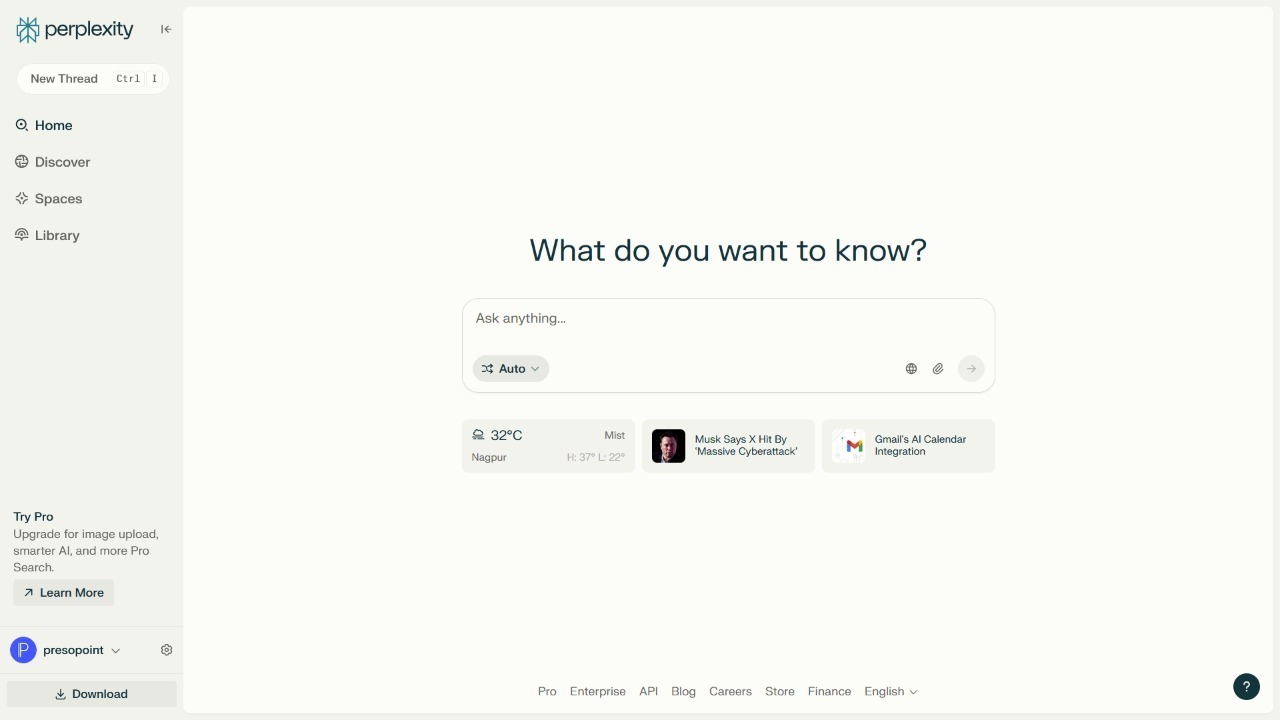
Perplexity’s core product is a conversational search and answer engine that competes directly with traditional web search and with AI assistants embedded in browsers and mobile apps. To deliver fast, high quality responses, it must run large models, maintain up to date indexes of the web, and personalize results based on user context, all of which are compute intensive. The $750 million cloud commitment gives Perplexity room to expand those capabilities, for example by training larger proprietary models, experimenting with more complex retrieval pipelines, or serving richer multimedia answers without worrying that infrastructure costs will immediately cap its ambitions.
From Microsoft’s perspective, supporting that evolution on Azure could have knock on effects for its own products. If Perplexity pushes the frontier of AI search, Microsoft can learn from those workloads to improve its own developer tools, monitoring systems, and hardware configurations. The reporting that frames the deal as a way for Microsoft to position Azure as the place to build AI applications and deploy models suggests that the company sees Perplexity not just as a customer, but as a partner whose demanding use cases will stress test the platform. In a market where users are increasingly comparing AI search tools side by side, any performance or quality gains that come from this collaboration could ripple quickly through the competitive landscape.
What it signals for the next phase of AI infrastructure
The scale and structure of the Perplexity agreement point to a new normal in AI infrastructure, where long term, nine figure cloud commitments become standard for companies that want to compete at the top tier. Instead of treating compute as a variable cost that can be dialed up or down month to month, leading AI startups are beginning to lock in multi year capacity so they can plan product roadmaps with confidence. The Perplexity deal, described as a $750 million AI cloud arrangement that helps Microsoft position Azure as the place to build AI applications and deploy models, fits squarely into that pattern and will likely be cited as a benchmark in future negotiations between cloud providers and AI companies.
For smaller players in the ecosystem, this shift cuts both ways. On one hand, the investments by Microsoft and Perplexity will drive improvements in hardware, networking, and software tooling that eventually become available to the broader developer community. On the other, the concentration of massive AI workloads on a few platforms could make it harder for alternative clouds or on premises solutions to compete on price and performance. As more companies follow Perplexity’s lead and sign large, multi year deals, the balance of power in AI infrastructure will tilt further toward those providers that can offer the kind of integrated, global platform that Azure is now using this partnership to showcase, a trend that is already visible in detailed coverage of how Perplexity has inked a Microsoft AI cloud deal amid its broader positioning against rivals like Amazon.