
The artificial intelligence boom has created a new kind of infrastructure race.
It is no longer only about who can build the most powerful chips, secure the largest electricity supply or find enough water for cooling. As hyperscale data centers expand around the world, another industrial resource is becoming increasingly important: copper.
Copper is everywhere inside modern digital infrastructure. It carries electricity through power systems, connects transformers and switchgear, supports cooling equipment and runs through the enormous network of cables required to move power and data around increasingly dense computing facilities.
That means the AI data-center boom could create an unexpected constraint. The question may not simply be whether the world can generate enough electricity for artificial intelligence, but whether it can manufacture and install enough copper-intensive infrastructure to deliver that electricity where it is needed.
The growing concern has been highlighted by OilPrice’s analysis of copper and the data-center boom, which points to copper’s increasingly strategic role as AI infrastructure expands.
AI Is Turning Data Centers Into Industrial-Scale Power Consumers
Traditional data centers already required significant electricity.
AI has changed the equation.
Training and operating large language models requires enormous computing power, while high-performance GPUs and accelerated computing systems generate substantial heat. As companies deploy larger AI clusters, individual facilities can require hundreds of megawatts of electricity.
The International Energy Agency estimates that global data-center electricity consumption could more than double by 2030, reaching approximately 945 terawatt-hours, with AI identified as a major driver of the increase. (iea.org)
The IEA’s detailed assessment is available in its Energy and AI report.
The electricity itself is only one part of the challenge.
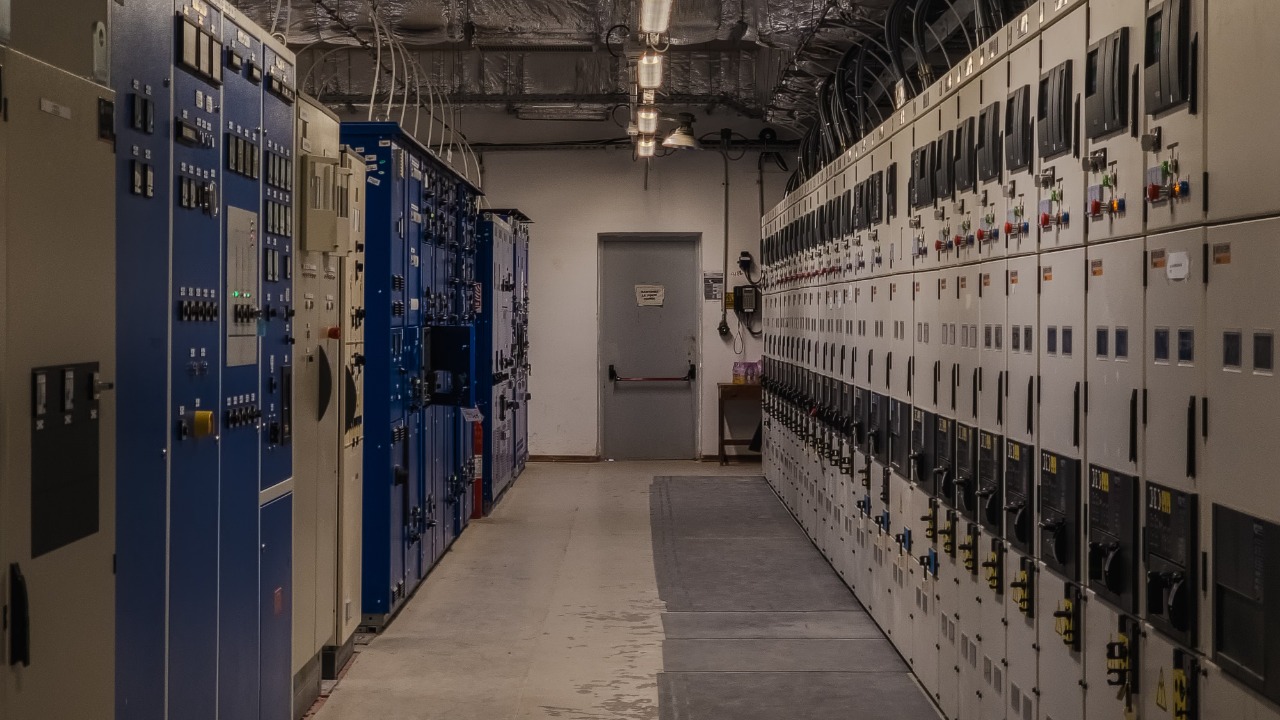
A data center cannot consume electricity that has not been transmitted to it. That requires substations, transformers, switchgear, busbars, cables and distribution equipment—and copper plays a major role throughout that chain.
The larger the AI cluster becomes, the larger the electrical infrastructure surrounding it must become.
Copper Is the Hidden Metal Inside the AI Infrastructure Boom
Copper is often associated with construction, power grids and traditional manufacturing.
Its importance to AI is less obvious.
Inside a large data center, copper can be found in electrical cables, grounding systems, transformers, busbars, generators, power distribution equipment and cooling systems. It also remains important across the broader electricity grid connecting generation facilities to high-demand data-center regions.
Copper’s physical properties make it particularly valuable.
It is highly conductive, relatively easy to work with and durable. While aluminium can replace copper in some applications, copper remains essential across many high-performance electrical systems where conductivity, reliability and space efficiency matter.
That means rising AI electricity demand can translate into rising copper demand even when the servers themselves contain relatively little copper.
The real material requirement comes from building the infrastructure capable of powering those servers.
Data Centers Could Intensify an Existing Copper Supply Problem
The timing is particularly important because the copper industry is already facing long-term supply challenges.
New copper mines take years—and sometimes more than a decade—to develop. Large projects require extensive permitting, capital investment, geological certainty, infrastructure and community approval.
At the same time, existing mines gradually experience declining ore grades.
The International Energy Agency has warned that the copper market faces a potential supply deficit later this decade as demand increases while the pipeline of new mining projects remains insufficient. In its analysis, copper demand could reach approximately 30 million tonnes annually by 2035, while the current project pipeline points toward a potential supply shortfall of around 30%. (iea.org)
The broader supply outlook can be explored through the IEA’s analysis of copper demand and recycling.
That forecast was developed primarily in the context of electrification and clean-energy technologies, including electric vehicles, grids, solar and wind.
AI adds another rapidly growing source of electricity-related copper demand.
The Electricity Grid May Be the Real Copper Story
The most important copper requirement may not be inside the data center at all.
It may be outside it.
AI facilities are increasingly being built in clusters, creating localized electricity demand that can overwhelm existing grid infrastructure. New substations, transmission connections and distribution systems must be constructed to deliver power to these sites.
That infrastructure is copper-intensive.
A single new data center can therefore trigger a much larger industrial project involving transformers, high-voltage equipment, transmission lines and grid upgrades.
The IEA has warned that grid infrastructure is becoming a critical bottleneck for data-center expansion. In the United States, roughly 20% of planned data-center projects could face delays if grid constraints are not addressed, according to the agency’s analysis. (iea.org)
That creates an important distinction.
The world might have enough electricity generation capacity in aggregate, yet still lack the transmission infrastructure required to deliver that electricity to AI campuses.
Copper sits directly inside that bottleneck.
Copper Demand Is Coming From Several Directions at Once
The data-center boom is only one piece of the demand equation.
Electric vehicles require copper in motors, wiring and charging infrastructure. Solar farms need electrical connections. Wind turbines require substantial quantities of copper. Battery systems, transmission networks and industrial electrification all increase demand.
That creates a competition for the same metal.
The IEA estimates that clean-energy technologies could become responsible for a much larger share of global copper demand as electrification accelerates. (iea.org)
AI is effectively adding another layer to that structural demand.
The result could be a market in which copper consumption rises even if any individual technology becomes more efficient.
Efficiency May Not Be Enough
AI companies are constantly improving computing efficiency.
New chips can perform more calculations per watt. Software optimization can reduce energy consumption. Data-center operators can improve cooling systems and increase server utilization.
But efficiency gains do not necessarily reduce total resource demand.
If computing becomes cheaper and more efficient, companies may simply deploy more computing capacity.
That creates what economists sometimes describe as a rebound effect.
The amount of energy or copper required per AI workload could fall while the number of AI workloads grows much faster.
The result is that total demand still increases.
This is why the copper question cannot be answered simply by examining the copper content of an individual server or GPU.
The real issue is the scale of the infrastructure being built around millions of increasingly powerful processors.
Can Aluminium Replace Copper?
Aluminium is the obvious alternative.
It is lighter and generally less expensive than copper, and it is already widely used in transmission and electrical applications.
However, aluminium has lower electrical conductivity by volume than copper. That means larger conductors are often required to deliver equivalent electrical performance.
In massive data centers where space, heat management, reliability and electrical losses matter, copper can retain significant advantages.
That does not mean aluminium cannot reduce copper demand.
Technology and engineering choices can shift the balance between the two metals, particularly in large power-distribution applications. Recycling can also make a meaningful contribution because copper can be recovered repeatedly without losing its fundamental properties.
The issue is whether these measures can keep pace with the extraordinary growth expected in electricity infrastructure.
Recycling Could Become More Important
Unlike fossil fuels, copper does not disappear when it is used.
Copper can be recovered from cables, electrical equipment, motors, buildings and industrial systems and returned to the supply chain.
That makes recycling one of the most important tools available for reducing pressure on new mining.
The IEA estimates that increasing recycling can significantly reduce the need for additional primary copper production, although recycling alone cannot completely eliminate the need for new mines as demand continues rising. (iea.org)
For data-center operators and infrastructure developers, that could eventually make material efficiency and end-of-life recovery part of strategic supply planning rather than simply an environmental consideration.
The Copper Race Could Become a Strategic Competition
Copper is increasingly being treated as a strategic resource because so many industries depend on it simultaneously.
Countries seeking to expand AI infrastructure need reliable access to electricity. Reliable electricity requires grids. Modern grids require enormous amounts of conductive material.
That means competition for copper could increasingly influence where data centers are built, how quickly new facilities can be connected and how much infrastructure projects cost.
The issue also extends to geopolitics.
Copper mining and refining are concentrated in a relatively small number of countries, while major technology companies are attempting to build computing infrastructure at extraordinary speed.
That mismatch creates supply-chain exposure.
A shortage of chips can delay an AI server.
A shortage of transformers can delay a data center.
A shortage of copper can constrain the infrastructure required to build both.
The Next AI Bottleneck May Not Look Like an AI Problem
This is what makes copper particularly interesting.
The AI industry often talks about chips, GPUs, electricity and cooling as the critical infrastructure constraints. Copper sits further down the chain and therefore receives less attention.
Yet every additional megawatt of computing capacity requires physical infrastructure.
Every new transmission connection requires conductors.
Every substation requires electrical equipment.
Every large cooling system needs power and plumbing infrastructure.
And every expansion of the electricity network increases demand for materials.
Copper is therefore not competing directly with AI for attention.
AI is competing with transportation, construction, renewable energy, electric vehicles and the broader global economy for access to the same copper supply.
Copper Could Become the Quiet Constraint Behind the AI Boom
The AI revolution is creating demand for resources far beyond semiconductors.
Water remains important for cooling. Electricity remains fundamental. Land and grid connections are becoming increasingly difficult to secure.
But copper may become one of the least visible—and most consequential—constraints.
The International Energy Agency’s projections already point toward a challenging copper supply environment as global electrification accelerates. AI adds another rapidly expanding source of demand precisely when mining projects take years to develop. (iea.org)
That creates a race between technological growth and physical resource development.
The companies that win the next stage of AI infrastructure may therefore not simply be those with the fastest processors.
They may be the companies that can secure electricity, grid connections, transformers, construction capacity and the copper needed to connect it all.
The next data-center resource race may not be about finding more water.
It may not even be about generating more power.
It could be about finding enough metal to carry that power to the machines.