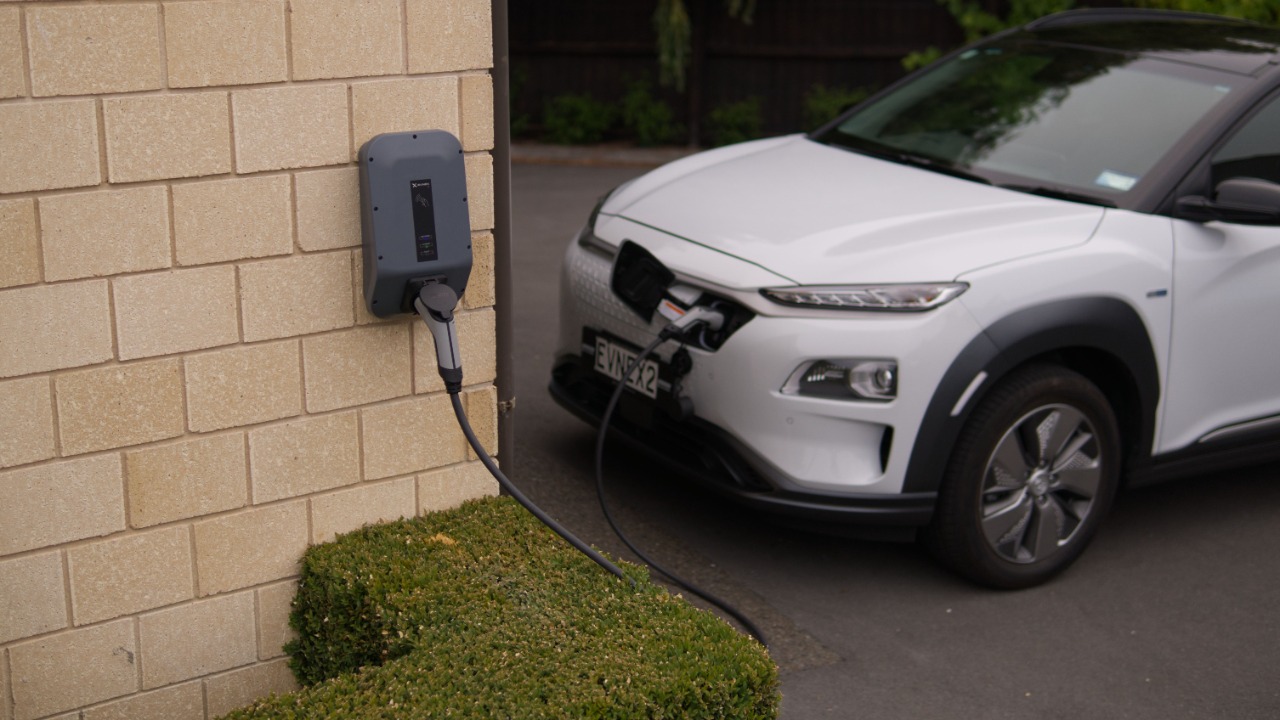

One of the biggest complaints about electric cars has always been charging time.
A gasoline car can stop, refuel and leave in a few minutes. An EV may need considerably longer, particularly when the battery is cold, the charger is slow or the vehicle itself cannot accept very high charging power.
That gap is shrinking quickly.
Some of today’s fastest-charging electric cars can add enough range during a 10-minute stop to make long-distance travel feel much closer to a conventional fuel break. The Morning Overview list highlights eight particularly strong examples: the Hyundai Ioniq 5, Kia EV6, Porsche Taycan, Lucid Air, Tesla Model 3, Genesis GV60, Hyundai Ioniq 6 and Kia EV9.
Most share one major engineering advantage:
high-voltage battery architecture.
Instead of relying on traditional 400-volt systems, several operate around 800 volts or higher, allowing enormous amounts of electrical power to enter the battery without requiring equally enormous current.
But charging power alone does not determine how many miles someone gets in 10 minutes.
Efficiency matters just as much.
Why “Miles Added in 10 Minutes” Is More Useful Than Peak Kilowatts
EV manufacturers love advertising charging power.
240 kW.
320 kW.
350 kW.
400 kW.
Those numbers are useful, but they do not tell the entire story.
Suppose two cars both receive 200 kWh-equivalent charging power during part of a session.
Car A consumes 25 kWh per 100 miles.
Car B consumes only 17 kWh per 100 miles.
Car B turns every kilowatt-hour added into significantly more driving distance.
That is why highly efficient cars such as the Lucid Air and Hyundai Ioniq 6 can perform extremely well in a short-stop comparison even if another vehicle briefly reaches a similar or higher charging rate.
The useful question on a road trip is not:
How many kilowatts is the charger delivering?
It is:
How many miles can I drive after these 10 minutes?
1. Hyundai Ioniq 5
The Hyundai Ioniq 5 helped bring 800-volt charging technology into the mainstream.
The latest U.S. model uses an 84-kWh battery on many trims and can charge from 10% to 80% in around 20 minutes on a compatible 350-kW charger. Hyundai also says the long-range rear-wheel-drive version can add as much as 178 miles in approximately 15 minutes under ideal conditions.
That works out to a substantial amount of range during a 10-minute coffee stop.
The secret is Hyundai’s E-GMP platform.
Its high-voltage architecture allows the battery to accept high charging power without forcing huge current through the system.
That reduces resistive losses and allows smaller, lighter electrical components than an equivalent lower-voltage system would require.
Hyundai Ioniq 5 official specifications
The Ioniq 5’s Advantage Depends on the Charger
There is an important catch.
The car does not produce 350 kW simply because it is connected to something labeled “fast charger.”
The station itself needs sufficient voltage and power.
Battery temperature matters.
State of charge matters.
Weather matters.
Hyundai explicitly notes that actual charging time varies according to charger output, battery temperature and other conditions.
That means an Ioniq 5 connected to an older 150-kW station can still charge quickly, but it cannot demonstrate the full advantage of its architecture.
Ultra-fast EV charging is a partnership between car and infrastructure.
2. Kia EV6
The Kia EV6 uses essentially the same E-GMP foundation as the Ioniq 5.
That gives it similarly impressive charging behavior.
For the 2026 EV6, Kia lists an 84-kWh battery on long-range trims and maximum DC charging input of around 240 kW. Under suitable conditions, Kia says the battery can move from 10% to 80% in around 20 minutes using a 350-kW charger.
That charging rate is particularly useful because the EV6 is relatively efficient.
A large, heavy EV can absorb huge amounts of electricity and still add fewer miles per minute.
The EV6 converts its energy into range reasonably well.
EV6 and Ioniq 5 Are Much More Similar Than They Look
The Hyundai and Kia look dramatically different.
One resembles a retro-futuristic hatchback.
The other looks like a low crossover.
Underneath, however, their charging systems are closely related.
That creates an interesting buying situation.
Someone choosing between them should probably not make charging speed the deciding factor.
Both are among the quickest-charging mainstream EVs available.
Interior layout.
Ride quality.
Styling.
Dealer availability.
Price.
Those differences may matter more.
3. Porsche Taycan
Porsche was using 800-volt architecture before it became fashionable.
The updated Taycan can now accept up to 320 kW at a sufficiently powerful DC charger.
Porsche says the current model can move from 10% to 80% in approximately 18 minutes, despite using a larger battery than the original version.
More importantly, the Taycan can sustain more than 300 kW for several minutes rather than touching a huge number only momentarily.
That charging curve matters enormously.
A peak rate that lasts 30 seconds looks impressive in marketing.
A slightly lower rate sustained for five or ten minutes adds more actual energy.
Porsche Taycan charging information
Porsche’s Charging Curve Is the Real Achievement
Batteries usually charge fastest when they are relatively empty.
As state of charge increases, the battery-management system gradually reduces power to protect the cells.
That is why EV manufacturers commonly quote 10-to-80% times rather than 0-to-100%.
The final 20% can take disproportionately long.
Porsche has worked extensively on maintaining high charging rates through a larger portion of that useful window.
The result is that a properly preconditioned Taycan arriving at a compatible charger with around 10% remaining can absorb an enormous amount of energy before the driver has finished a short break.
4. Lucid Air
The Lucid Air approaches the problem from two directions.
First, it uses a 900-volt-plus electrical architecture capable of very high charging rates.
Second, it is extraordinarily efficient.
Lucid says its Wunderbox charging system can add up to approximately 400 kilometers, or roughly 250 miles, in around 15 minutes, depending on the version and conditions.
That means a short charging session can translate into an unusually large amount of actual driving.
The efficiency side is crucial.
Lucid did not simply install a giant battery and gigantic charger.
The Air uses extremely efficient motors, aerodynamics and power electronics.
That allows every kilowatt-hour added to carry the car farther.
This Is Why Lucid Can Beat Cars With Similar Charging Power
Imagine two EVs each add 40 kWh during a charging stop.
One travels four miles per kWh.
The other travels three.
The first has just gained roughly:
160 miles
while the second gained:
120 miles.
Same energy.
Forty-mile difference.
That is why miles-per-minute comparisons often reveal more about real road-trip performance than peak charger ratings.
Lucid’s extreme efficiency makes its charging power unusually valuable.
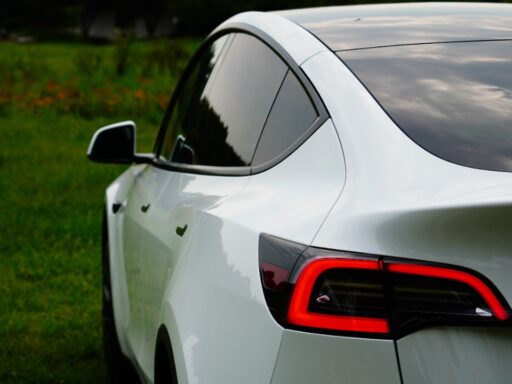
5. Tesla Model 3
The Tesla Model 3 is different from most vehicles on this list.
It does not rely on an 800- or 900-volt architecture.
Yet it remains one of the easiest EVs to road-trip.
Why?
The Supercharger network.
Tesla optimized the car and charging infrastructure together.
That means the navigation system can route the vehicle to charging stations, precondition the battery before arrival and estimate how long the stop should take.
Morning Overview emphasizes that the Model 3’s real advantage is not necessarily having the highest theoretical voltage but having access to a large, consistent charging network.
A theoretically faster charger 30 miles away is not particularly useful.
A reliable fast charger directly beside the highway is.
Charging Reliability Can Matter More Than Charging Speed
This is something specification tables often overlook.
Suppose Car A can theoretically add 200 miles in 10 minutes.
But the closest compatible charger is broken.
Car B adds only 160 miles in the same time but has six working stations along the route.
Which is better for the road trip?
Probably Car B.
This is where Tesla historically built one of its strongest advantages.
The charging experience was designed as an extension of the vehicle rather than an unrelated third-party service.
Other networks are improving rapidly, and NACS adoption has given more vehicles access to Tesla infrastructure, but network reliability remains a major part of real-world charging performance.
6. Genesis GV60
Genesis essentially took Hyundai’s fast-charging platform and wrapped it in a more luxurious package.
The 2026 GV60 uses an upgraded 84-kWh battery and 800-volt architecture.
Genesis says it can charge from 10% to 80% in as little as 18 minutes on a compatible 350-kW, 800-volt charger.
The rear-wheel-drive version also reaches an EPA-estimated range of up to 306 miles.
2026 Genesis GV60 official information
That makes the GV60 an interesting example of how platform sharing benefits consumers.
Genesis did not have to invent an entirely separate ultra-fast charging system.
It inherited proven electrical architecture from Hyundai Motor Group and concentrated more of its development effort on materials, comfort and luxury features.
Luxury Doesn’t Have to Mean Slow Charging
Some luxury EVs historically emphasized performance and interior technology while charging relatively slowly.
The GV60 avoids that problem.
Its charging capability is essentially one of its headline features.
That matters because luxury buyers are arguably even less willing to spend 45 minutes sitting beside a charging station.
A premium EV should reduce inconvenience, not introduce more of it.
7. Hyundai Ioniq 6
The Ioniq 6 demonstrates why aerodynamics can be just as valuable as charging hardware.
It uses the same basic 800-volt E-GMP charging technology as the Ioniq 5.
Hyundai says Ioniq 5 and Ioniq 6 models can reach 10% to 80% in as little as approximately 18 minutes under ideal conditions with the appropriate 350-kW charger.
The difference is shape.
The Ioniq 6 is a low, streamlined sedan rather than a relatively upright crossover.
That reduces aerodynamic drag.
Lower drag means less energy is required to move the car at highway speed.
More miles come from each kilowatt-hour.
Hyundai electric vehicle charging overview
Aerodynamics Matter Most Exactly Where Fast Charging Matters
At low city speeds, aerodynamic drag is relatively modest.
At highway speeds, it becomes increasingly important.
That means the Ioniq 6’s slippery shape is particularly valuable during long-distance driving—the exact situation where fast charging matters most.
A road-trip EV therefore benefits twice:
Charge quickly.
Then use that electricity efficiently at 70 mph.
That combination can reduce total travel time more effectively than simply installing a larger battery.
8. Kia EV9
Fast charging is relatively easy to appreciate in a small sedan.
It becomes more impressive in something as large as the Kia EV9.
The EV9 is a full three-row electric SUV capable of carrying a family and substantial luggage.
That means more mass.
Larger frontal area.
More energy consumption.
Yet Kia’s high-voltage platform allows the EV9 to maintain competitive charging times.
For the 2026 model, Kia lists approximately 24 minutes from 10% to 80% for the larger battery on a suitable 350-kW charger, with the smaller battery taking around 20 minutes.
The EV9 may not add as many miles per minute as a highly aerodynamic sedan.
But for a vehicle with three real rows of seats, the charging performance remains exceptional.
Why the EV9’s Bigger Battery Doesn’t Automatically Make It Faster
This is another common misunderstanding.
A large battery can accept lots of electricity.
But it also requires more electricity to move the vehicle.
Imagine adding 30 kWh to:
A lightweight sedan.
A large three-row SUV.
The sedan might travel much farther on that same energy.
So when comparing “range added in 10 minutes,” vehicle efficiency becomes especially important.
The EV9’s achievement is that despite being large and heavy, it does not condemn families to hour-long charging stops.
Why 800 Volts Makes Such a Difference
Electrical power is basically a combination of voltage and current.
To deliver enormous charging power, a charging system can increase:
Voltage.
Current.
Or both.
High current creates more resistance-related heating and requires thicker, heavier cables and components.
Increasing voltage allows more power to be transferred without increasing current proportionally.
That is why 800-volt architectures have become so popular among newer premium and performance EVs.
Porsche specifically notes that its Taycan reaches maximum charging performance at compatible 800-volt charging stations.
The higher-voltage approach can provide:
Faster charging.
Lower electrical losses.
Potentially lighter cabling.
Better sustained high-power performance.
It is not magic.
But it changes the engineering trade-offs considerably.
Why Doesn’t Every EV Use 800 Volts?
Cost.
Complexity.
Component availability.
A basic commuter EV may not need 300-kW charging.
If someone drives 30 miles per day and charges overnight at home, spending more money on an extremely sophisticated high-voltage architecture may offer little practical benefit.
That makes 400-volt systems perfectly reasonable for many vehicles.
High-voltage architecture becomes particularly valuable for:
Long-range vehicles.
Road-trip cars.
Premium EVs.
High-performance models.
Large batteries.
Drivers frequently relying on DC fast charging.
Eventually, costs may fall enough that 800-volt systems become normal across much of the industry.
Peak Charging Speed Is Not the Most Important Number
This deserves repeating.
An EV advertised at 350 kW does not necessarily charge faster overall than one advertised at 300 kW.
Consider two hypothetical charging curves.
Car A:
350 kW for one minute.
Then 180 kW.
Then 120 kW.
Car B:
300 kW for five minutes.
Then 250 kW.
Then 200 kW.
Car B may add significantly more energy during a 10-minute stop despite having the lower peak.
This is why serious EV testing looks at charging curves and average charging power rather than simply the highest number displayed for a few seconds.
Battery Preconditioning Can Save Several Minutes
Fast-charging batteries prefer a particular temperature range.
Too cold and charging slows.
Too hot and the battery-management system protects the cells by reducing power.
Modern EVs increasingly solve this through battery preconditioning.
Enter a fast charger into the navigation system.
The car begins heating or cooling the battery before arrival.
Reach the charger.
The battery is already near its optimal temperature.
High charging power becomes available quickly.
This is one reason simply navigating manually to a charger can sometimes produce slower results than letting the car’s built-in route planner prepare the battery.
Arriving at 10% Can Be Faster Than Arriving at 50%
EV charging speed also changes with state of charge.
The lower portion of the battery can generally accept power much faster than the upper portion.
That means someone optimizing a road trip may deliberately arrive with 10% remaining, charge to perhaps 60% or 70%, then leave.
That can be faster than:
Arrive at 40%.
Charge to 100%.
The final portion of the battery usually takes much longer.
This is why manufacturers advertise 10-to-80% times.
It represents the useful fast-charging window.
Charging to 100% on Every Road Trip Can Waste Time
A driver coming from a gasoline car naturally wants to “fill the tank.”
With an EV, that is often inefficient.
Suppose charging from:
10% to 80% takes 18 minutes.
But:
80% to 100% requires another 20 minutes.
Spending nearly as long on the final 20% as the first 70% makes little sense if another charger is available farther down the route.
The faster strategy is often:
Charge enough to comfortably reach the next stop.
Leave.
This changes the psychology of road trips.
The goal becomes minimizing total journey time rather than maximizing battery percentage at every stop.
The Charger Itself Can Become the Bottleneck
Buying a 320-kW-capable EV does not guarantee 320-kW charging.
Plug into a 150-kW station and the station wins.
The car cannot extract electricity that the charger cannot provide.
Public charging networks are gradually expanding 350-kW and even more powerful equipment, but high-power charging remains uneven geographically.
Porsche’s latest Cayenne Electric demonstrates where the industry is heading: its 800-volt system can reach 390 kW, or briefly around 400 kW under certain conditions, and Porsche claims approximately 312 to 338 kilometers of WLTP range can be added in ten minutes depending on the version.
That already goes beyond many of the vehicles in the original list.
The limiting factor may increasingly become infrastructure rather than the car.
New EVs Are Already Moving Beyond 400 kW
Charging technology is accelerating quickly.
The latest BMW Neue Klasse products can reach around 400 kW.
Lucid’s Gravity can reach similar territory.
New Mercedes-AMG electric technology is targeting dramatically higher figures.
InsideEVs reports that some of the newest 2026 EV platforms are claiming charging powers as high as 600 kW, with certain models potentially adding more than 280 miles of rated range in ten minutes under ideal conditions.
That means today’s “fastest-charging EV” lists can age surprisingly quickly.
The direction is clear:
Ten-minute stops are becoming a major engineering target.
Cold Weather Can Destroy the Perfect Charging Session
Manufacturer charging figures are usually measured under favorable conditions.
Real winter driving can look different.
A cold battery cannot accept maximum charging power safely.
If preconditioning is unavailable or not activated, a nominally 300-kW-capable car may charge at a fraction of that rate.
The same applies during extreme heat.
This is why buyers living in colder climates should pay attention to battery preconditioning just as much as headline charging speed.
A car capable of warming itself before reaching the charger can deliver a much more consistent road-trip experience.
Charging Station Sharing Can Slow Things Down Too
Some charging installations share power between multiple stalls.
If several EVs connect simultaneously, each may receive less than the charger’s advertised maximum.
Porsche specifically identifies power sharing as one reason charging stations sometimes fail to reach expected speed.
This is another reminder that charging speed is a system outcome.
Car.
Battery.
Cable.
Charger.
Grid connection.
Temperature.
State of charge.
All need to cooperate.
Which of These Eight Is Best for Road Trips?
That depends on what “best” means.
For sheer efficiency and huge range gained during short charging stops, the Lucid Air is exceptionally strong.
For mainstream affordability combined with ultra-fast charging, the Ioniq 5, Ioniq 6 and EV6 remain difficult to beat.
For performance-car buyers, the Porsche Taycan offers one of the best sustained fast-charging experiences available.
For luxury compact-crossover buyers, the Genesis GV60 provides E-GMP speed with a more premium interior.
For families needing three rows, the Kia EV9 is unusually capable.
And the Tesla Model 3 continues to benefit from the strength and integration of its charging network.
There is no single winner because driving patterns differ.
The Most Important EV Specification May Soon Be Minutes, Not Miles
For years, EV marketing revolved around one number:
Range.
250 miles.
300 miles.
400 miles.
500 miles.
That made sense when charging was slow and public infrastructure limited.
But imagine two cars.
Car A drives 400 miles but needs 45 minutes to recharge.
Car B drives 330 miles but adds another 200 miles in 10 minutes.
Which is better on an 800-mile road trip?
The answer may be Car B.
That is why short-stop charging performance is becoming so important.
Once an EV can recover meaningful highway range during the time someone needs to use a restroom and buy coffee, the conversation around electric road trips changes completely.
The eight vehicles highlighted by Morning Overview demonstrate that transition already.


Charging still is not as universally convenient as gasoline.
The fastest rates require powerful chargers.
Weather affects performance.
Station reliability matters.
Battery temperature matters.
And quoted manufacturer numbers represent ideal conditions rather than guarantees.
But the direction is unmistakable.
The industry is no longer asking whether an EV can drive 300 miles.
It is increasingly asking:
How quickly can you get the next 200?
And when that answer approaches ten minutes, one of the biggest practical differences between electric and gasoline road trips starts becoming considerably smaller.