
Skywatchers across much of North America could get an unusually dramatic double show Thursday night.
A deep partial lunar eclipse will turn almost the entire full moon reddish-orange overnight on August 27 into August 28, while elevated solar activity could simultaneously push the northern lights far enough south to become visible across parts of the northern United States.
The lunar eclipse itself is highly predictable. At maximum, about 96.2% of the moon will enter Earth’s dark umbral shadow, producing an almost-total “blood moon” appearance. The aurora is the uncertain part: forecasters are watching an incoming high-speed solar-wind stream and a coronal mass ejection that could produce minor to moderate geomagnetic storms.
If the timing lines up, observers could potentially see a red eclipsed moon in the southern sky while green or reddish aurora glows low toward the north.


This Is Almost a Total Lunar Eclipse
Thursday’s event is technically a partial lunar eclipse, not a total one.
But barely.
At maximum eclipse, roughly 96% of the lunar disk will be inside Earth’s umbral shadow. Only a narrow portion will remain directly illuminated by the sun.
That means the moon should look much more dramatic than a typical partial eclipse.
Most of its surface can take on the coppery-red appearance usually associated with a total lunar eclipse.
This reddish color happens because sunlight passing through Earth’s atmosphere is filtered and bent into the planet’s shadow. Blue wavelengths scatter more easily, while red and orange light continues through and reaches the moon.
It is essentially the combined light of Earth’s sunrises and sunsets falling onto the lunar surface.
When Will the Eclipse Peak?
Maximum eclipse occurs at approximately:
12:12 a.m. EDT on Friday, August 28
That corresponds to:
11:12 p.m. CDT Thursday
10:12 p.m. MDT Thursday
9:12 p.m. PDT Thursday
8:12 p.m. AKDT Thursday
The full eclipse sequence lasts approximately 5 hours and 38 minutes, although the most visually impressive period comes around maximum coverage.
North and South America get particularly favorable viewing conditions.
Much of the eastern half of North America can watch the entire eclipse progress, while observers farther west will see the moon rise already partially eclipsed.
You Don’t Need Eclipse Glasses
Unlike a solar eclipse, a lunar eclipse is completely safe to watch with the naked eye.
No solar filters.
No eclipse glasses.
No special protective equipment.
Binoculars can make the lunar surface look more detailed, and a telescope can provide an impressive close-up, but neither is necessary.
Just look at the moon.
The much harder challenge will be finding a place dark enough to see the aurora at the same time.
Why Could the Northern Lights Appear?
The aurora forecast comes from activity on the sun.
A high-speed stream of solar wind is expected to interact with Earth’s magnetic field beginning late Thursday, while an Earth-directed coronal mass ejection, or CME, could arrive around Friday.
A CME is an enormous burst of magnetized plasma released from the sun.
When that material reaches Earth, it can disturb the planet’s magnetic field.
Charged particles are then guided toward the atmosphere, where they collide with oxygen and nitrogen.
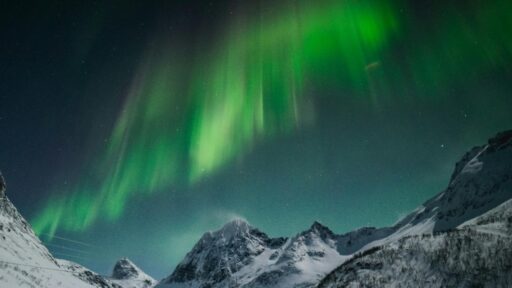
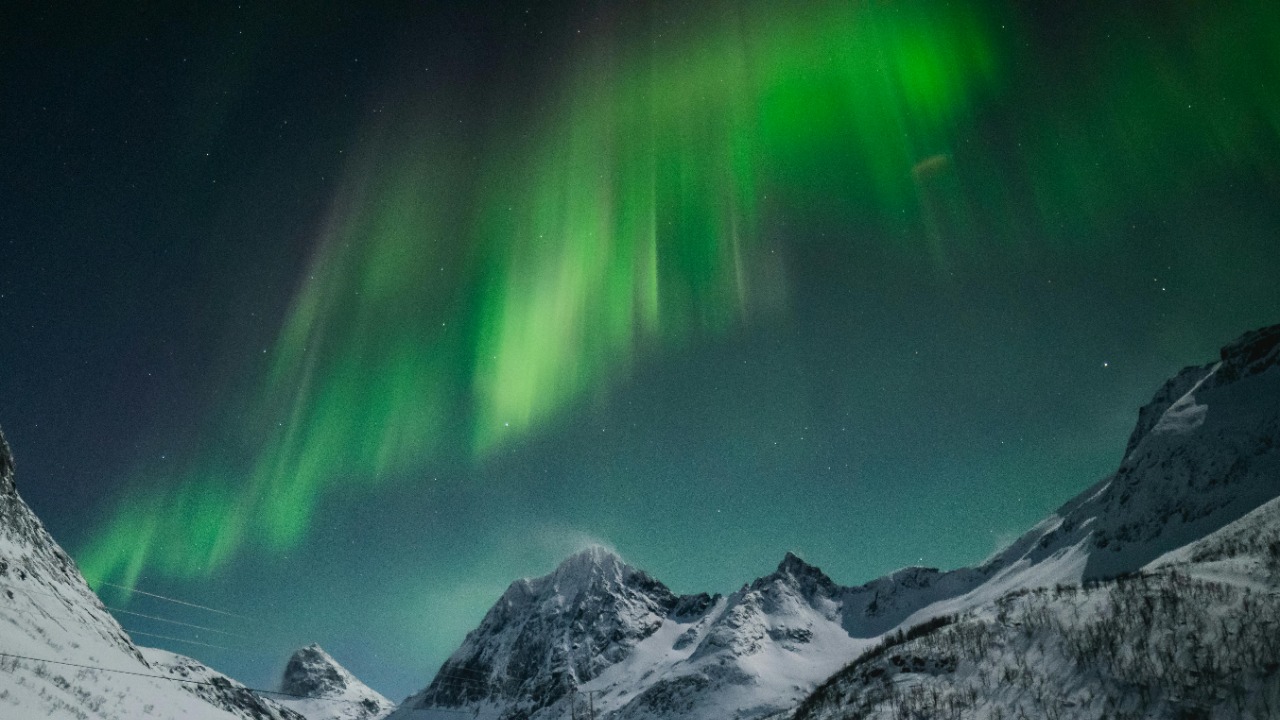
Those collisions produce the glow we call the aurora borealis.
Green is the most familiar color, although strong events can also create red, pink and purple light.
NOAA Is Watching for G1 and G2 Storm Conditions
Current forecasts suggest geomagnetic conditions could increase significantly.
According to the forecast summarized by Forbes, NOAA expects activity to rise toward G1, or minor geomagnetic storm, levels as the high-speed solar-wind stream arrives, with G2 moderate storm conditions possible on August 28 as CME effects reach Earth.
The UK Met Office is also watching for elevated geomagnetic activity, including possible Kp 5 conditions.
That agreement between forecasting agencies increases confidence that some auroral activity is likely.
It does not guarantee that someone standing outside in Chicago or New York will see brilliant green curtains overhead.
Aurora forecasts are much less predictable than eclipse forecasts.
Which States Could See the Northern Lights?
If geomagnetic activity reaches roughly G1 levels, the best chances would generally be in northern states close to Canada.
Potential viewing areas include:
Alaska, Washington, Idaho, Montana, North Dakota, Minnesota, Wisconsin, Michigan, Maine, Vermont and New Hampshire.
If conditions strengthen toward G2 levels, the auroral oval could expand farther south.
That could potentially give observers in parts of:
Oregon, Wyoming, Nebraska, Iowa, Illinois, Indiana, Ohio, Pennsylvania and New York
a chance to see or photograph the aurora.
That gets the potential viewing area close to 20 states.
But “could be visible” needs to be interpreted cautiously.
In the southern part of the forecast region, the aurora may appear only as a faint glow low on the northern horizon.
A phone camera may see considerably more color than the naked eye.
The Moon and Aurora Will Be in Opposite Directions
This is one of the most interesting parts of the event.
Around maximum eclipse, the moon should dominate the southern sky for many North American observers.
Any aurora would generally appear toward the north.
So do not necessarily expect to photograph a giant blood moon sitting directly inside green auroral curtains.
Depending on location and lens choice, the two phenomena may appear on opposite sides of the sky.
That creates a very different observing experience.
Turn south:
A deep red lunar eclipse.
Turn north:
Potential aurora.
Seeing both during the same night would still be extraordinary.
The Eclipse Could Actually Help Aurora Viewing
Normally, a full moon is one of the worst things for seeing faint northern lights.
Moonlight brightens the sky and reduces contrast.
Thursday night provides an unusual exception.
During maximum eclipse, Earth’s shadow will dramatically reduce the moon’s brightness.
That could temporarily produce darker skies even though it is technically a full-moon night.
For faint aurora near the northern horizon, that reduction in moonlight could make a meaningful difference.
It is one reason the coincidence is particularly interesting.
The eclipse does not cause the aurora.
It simply creates better conditions for seeing it if geomagnetic activity occurs at the same time.
Your Phone May See Aurora Before You Do
Do not immediately give up if the northern sky looks gray.
Modern smartphone cameras are surprisingly good at detecting faint aurora.
Use Night Mode.
Point the phone north.
Hold it extremely still.
Take a several-second exposure.
The camera may reveal green or pink coloration that your eyes perceive only as a pale gray band.
Recent northern-light events across the U.S. have produced exactly this effect, with smartphones capturing significantly more color than observers could see directly.
For better results, use a tripod or brace the phone against a solid surface.
Do not use flash.
A Camera Can Capture Both Better Than Your Eyes
Photographers have another advantage.
Long exposures collect light over several seconds.
That means cameras can intensify faint aurora colors while also recording stars that are difficult to see directly.
The eclipsed moon presents a challenge because it remains much brighter than most of the surrounding sky.
If trying to include both the moon and aurora in one image, photographers may need multiple exposures or careful editing to avoid either overexposing the moon or underexposing the aurora.
A wide-angle lens will help if the moon and aurora are widely separated.
For a close-up of the blood moon itself, use a telephoto lens instead.
Dark Skies Matter Enormously
A G1 geomagnetic storm may produce visible aurora near the Canadian border while remaining almost impossible to see from a brightly illuminated city.
Streetlights.
Store signs.
Buildings.
Car headlights.
All reduce contrast.
For the best chance, travel somewhere with:
A dark northern horizon.
Minimal city light.
Few trees or buildings blocking the view.
Clear weather.
An unobstructed southern view for the moon.
That last point matters if the goal is seeing both events.
An ideal location would have clear horizons in both directions.
Clouds Could Ruin Everything
Astronomy always has one irritating limitation.
Weather.
The eclipse happens whether the sky is clear or not.
The aurora may happen whether the sky is clear or not.
But neither matters much to an observer sitting under thick cloud.
Local cloud forecasts therefore become just as important as the space-weather forecast.
Someone in a state technically inside the aurora viewing zone may see nothing because of overcast skies, while someone farther south under crystal-clear conditions might photograph a faint display.
Check weather forecasts shortly before leaving.
Aurora Forecasts Can Change Very Quickly
A lunar eclipse can be calculated years in advance with extraordinary precision.
A CME is different.
Forecasters may know that material is traveling toward Earth, but predicting exactly when it arrives and how strongly it interacts with Earth’s magnetic field is difficult.
One especially important factor is the direction of the interplanetary magnetic field embedded in the solar wind.
If it aligns favorably with Earth’s magnetic field, geomagnetic activity can intensify dramatically.
If it does not, a promising CME can produce a disappointing aurora.
That is why real-time monitoring becomes particularly useful in the final hours.
A forecast saying “G2 possible tomorrow” is valuable.
A real-time measurement saying the solar wind has arrived and conditions are favorable is much better.
This Is the Best U.S. Lunar Eclipse for Years
Even if the aurora does nothing, the lunar eclipse itself is worth seeing.
Space.com describes it as the deepest partial lunar eclipse since September 2024 and the most impressive partial eclipse until late 2028.
AccuWeather similarly calls it the best lunar eclipse for much of the contiguous United States until 2029.
That means nobody should treat the northern lights as the only reason to go outside.
Think of the aurora as a possible bonus.
The eclipse is the reliable event.
Why Isn’t It Technically a Blood Moon?
Astronomers normally use “blood moon” informally to describe the red appearance of a total lunar eclipse.
Thursday’s eclipse reaches only about 96%.
Technically, therefore, it remains partial.
But with such a large portion of the moon inside the umbra, most of the lunar surface should become dark red or copper.
Visually, it can strongly resemble a total eclipse.
That is why headlines are describing it as a blood moon even though a thin portion remains directly illuminated.
The distinction matters scientifically more than visually.
Saturn Will Be Nearby Too
There is another celestial object worth watching.
Saturn will appear relatively close to the eclipsed moon in the night sky, adding another target for observers.
A small telescope can reveal Saturn’s appearance more clearly, although its rings currently present at a relatively narrow angle compared with their most spectacular years.
Still, a red eclipsed moon, Saturn and possible northern lights in one evening makes this an unusually busy night for skywatchers.
The Best Strategy Is Simple
Go somewhere dark before maximum eclipse.
Make sure the northern horizon is clear.
Watch the moon as Earth’s shadow gradually consumes it.
Around maximum eclipse, check the northern sky repeatedly.
Use a smartphone camera if nothing obvious appears.
And keep watching the real-time aurora forecast because geomagnetic conditions can intensify or weaken quickly.
There is no guarantee the northern lights will cooperate.
That uncertainty is part of what makes the event interesting.
Thursday Night Could Produce a Remarkable Combination
The lunar eclipse is essentially certain.
Around 96.2% of the moon will enter Earth’s darkest shadow, reaching maximum eclipse at 12:12 a.m. EDT Friday.
The northern lights are the wildcard.
If the incoming solar wind and CME create the forecast G1 or G2 geomagnetic activity, aurora could become visible from northern states and potentially reach much farther south.
That could create an unusual scene:
A reddish almost-blood moon hanging in the south.
A darkened full-moon sky.
And green aurora glowing toward the north.
Even if only a fraction of observers get both, Thursday night is worth watching.
Because sometimes the most memorable sky events are not the ones astronomers plan years in advance.
They are the nights when two completely unrelated parts of space decide to put on a show at the same time.