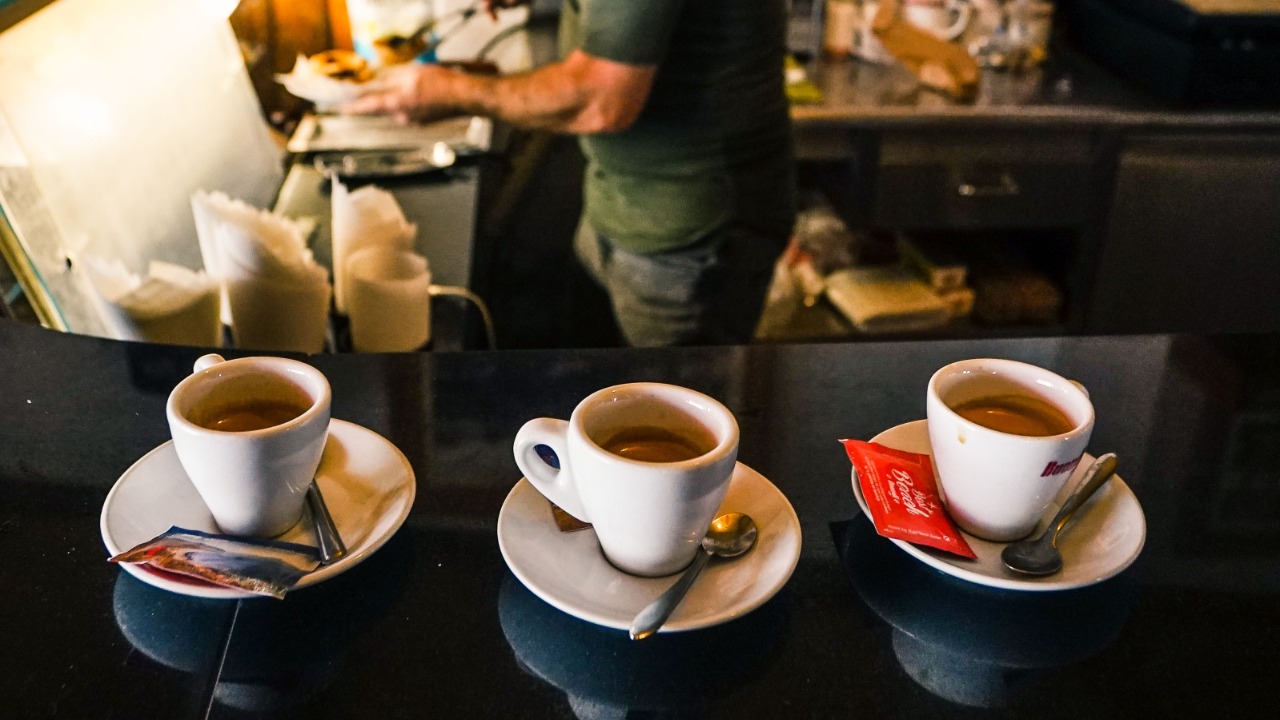

Coffee drinkers already know that climate change can make their morning cup more expensive.
What is less obvious is that it could also make that cup taste different.
Coffee is unusually sensitive to its growing environment. Temperature, rainfall, altitude, soil and the speed at which coffee cherries ripen all influence the chemistry developing inside the bean. When those conditions change, farmers do not simply harvest more or less coffee. They can also end up harvesting coffee with different acidity, sweetness, aroma and body.
That matters particularly for Arabica, the species responsible for much of the world’s specialty coffee. Arabica generally performs best under relatively cool conditions, and World Coffee Research places its optimal average annual temperature at roughly 18–21°C. As temperatures rise beyond that range, coffee plants face greater stress and cherries can develop differently. (worldcoffeeresearch.org)
So the surprising effect of climate change may not be that coffee disappears.
It may be that the coffee people recognize today becomes harder and more expensive to produce.
Coffee Flavor Begins Long Before the Beans Reach a Roaster
A roasted coffee bean may look simple, but its flavor is the end result of a long biological process.
Coffee cherries develop slowly on trees.
During that process, sugars, acids and other compounds accumulate inside the seed. Roasting later transforms those compounds into the aromas and flavors associated with brewed coffee.
Growing temperature influences how quickly the fruit develops.
Cooler high-altitude conditions generally slow maturation, giving Arabica cherries more time to develop the chemical complexity valued in specialty coffee.
Warmer conditions can accelerate ripening.
That does not automatically make every warm-grown coffee bad, but it can make producing certain flavor profiles more difficult.
Research on coffee-growing suitability consistently shows that Arabica has a relatively narrow climatic comfort zone. A study examining future coffee conditions in Mozambique, for example, describes annual mean temperatures of roughly 20–23°C and adequate rainfall as favorable for Arabica cultivation. (sciencedirect.com)
Once temperatures move persistently beyond suitable ranges, farmers begin dealing with more than uncomfortable weather.
The biology of the crop starts changing.
Heat Can Make Coffee Cherries Ripen Too Quickly
Slow maturation is one reason high-altitude Arabica coffees can develop distinctive acidity and aromatic complexity.
Higher temperatures can shorten that process.
When cherries mature faster, beans may have less opportunity to develop the same balance of sugars and organic acids.
This is one reason climate change can affect quality as well as quantity.
World Coffee Research has warned that extreme heat is becoming a major challenge for Arabica production. Its research notes that much of the world’s currently suitable coffee land is expected to experience hotter conditions as the climate changes. (worldcoffeeresearch.org)
The effect will not be identical everywhere.
A farm that is currently slightly too cool might initially benefit from modest warming.
A farm already near Arabica’s upper temperature limit may experience the opposite.
That unevenness is what makes the future of coffee difficult to predict through one global average.
Rainfall Timing Can Matter as Much as Total Rainfall
Coffee does not simply need water.
It needs water at the right time.
Rain can help trigger flowering after a dry period. Once flowers appear, weather conditions influence fruit development over the following months.
Climate change can make those seasonal patterns less predictable.
A long drought can damage plants.
Heavy rain at the wrong time can disrupt flowering.
Unexpected rain during harvest can complicate drying and reduce bean quality.
Recent conditions in Brazil illustrate the problem. During the 2026 crop, extreme heat and irregular rainfall linked with El Niño threatened flowering and ripening, while rain in some southeastern areas delayed harvesting and reduced bean quality. (reuters.com)
That means a climate shock can hit coffee several times.
First it can reduce the number of cherries.
Then it can affect the cherries that remain.
Finally, it can interfere with harvesting and processing.
By the time the beans reach a café, those weather events may have happened months earlier and thousands of miles away.
Your Favorite Coffee Region May Have to Move Uphill
Altitude provides coffee growers with one possible escape from rising temperatures.
Higher elevations are generally cooler.
As lower farms become too warm for high-quality Arabica, suitable production may shift upward.
But mountains have limits.
A farmer cannot move indefinitely higher.
The available land may become steeper.
Protected forests may occupy higher elevations.
Infrastructure may be poor.
Different communities may already use that land.
A 2021 study examining Ethiopian specialty coffee found that climate change could substantially alter the areas suitable for several celebrated coffee types, threatening regions associated with distinctive cup profiles. (nature.com)
This has implications far beyond agricultural output.
Coffee origin is part of flavor.
An Ethiopian coffee grown in one region can taste dramatically different from a Brazilian or Colombian coffee because climate, elevation, genetics and processing all interact.
If production shifts geographically, some traditional flavor identities may become harder to preserve.
Arabica Is Especially Vulnerable
The two commercially dominant coffee species are Arabica and Canephora, the latter generally called Robusta.
Arabica is usually associated with more delicate acidity, sweetness and aromatic complexity.
Robusta tends to tolerate hotter conditions better and commonly produces a stronger, more bitter cup with higher caffeine.
That difference is becoming strategically important.
As traditional Arabica-growing regions become hotter, producers and researchers are paying greater attention to Robusta and other heat-tolerant coffee species.
In Brazil’s Rondônia region, for example, Robusta production has been expanding while researchers develop varieties better able to handle heat and changing rainfall. (theguardian.com)
That could eventually change what appears inside supermarket coffee blends.
A future blend may contain a greater proportion of heat-tolerant varieties.
That might help protect supply.
It could also subtly change taste.
Robusta Itself Is Not Invincible
Switching everything to Robusta would not solve the problem.
Robusta can tolerate higher temperatures than Arabica, but it still has biological limits.
The 2026 Brazilian crop provided a useful example. Farmers in major Canephora-producing areas faced erratic rainfall and heatwaves, while specialists noted that temperatures above roughly 35°C can severely disrupt plant metabolism. (reuters.com)
Climate resilience therefore does not mean climate immunity.
If heat becomes extreme enough, both major commercial coffee species can struggle.
That is why researchers are looking beyond the coffee varieties consumers already know.
A Forgotten Coffee Species Could Help
One of the most intriguing candidates is Coffea stenophylla.
The species was once cultivated in West Africa before largely disappearing from commercial production.
Scientists became interested again because stenophylla appears capable of tolerating substantially higher temperatures than Arabica while producing a flavor profile experts have compared favorably with high-quality Arabica.
Research highlighted by the Royal Botanic Gardens, Kew, found that stenophylla may tolerate temperatures several degrees warmer than Arabica. The species is now being studied both as a potential commercial crop and as genetic material for breeding more climate-resilient coffee. (ft.com)
That creates an intriguing possibility.
Climate change may eventually expand the types of coffee people drink.
The future cup might contain a species that most consumers today have never heard of.
Shade Trees Could Help Coffee Farms Stay Cooler
Not every adaptation requires new genetics.
Some farmers are changing how coffee is grown.
Shade trees can reduce heat exposure, help conserve soil moisture and create more stable microclimates around coffee plants.
Traditional coffee agroforestry systems already use larger trees above coffee crops.
Research in southeastern Brazil has examined shade as one strategy for helping Arabica adapt to warming conditions. (sciencedirect.com)
The system can provide ecological benefits too.
Shade trees can support wildlife, protect soils and store carbon.
But there are trade-offs.
Shade can alter yields.
Trees compete for water and nutrients.
Farmers need to choose species and planting densities carefully.
There is no single adaptation capable of working on every coffee farm.
Farmers Are Also Breeding Coffee for a Hotter World
Genetics may become one of the industry’s most important tools.
Coffee breeders are developing varieties that combine cup quality with resistance to heat, drought and disease.
This is challenging because Arabica has a complicated genome and coffee trees take years to mature.
A breeder cannot create a new variety in January and know whether it works by summer.
Testing happens across seasons and locations.
Recent genomic research is helping accelerate that process by identifying genetic variation that may be useful for developing more climate-resilient coffee. (nature.com)
World Coffee Research is also developing new Arabica varieties specifically with changing growing conditions in mind.
That means adaptation may eventually be almost invisible to consumers.
A coffee sold under the same origin name could come from a completely different variety than the one farmers planted 30 years earlier.
Climate Change Can Raise Prices Even When Coffee Still Exists
For consumers, the first visible impact may continue to be price.
Coffee markets react rapidly when major producers experience drought, frost or excessive heat.
Brazil matters enormously because it is the world’s largest coffee producer and a dominant Arabica supplier.
Vietnam is similarly important for Robusta.
When bad weather reduces output in both countries, global supply tightens.
Recent drought and extreme heat in Brazil have already contributed to sharp increases in coffee prices, while poor conditions in Vietnam have added further pressure. (apnews.com)
Higher commodity prices eventually move through roasters, distributors, supermarkets and cafés.
The effect does not happen instantly because companies use inventories and long-term contracts.
But persistent production problems eventually become difficult to absorb.
That is when climate change reaches the breakfast table.
Specialty Coffee Could Feel the Effects First
Cheap coffee blends have flexibility.
A roaster can adjust proportions.
Beans from one origin can sometimes be replaced with another.
A specialty coffee marketed specifically because it comes from one farm or region has much less room to adapt.
If climate change alters the conditions producing that distinctive flavor, replacing the coffee means changing the product.
This is why specialty coffee may be particularly vulnerable.
A consumer is not simply buying caffeine.
He or she may be buying Ethiopian floral aromas, Kenyan acidity or the chocolate and nut character associated with parts of Brazil.
Climate change threatens those sensory identities.
The coffee industry may therefore face something similar to wine.
Changing climate can move suitable growing regions and change the characteristics associated with famous origins.
Your Morning Coffee Probably Won’t Disappear
The most dramatic predictions sometimes make it sound as though coffee itself is heading toward extinction.
That is unlikely.
Coffee is too economically important, and producers have too many potential adaptations available.
Farmers can change varieties.
Production can move.
Irrigation can expand where water is available.
Shade can reduce heat.
Breeders can develop more resilient plants.
Robusta and less familiar coffee species can play larger roles.
The more realistic future is one of transformation.
Some regions may produce less.
Some coffees may become more expensive.
Certain flavor profiles may become rarer.
New varieties and origins may become more important.
The cup survives.
What is inside it changes.
Climate Change May Rewrite What “Good Coffee” Means
Coffee culture has spent decades teaching consumers that Arabica is desirable and Robusta is inferior.
A warming world may force that hierarchy to evolve.
Researchers and producers are already improving Robusta quality and rediscovering forgotten species such as stenophylla.
Future cafés may celebrate varieties consumers currently barely recognize.
That could be the unexpected consequence of climate change.
The biggest effect on coffee may not simply be fewer beans.
It may be a gradual transformation of the flavors, varieties and origins people consider normal.
Someone drinking a cup in 2045 may still call it coffee.
It may still contain caffeine.
It may still be the first thing he reaches for in the morning.
But the beans could have been bred for heat, grown under a forest canopy, cultivated much higher up a mountain or produced from a species that rarely appears in today’s cafés.
Climate change is not merely threatening coffee production.
It is quietly influencing what coffee itself may become.