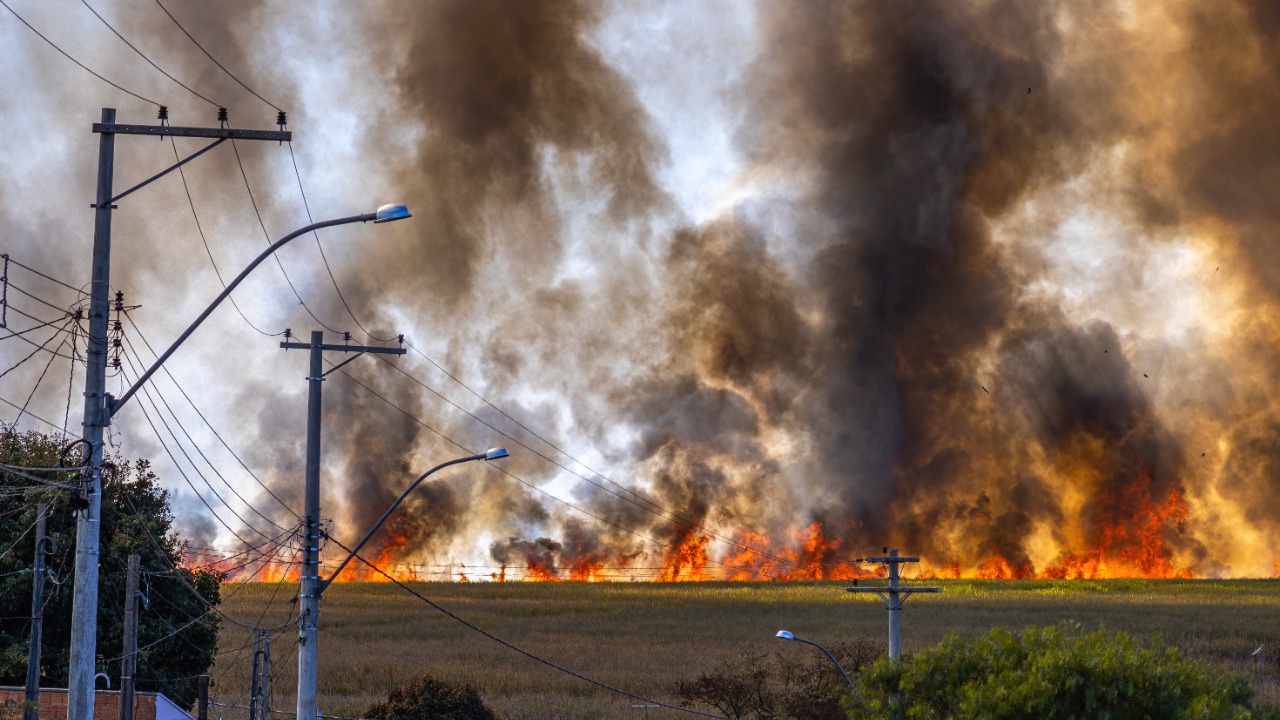

Around 1,200 people have been evacuated as another wildfire threatened a coastal area of France, adding to what has already become an extraordinary summer of fires, emergency evacuations and disruption across the country.
The evacuation may appear relatively small compared with the hundreds of thousands of people forced from their homes and holiday accommodation during the massive fires around Bordeaux and France’s Atlantic coast in July. Yet it illustrates a wider problem confronting French emergency services in 2026: wildfires are increasingly threatening places crowded with tourists as well as permanent residents.
France has already experienced enormous evacuations this summer. During the July fires around Gironde, Cap Ferret and Bordeaux, authorities eventually evacuated more than 220,000 people from southwestern France.
The latest evacuation therefore arrives in a country that has barely had time to recover from one major wildfire emergency before facing the risk of another.
Coastal Areas Can Become Especially Difficult to Evacuate
Wildfire evacuations are complicated anywhere, but coastal tourist destinations create particular logistical problems.
During the height of summer, the number of people occupying a seaside community can be far greater than its permanent population. Campsites, holiday rentals and hotels fill with visitors who may know little about local roads or evacuation routes.
That can create dangerous bottlenecks.
France experienced exactly this problem during the July wildfire crisis on the Cap Ferret peninsula. Authorities eventually ordered a complete evacuation and used boats as well as the area’s only main road to move people away from approaching flames.
The incident demonstrated why officials increasingly evacuate threatened communities before flames actually reach homes.
Waiting until the fire is visible from someone’s window may already be too late.
Modern wildfires can change direction rapidly when winds strengthen or burning embers ignite new fires ahead of the main front.
France Has Already Seen Mass Evacuations This Summer
The scale of the country’s 2026 wildfire season provides important context for the latest incident.
On July 23, more than 10,000 people were evacuated overnight as a rapidly expanding fire west of Bordeaux burned through approximately 2,000 hectares.
The situation deteriorated dramatically over the following days.
Authorities ordered residents and holidaymakers out of increasingly large sections of Gironde as fires moved toward Bordeaux and devastated parts of the Atlantic coast. At one stage, around 220,000 people had been evacuated across southwestern France.
By July 31, improved weather conditions allowed more than 144,000 evacuees to return to areas around Bordeaux, although substantial damage remained and some locations continued to face restrictions.
That sequence demonstrates how quickly a regional wildfire can become a national emergency.
A blaze that initially affects forest can soon threaten campsites, transport routes, towns and major cities.
Campsites Have Become One of the Most Vulnerable Locations
One of the clearest themes from France’s recent fires has been the vulnerability of campsites.
At the Domaine de La Rive campsite near Biscarrosse, approximately 1,200 holidaymakers were evacuated in less than half an hour when flames approached during the evening. Families reportedly left meals sitting on tables as police and campsite staff rushed them out.
That evacuation is a useful example of why emergency planners treat crowded holiday sites differently from ordinary residential neighborhoods.
A campsite can contain hundreds or thousands of people within a relatively small area.
Many are unfamiliar with local geography.
Some are traveling with children.
Others may have caravans, trailers or large amounts of equipment that they instinctively want to save.
All of that can slow an evacuation.
When authorities tell people to leave immediately, the priority is therefore not protecting the holiday itself. It is getting everyone onto safe routes before those routes become threatened.
France’s Traditional Summer Holiday Is Being Changed by Fire Risk
Camping occupies an unusually important place in French holiday culture.
Reuters reported in August that recent fires had forced evacuations from 62 campsites in southwestern France, creating major economic pressure on operators during the most important period of their year. August alone can account for a large share of annual revenue for some sites.
The consequences therefore extend beyond emergency response.
A campground that escapes physical destruction can still lose weeks of business because visitors cancel reservations or authorities restrict access to surrounding forests.
Tourism businesses then face a difficult question.
Should they rebuild exactly as before, or should facilities in fire-prone areas be redesigned around wider evacuation routes, vegetation management and emergency shelters?
The answer will become increasingly important if severe fire seasons continue.
Heat and Drought Are Creating More Dangerous Conditions
Wildfires need ignition, but the environment determines how dangerous that ignition becomes.
France and other parts of Europe have endured repeated periods of intense heat and drought in 2026. Reuters reported during the July crisis that Western European temperatures were running roughly 3 degrees Celsius above historical norms as extremely dry vegetation created highly combustible landscapes.
Scientists have repeatedly warned that human-driven climate change increases the probability and intensity of extreme heat and drought conditions that can make severe wildfires more likely. Reuters’ coverage of the European fire crisis notes that Europe is the world’s fastest-warming continent and that rising temperatures are intensifying the conditions associated with destructive fires.
That does not mean climate change ignites every fire.
Human activity remains responsible for many individual ignition events.
What warmer and drier conditions can do is make the landscape more capable of turning a small spark into an uncontrollable blaze.
Northern Areas Are No Longer Automatically Safe
France historically associated its greatest wildfire danger with Mediterranean regions and the dry forests of the south.
That geographic assumption is becoming less reliable.
Wildfire specialists have warned that more French departments are now exposed to significant fire danger, including areas farther north that were previously considered less vulnerable. Geographer Pauline Vilain-Carlotti told Le Monde that more than 60 departments now face wildfire risk and argued that the growing intensity of recent fires could become increasingly normal.
That expansion has major implications for emergency planning.
Southern communities may already have decades of experience with firebreaks, evacuation procedures and vegetation management.
Areas where serious wildfires were historically rare may be less prepared.
They may also contain residents who do not automatically recognize wildfire alerts as an immediate threat.
Early Evacuation Has Become a Critical Strategy
The French response this summer shows that authorities are increasingly willing to evacuate large populations before conditions become catastrophic.
That strategy can be disruptive.
Families may spend nights in temporary shelters only to discover that their homes were never directly threatened.
Tourists may lose holidays.
Businesses may lose revenue.
But emergency planners face a difficult asymmetry.
Evacuating too early creates inconvenience.
Evacuating too late can create fatalities.
Analysis of recent European fire emergencies suggests authorities are increasingly relying on earlier alerts, geolocated warning systems and preemptive evacuations precisely because extreme fires can behave unpredictably.
France’s FR-Alert system can send emergency notifications directly to mobile phones in threatened geographic areas, helping officials reach people who might not be following television or local radio.
For holiday destinations filled with visitors, that capability is particularly valuable.
Firefighting Alone Cannot Solve the Problem
France has deployed thousands of firefighters, military personnel, aircraft and police during this year’s major fires.
During the Gironde crisis, the country also requested assistance through the European Union’s Civil Protection Mechanism, with aircraft and other resources arriving from European partners.
But emergency response begins only after a fire already exists.
The longer-term challenge is prevention.
That means reducing dry vegetation around communities, enforcing restrictions during extreme fire danger, improving evacuation routes and reconsidering development in areas where thousands of people may need to escape quickly.
French authorities have also strengthened legal action against dangerous behavior in forests. Following the July fires, prosecutors began pursuing cases involving activities such as smoking, fireworks and poorly controlled fires in high-risk areas.
The message is increasingly clear: during extreme fire conditions, a seemingly minor act can have consequences extending far beyond the person who caused the ignition.
Another Evacuation Is No Longer an Isolated Story
The evacuation of around 1,200 people might once have been treated as an unusual regional emergency.
After the summer France has experienced, it looks different.
It is part of a broader transition in which wildfire is becoming a recurring threat to coastal communities, holiday destinations and regions that previously considered large-scale fire unusual.
France has already seen what happens when a forest fire reaches heavily populated tourist areas.
Roads become evacuation corridors.
Campsites empty within minutes.
Boats become emergency transport.
Thousands of firefighters can spend days trying to prevent flames from reaching towns.
The immediate priority in any new fire remains straightforward: move people away from danger and contain the blaze.
The bigger challenge will continue long after the smoke disappears.
France must increasingly plan its summers around the possibility that wildfires will not remain confined to distant forests.
They can arrive beside campsites, beaches and communities filled with people who expected nothing more dangerous than a summer holiday.