

The global car industry is entering one of the most disruptive periods in its history.
For decades, the basic formula was remarkably stable. Established manufacturers in Europe, Japan, South Korea and the United States designed internal-combustion vehicles, built enormous regional supply chains and sold them around the world.
That structure is now being challenged from almost every direction.
Chinese automakers are expanding internationally. Electric vehicles are taking a larger share of global sales. Hybrids are proving far more resilient than some manufacturers expected. Governments are using tariffs to protect domestic industries. Battery costs continue falling, while software, artificial intelligence and autonomous-driving technology are becoming increasingly important parts of the vehicle itself.
The International Energy Agency describes the shift as fundamental. Its Global EV Outlook 2026 estimates that electric-car sales exceeded 20 million globally in 2025, representing roughly one-quarter of all new cars sold.
So what comes next?
The answer is unlikely to be a simple transition from gasoline cars to electric cars.
It looks more like a complete restructuring of who designs cars, where they are built and what consumers expect them to do.
China Is No Longer Just the World’s Factory
Perhaps the biggest change is the role of China.
China was once primarily viewed by Western manufacturers as a manufacturing base and enormous sales market. Increasingly, it is becoming an automotive technology center.
The IEA estimates that China accounted for around 40% of global car-manufacturing capacity in 2024 and had become the world’s largest vehicle exporter. Around 70% of electric cars sold worldwide were manufactured in China.
That scale has produced an enormous cost advantage.
The IEA estimates that manufacturing a small SUV in China costs more than 30% less than producing a comparable vehicle in advanced economies. Battery-cell prices in China are also substantially lower than in Europe or North America. (IEA)
But cost is only part of the story.
Companies such as BYD, Geely, Chery, SAIC, Xiaomi, XPeng and others are increasingly competing on software, battery technology, cabin electronics, charging speed and product-development cycles.
Western manufacturers are now responding by moving more engineering work into China. Reuters reported that GM, Volkswagen, Audi and Renault are increasingly using Chinese engineering operations to develop vehicles and technology not only for Chinese buyers but potentially for global markets.
China is becoming less of a factory for the global car industry and more of an innovation engine.
The Electric Transition Is Still Happening, but Not Everywhere at the Same Speed
The idea that the entire world would move quickly and uniformly from combustion engines to battery-electric vehicles has proven too simple.
China is moving rapidly.
Electric cars represented nearly 55% of Chinese new-car sales in 2025, according to the IEA. Europe reached approximately 28%, while adoption remained much lower in several other markets.
Even inside Europe, buyers are choosing different forms of electrification.
The European Automobile Manufacturers’ Association reported that battery-electric vehicles reached 20.7% of EU registrations during the first half of 2026, while conventional hybrids were much larger at 37.3%. Petrol and diesel together fell below 30%.
That suggests the future will not arrive through one powertrain overnight.
Battery EVs will continue growing.
Hybrids will remain important.
Plug-in hybrids will occupy part of the middle ground.
Combustion vehicles will survive longer in regions where charging infrastructure, affordability or energy systems make electrification more difficult.
The result will be a fragmented global market.
Automakers may have to develop several powertrain strategies simultaneously rather than betting everything on one technology.
Hybrids Have Become the Industry’s Unexpected Safety Net
A few years ago, some manufacturers treated hybrids mainly as a transitional technology.
That assumption is being reconsidered.
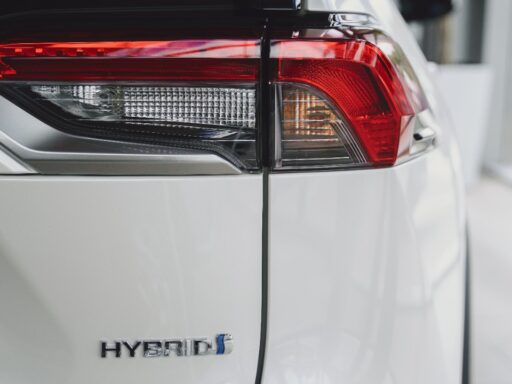
Toyota expects to sell around 5 million hybrids this year, reflecting just how important the technology remains to its global strategy.
Other companies are also changing direction.
Global automakers have recorded tens of billions of dollars in charges as they reassess previous EV investments. Reuters reported that Ford, GM, Honda, Stellantis, Volkswagen and others have scaled back, delayed or restructured electric programs as demand and regulations changed.
This does not necessarily mean the EV transition has failed.
It means automakers discovered that consumers do not all transition at the same speed.
A hybrid can offer lower fuel consumption without requiring the driver to change refueling habits. In markets where charging infrastructure remains limited, that is an enormous advantage.
The manufacturers that succeed may therefore be those capable of offering several forms of electrification without destroying profitability.
Battery Costs Could Still Change Everything
Electric vehicles remain expensive largely because of the battery.
But the cost trend continues moving downward.
The IEA reports that average battery prices fell another 8% in 2025, while EV battery deployment increased almost 30% to approximately 1.2 terawatt-hours. (IEA)
Longer-term progress has been even more dramatic.
Over roughly the past decade, average EV battery-pack energy density has increased by around 60%, while pack prices have fallen approximately 75%. (IEA)
If those trends continue, the economic argument around EVs changes.
The electric drivetrain itself is relatively inexpensive and mechanically simple. The battery remains the major cost obstacle.
As that obstacle shrinks, smaller and cheaper electric cars become easier to build profitably.
That may be where Chinese manufacturers currently hold one of their biggest advantages.
Their battery supply chains, manufacturing scale and widespread use of lower-cost lithium iron phosphate chemistry allow them to offer vehicles at prices many global competitors struggle to match.
Tariffs Will Shape Where Cars Are Built
The next automotive era will not be determined purely by engineering.
Politics is becoming part of vehicle design.
Governments increasingly view automotive manufacturing as strategically important because it supports jobs, industrial supply chains, technology and national economic security.
That has produced tariffs and localization requirements across multiple regions.
Mexico introduced tariffs reaching 50% on cars from countries without free-trade agreements, including China. Türkiye has imposed additional duties on some imported EVs, while the European Union has also applied higher tariffs to certain Chinese-made electric vehicles.
The response from Chinese manufacturers is predictable.
They are increasingly exploring local factories.
Reuters reported that BYD and Geely have pursued manufacturing opportunities in Mexico, while Chinese companies are also expanding or considering production in Europe, Southeast Asia and other regions.
Tariffs may therefore slow imports.
They may not stop Chinese brands from globalizing.
Instead, they may simply change where those vehicles are assembled.
Software Could Become as Important as Horsepower
Another transformation is happening inside the vehicle.
Cars are increasingly becoming software platforms.
Infotainment, navigation, driver assistance, battery management, charging, climate systems and even suspension behavior can now be controlled electronically.
Over-the-air updates allow manufacturers to change vehicle functionality after the car has been sold.
That creates a completely different competitive environment.
Traditional automakers developed vehicles through multi-year mechanical engineering cycles.
Technology-oriented manufacturers increasingly operate closer to consumer-electronics companies, updating software continuously and redesigning interfaces far more quickly.
Chinese automakers have become particularly aggressive in this area.
That helps explain why legacy companies are expanding engineering operations inside China rather than trying to replicate every innovation from headquarters thousands of miles away.
The car industry’s next competitive battlefield may therefore be less about engines and more about operating systems.
The Industry Is Heading Toward Consolidation
Not every new brand will survive.
China’s EV sector alone contains far more manufacturers than the market can support indefinitely.
AlixPartners estimated that only around 15 of China’s 129 EV and plug-in-hybrid brands operating in 2025 would remain financially viable by 2030.
Price wars can help consumers temporarily.
They are much harder on manufacturers.
Companies selling vehicles close to cost cannot sustain enormous investments in factories, software, batteries and new platforms indefinitely.
Consolidation is therefore likely.
Some companies will disappear.
Others will merge.
Some Western brands may rely more heavily on Chinese partners.
GM’s decision to extend its SAIC joint venture in China for another 20 years illustrates how alliances may evolve. The partnership plans at least 30 electric or hybrid models by 2030, with Chinese-developed vehicles potentially exported to additional markets.
The boundary between “Chinese car” and “Western car” may become increasingly difficult to define.
The Winning Car Company May Look Very Different
For decades, automotive strength meant something relatively simple.
A company needed excellent engines, transmissions, manufacturing plants, dealer networks and strong brands.
Those things still matter.
But the next winner may need something more complicated.
It needs competitive batteries.
It needs software capability.
It needs access to semiconductors and critical minerals.
It needs flexible factories.
It needs multiple powertrain strategies.
It needs enough scale to survive global price competition.
And it needs to move quickly enough that a vehicle developed today does not feel outdated when it finally reaches customers.
The global car industry is therefore not merely changing what powers vehicles.
It is changing what an automaker actually is.
The companies that dominated the combustion-engine era may not automatically dominate the electric and software era.
And the companies leading EV sales today may not all survive the brutal consolidation that appears increasingly likely.
The next decade will not simply determine whether the world’s cars run on gasoline, electricity or both.
It will determine which countries, technologies and companies control one of the largest manufacturing industries on Earth.