

Buying a new pickup truck should not require measuring the house first, but that is increasingly becoming part of the shopping process.
Modern pickups have grown substantially in capability. They tow heavier trailers, carry larger payloads, offer spacious crew cabs, and provide technology that would have seemed impossible in a work truck several decades ago. The tradeoff is physical size.
A buyer can spend tens of thousands of dollars on a new truck, drive it home, press the garage-door opener, and discover an uncomfortable problem: the truck technically fits on the property but not necessarily inside the garage.
Sometimes it is too long. Sometimes the mirrors create a width problem. Sometimes a lifted suspension, roof accessory, or larger tires create a height problem. Even when the truck physically crosses the garage opening, there may not be enough room to close the door or comfortably walk around it.
The problem becomes clearer when looking at specifications for modern pickups. Ford lists certain configurations of the F-150 at more than 243 inches long, depending on cab and bed configuration. A vehicle roughly 20 feet long can make a conventional residential garage feel surprisingly small.
So, are trucks becoming too large for the houses expected to store them?
A Full-Size Truck Can Be Nearly as Long as the Garage
Garage dimensions vary considerably between houses, but a common residential garage depth is around 20 to 24 feet.
That sounds generous until a full-size pickup enters the equation.
The current Chevrolet Silverado 1500 can exceed 240 inches in overall length in longer configurations. Chevrolet’s published Silverado specifications demonstrate how dramatically dimensions can change depending on the cab and cargo-box combination.
At roughly 20 feet long, a truck entering a 20-foot-deep garage leaves essentially no practical clearance.
Even a few extra feet do not automatically solve the problem.
A driver needs room in front of the truck. The garage door needs clearance behind it. Storage cabinets, refrigerators, bicycles, workbenches, water heaters, or steps leading into the house may consume additional space.
A garage advertised as 22 feet deep is not necessarily providing 22 feet of completely usable parking space.
Suddenly, choosing between a short bed and long bed becomes more than a cargo decision.
It becomes an architectural one.
Heavy-Duty Trucks Make the Problem Even Bigger
If a half-ton truck creates a tight fit, heavy-duty pickups can turn the garage into a measuring exercise.
Ford’s Super Duty lineup includes configurations stretching well beyond the dimensions of ordinary passenger vehicles. Crew cabs combined with longer beds can create trucks approaching or exceeding 22 feet in length, depending on configuration.
Ram heavy-duty pickups present a similar challenge.
The Ram 3500 is available with multiple cab, bed, and rear-wheel arrangements designed around towing and commercial capability rather than suburban garage dimensions.
That makes perfect sense for the truck’s intended job.
The vehicle may need to tow a large fifth-wheel trailer, transport equipment, or serve as a commercial work platform.
But the residential garage was probably designed according to a completely different set of priorities.
The result is a mismatch between two products that have evolved independently: houses and trucks.
Width Is Easy to Forget Until the Mirrors Arrive
Length receives most of the attention, but width can create an equally frustrating problem.
Truck specifications often list vehicle width without fully communicating how large the truck becomes when the mirrors are extended.
Towing mirrors can dramatically increase overall width.
A driver may technically have enough space to pass through the garage opening but only with the mirrors folded.
That creates a different question.
How comfortable is the driver with only a few inches of clearance on each side?
A narrow garage entrance can become particularly difficult when the driveway approaches at an angle. The truck may need to turn while entering, causing its front and rear corners to follow different paths.
Modern technology helps.
Surround-view cameras, parking sensors, and electronically folding mirrors make maneuvering large vehicles considerably easier. Ford, for example, offers multiple camera and towing technologies through its F-150 technology systems that help drivers understand what is happening around the truck.
But technology cannot change the dimensions of the garage.
Height Can Become the Unexpected Dealbreaker
A stock pickup may fit underneath the garage door without difficulty.
Then the owner starts modifying it.
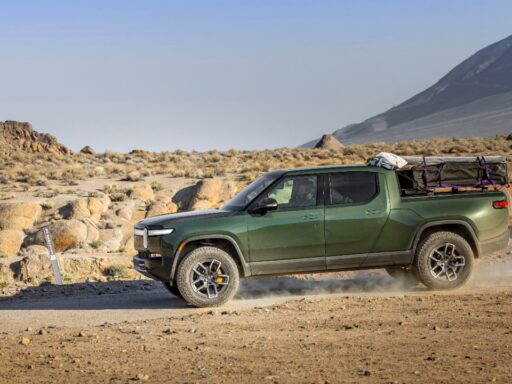
Larger tires add height. Suspension lifts raise the body. Roof racks, rooftop tents, antennas, light bars, and cargo systems push the highest point even farther upward.
Even factory configurations can be surprisingly tall.
Off-road-focused trucks are particularly relevant because increased ground clearance is part of their appeal.
The Ford F-150 Raptor combines large tires and specialized suspension with dimensions designed for serious off-road performance rather than maximum garage compatibility.
A driver therefore needs to measure more than the vehicle’s roof.
The highest permanent accessory determines whether the truck clears the opening.
Garage-door hardware also matters. The opening height may be lower than the ceiling itself, particularly when tracks, weather seals, or structural elements reduce usable clearance.
An expensive roof accessory discovering the garage frame is not the ideal way to determine maximum vehicle height.
Why Have Pickup Trucks Become So Large?
The obvious question is why manufacturers continue building larger trucks if parking them is becoming difficult.
The answer is that buyers increasingly expect trucks to perform several jobs simultaneously.
A modern pickup can be a family vehicle, towing platform, luxury car, work truck, off-road machine, and mobile office.
Crew cabs provide rear-seat space comparable with SUVs. Larger beds increase utility. Stronger frames and suspensions support greater payloads and towing capacities.
Safety requirements, crash structures, emissions equipment, larger wheels, and increasingly sophisticated mechanical systems also influence packaging.
The American pickup has evolved far beyond the basic work trucks of earlier decades.
The EPA’s Automotive Trends Report documents the broader shift in the U.S. vehicle market toward trucks and SUVs, showing how dramatically consumer preferences have changed.
Manufacturers are responding to what people buy.
And people keep buying large trucks.
Older Garages Were Never Designed for Modern Pickups
The garage itself is part of the problem.
Many American houses were built when vehicles were significantly smaller.
A garage designed several decades ago may have been perfectly adequate for the sedans, station wagons, or compact pickups common at the time.
Replacing those vehicles with a modern crew-cab full-size pickup changes the equation.
The house has not grown.
The vehicle has.
This becomes especially noticeable in older neighborhoods, where garages may have narrower doors and shallower interiors than those found in newer construction.
A truck owner can therefore encounter a strange situation: the vehicle is perfectly legal for American roads but impractical for the building intended to store it.
Midsize Trucks Are Not Necessarily Small Anymore
Choosing a midsize truck might appear to solve the problem.
Sometimes it does.
But modern midsize pickups have also become substantial vehicles.
The current Toyota Tacoma, Ford Ranger, Chevrolet Colorado, GMC Canyon, and Nissan Frontier provide capabilities that would once have placed them remarkably close to older full-size trucks.
Their smaller dimensions can make them easier to park, but buyers should not assume the word “midsize” guarantees garage compatibility.
Cab configuration and bed length still matter.
A long-bed midsize truck may create more difficulty than expected in a shallow garage.
The only reliable solution is measuring the exact configuration being purchased.
Measure the Garage Before Signing for the Truck
Truck buyers routinely compare horsepower, towing capacity, payload, fuel economy, trim levels, screens, engines, and financing.
Garage dimensions deserve a place in that research.
The usable opening width matters. The opening height matters. Interior depth matters. So do mirrors, accessories, shelving, steps, and anything permanently installed inside the garage.
The manufacturer’s specification sheet can provide the vehicle dimensions, but those numbers need to be compared with the actual usable space rather than the garage dimensions listed on a real-estate floor plan.
A few inches of theoretical clearance may technically mean the truck fits.
It does not mean living with it will be pleasant.
Bigger Capability Comes With a Bigger Footprint
Modern pickups are extraordinary machines.
A truck can tow loads once associated with commercial equipment while carrying five adults in a cabin filled with leather, large digital displays, advanced driver-assistance technology, and climate-controlled seats.
That capability requires space.
For some owners, parking outside is an acceptable compromise. Others may modify the garage, choose a shorter bed, step down to a midsize truck, or select a different configuration entirely.
The important point is discovering the problem before delivery day.
A truck can have the perfect engine, ideal towing capacity, favorite color, and every option on the wish list.
But if the garage door closes against the rear bumper, one specification suddenly becomes more important than all the others.
Overall length.