
Parts of central and south-east England have experienced an extraordinary absence of rainfall, with weather records showing a 14-day stretch in which Met Office stations across both regions recorded an average of zero rain.
The dry run extended from 2 July to 15 July 2026, making it the longest uninterrupted rain-free spell in south-east England since April 1997 and the longest in central England since June 1996.
The figures add another striking chapter to an already exceptional British summer marked by repeated heatwaves, unusually high temperatures and growing pressure on water supplies.
The original BBC Weather report on England’s record rain-free spells highlighted how prolonged dry weather had turned what might ordinarily be welcomed as a sunny summer into a more complicated environmental and water-management problem.
Central and South-East England Go Two Weeks Without Rain
An occasional dry summer week is hardly unusual in Britain. Fourteen consecutive days with no measurable regional rainfall is a different matter.
Met Office station data showed an average of zero rainfall across central and south-east England between 2 and 15 July. For the south-east, a longer uninterrupted period had not been recorded since a 15-day spell in April 1997. Central England had not experienced an equivalent run since a 14-day period in June 1996.
The length of the rain-free spell is particularly notable because it followed months in which parts of England had already experienced warm and relatively dry conditions.
By mid-July, the Environment Agency reported that England had received just 3% of its normal July rainfall up to that point. Less than 1mm of rain was recorded anywhere in England during the week ending 14 July, while rainfall totals in eastern and south-eastern England stood at effectively 0% of the long-term average for the month.
The full Environment Agency dry weather and drought report provides a broader picture of how quickly the lack of rainfall affected rivers, reservoirs, soils and public water supply.
Heat and High Pressure Helped Keep Rain Away
The lack of rain was closely connected with persistent high-pressure conditions.
High pressure frequently brings settled weather because sinking air suppresses the development of the clouds and weather systems capable of producing widespread rainfall. During prolonged summer periods, that can create extended stretches of sunshine, light winds and rising temperatures.
The Met Office explained during July that high pressure had dominated much of the UK’s weather pattern for weeks, resulting in prolonged sunshine and very limited rainfall across many areas. Some isolated showers and thunderstorms occurred, but they were highly localised and did little to change the overall dry picture.
That meant one town might briefly experience a shower while another location only a few miles away remained completely dry.
The conditions were accompanied by exceptional heat. The UK recorded temperatures of at least 35°C during May, June and July 2026, the first time that threshold had been reached in all three months during the same year in the official weather record.
By early July, the Met Office had confirmed another prolonged period of hot and dry weather, with parts of southern England expected to reach the mid-30s Celsius.
Reservoir Levels Begin to Reflect the Dry Weather
A prolonged absence of rainfall becomes more important when it begins influencing water resources.
For the week ending 14 July, reservoir storage across England had fallen to 78.8%, approximately five percentage points below the long-term average for that time of year. Almost every reservoir monitored by the Environment Agency recorded declining storage during the week.
Six reservoirs were classified as notably low, including Grafham in Cambridgeshire and Hanningfield in Essex. Blagdon Reservoir in Somerset was classified as exceptionally low for the time of year.
The combination of limited rainfall and very high temperatures also caused water demand to rise sharply. Water companies reported demand around 20% above normal during one of the July heatwave weekends.
That creates a double pressure on water infrastructure. Less rainfall means fewer opportunities to replenish rivers, reservoirs and groundwater, while hot weather simultaneously encourages households and businesses to consume more water.
Hosepipe Restrictions Spread Across England
The situation soon became visible to households.
Temporary use bans, commonly known as hosepipe bans, were introduced or announced by several water companies as dry conditions persisted.
South East Water had already implemented restrictions in Kent. Anglian Water followed on 11 July, while restrictions affected customers supplied by South West Water, Southern Water, Affinity Water and Cambridge Water during the same period.
These restrictions are designed to reduce non-essential consumption at times when demand is high or available supplies are under increasing pressure.
The restrictions do not necessarily mean that drinking water is about to run out. Instead, they are one of the preventative measures water companies can use to protect supplies and maintain sufficient pressure within the network.
As July progressed, the overall water position became more challenging. Environment Agency figures for the week ending 21 July showed England’s reservoir storage falling further to 75.3%, around 7.4 percentage points below the long-term average.
Several additional areas, including Thames and London, Hertfordshire and North London, Wessex and parts of Kent and South London, were moved into prolonged dry weather status.
Rivers, Soil and Wildlife Also Feel the Effects
The impact of extended dry weather extends far beyond household water supplies.
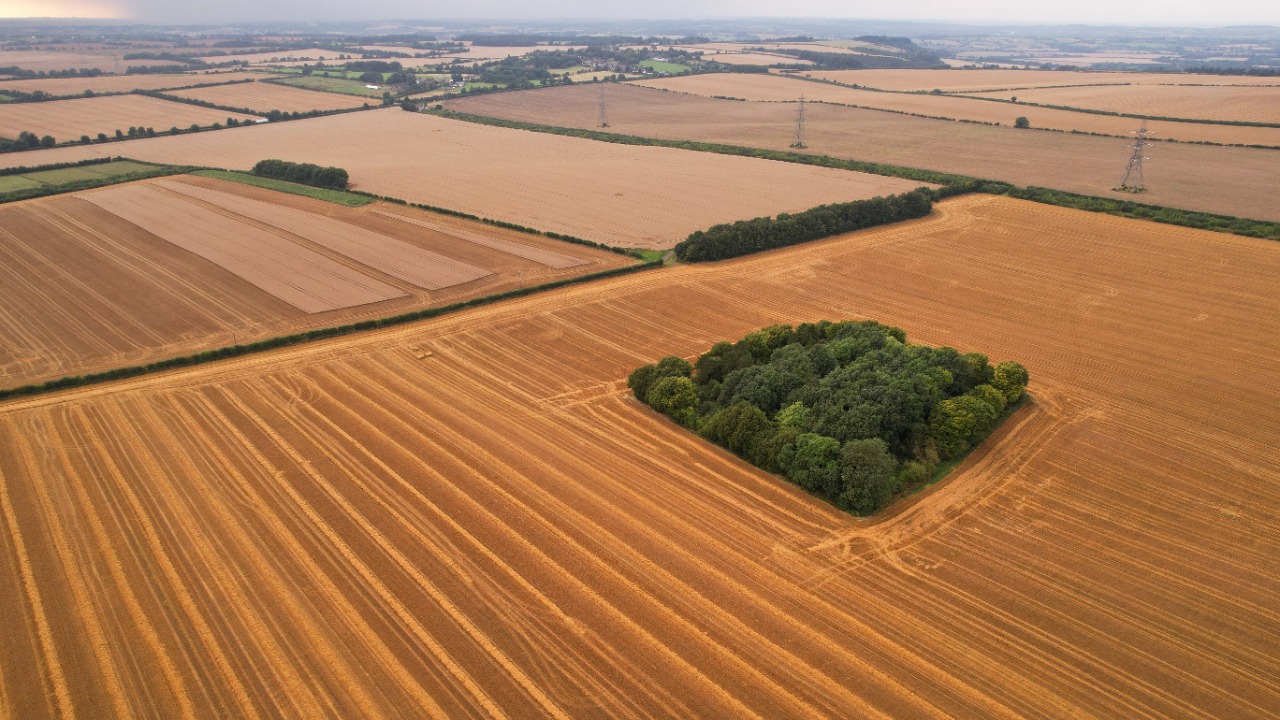
By mid-July, soils were much drier than average across England. River flows had declined at most monitoring sites, with several rivers recording exceptionally low flows for the time of year.
Agriculture was also beginning to feel the effects. Farmers faced greater irrigation demand, falling winter water-storage levels and restrictions on abstraction in some areas. The dry spring had already affected some later-sown crops, while livestock farmers in East Anglia reported difficulties linked to reduced forage availability.
Environmental impacts were becoming increasingly visible as well.
By the following week, the Environment Agency had recorded 61 confirmed incidents associated with drought and dry weather during 2026. Reports included algal blooms, dead fish, low river flows and wildfires in different parts of England.
Extremely dry soils can also create another problem when rainfall finally returns. Hard, baked ground may initially absorb water less efficiently, meaning intense rainfall can run quickly across the surface rather than immediately soaking into the soil.
That is why a period of heavy rain after prolonged dryness does not automatically solve water shortages.
Rainfall Can Return Without Ending the Wider Dry Spell
Forecasts eventually suggested that some parts of Britain would see showers and rain, particularly across northern and western areas.
However, southern England remained much more likely to stay comparatively dry.
The Met Office warned in late July that weather fronts approaching from the northwest could bring rainfall to Scotland, Northern Ireland, northern England and parts of Wales while weakening farther south and east. Southern England was therefore expected to remain dominated by relatively dry conditions.
Met Office rainfall data also showed just how sharp the contrast had become. Between 1 June and 26 July, the UK recorded 111.7mm of rain, but 90.4mm of that fell during June. Only 21.3mm was recorded between 1 and 26 July.
Readers can follow updated analysis through the Met Office’s explanation of where Britain’s summer rainfall has gone.
England’s Dry Summer Is Becoming Increasingly Significant
The 14-day rain-free spell across central and south-east England is significant because it forms part of a much broader pattern.
Repeated heatwaves, exceptionally dry soils, falling reservoir storage and declining river flows show how persistent summer weather can affect far more than weekend plans or garden conditions.
Britain’s weather remains highly variable, and rainfall can return quickly. Yet a few showers cannot instantly reverse the effects of weeks of dry weather. Reservoirs, groundwater and rivers often require prolonged and appropriately distributed rainfall before conditions return to normal.
For central and south-east England, two consecutive weeks without measurable regional rain have already placed the summer of 2026 among the most notable dry periods of recent decades.