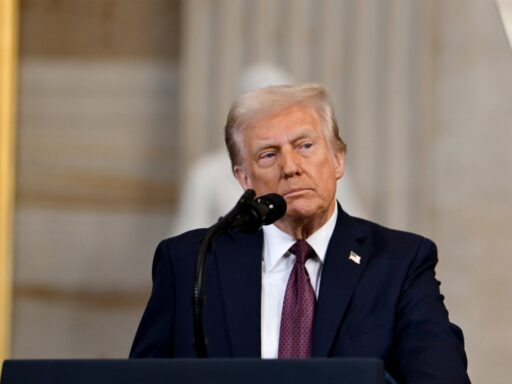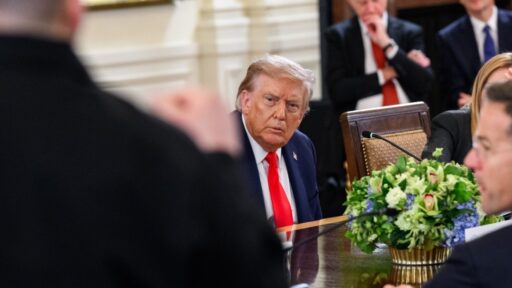
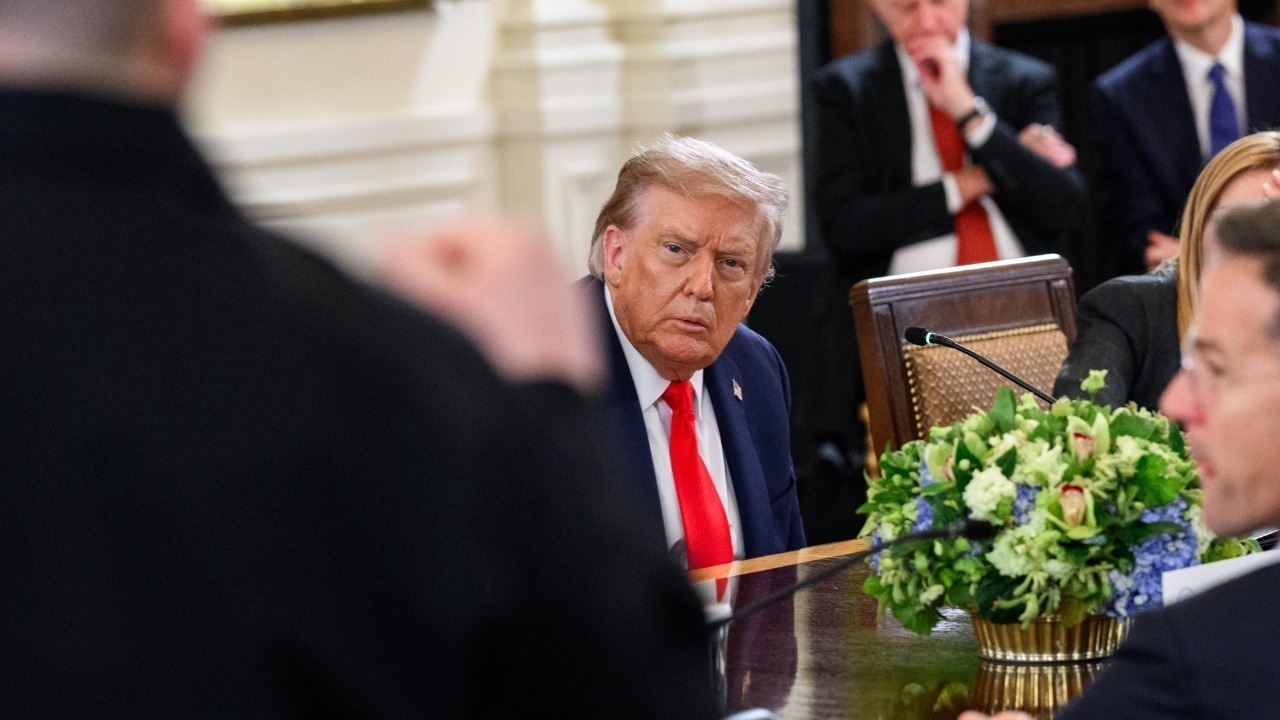

The war involving the United States and Iran has entered another volatile stage after President Donald Trump said he was close to deciding whether to launch a “massive attack” against Iran.
Trump’s warning came as American forces continued striking Iranian targets, Tehran expanded attacks against United States positions in neighbouring countries, and Iran-aligned Houthi forces opened a potentially dangerous new front around the Red Sea. The combination of military escalation, disrupted shipping routes, higher oil prices, and stalled negotiations has increased fears that the conflict could return to full-scale warfare.
In an interview with Axios, Trump said he was seriously considering an operation that would be larger than previous American attacks conducted during Operation Epic Fury. However, he also acknowledged that no final decision had been made. Two United States officials similarly indicated that no new military orders had been issued at the time of the report.
That distinction remains important. Trump’s statement represents a major threat, but it does not yet confirm that an unprecedented operation has been authorised.
What Trump Said About a Possible Massive Attack
Trump described the United States as fully prepared for another large military campaign and said he was nearing a decision. He also claimed that Israel would quickly participate if requested, although he suggested that the United States could conduct the operation without outside assistance.
The president connected the possibility of further attacks to Iran’s continued resistance and its alleged involvement in regional strikes. He argued that Iranian leaders were interested in negotiations but had not experienced enough pressure to accept Washington’s conditions.
His warning followed attacks by Yemen’s Houthi movement against Saudi-linked tankers in the Red Sea. Trump said the United States would hold Iran responsible for additional Houthi attacks and threatened “major military punishment” against both Tehran and the Yemeni group. Iran supports the Houthis, although the degree of direct Iranian control over individual operations is frequently disputed.
The administration appears to be using the prospect of overwhelming force to pressure Iran into changing its position. However, the same strategy could reduce the political space for negotiations if Iranian leaders conclude that accepting talks under threat would appear to be a surrender.
United States Strikes Continue Across Iran
The threat of a larger attack emerged while American military operations were already intensifying. The United States military announced that it had completed its 13th consecutive night of strikes against Iranian targets.
According to Reuters’ latest reporting on the conflict, missiles struck locations across Iran, including reported targets in Gilan, Ahvaz, Bandar Anzali and other areas. Iranian media said a Revolutionary Guard naval headquarters near the Caspian Sea had been hit, while an attack in Ahvaz reportedly killed four people and injured five.
United States Central Command said the broader campaign was intended to weaken Iran’s ability to threaten commercial shipping and civilian crews. Some of the latest attacks reportedly focused on naval facilities, drone infrastructure and locations connected to Iran’s capacity to operate around the Strait of Hormuz.
Washington’s immediate objective appears increasingly centred on restoring safer passage through regional waterways. Nevertheless, a sustained bombing campaign can produce wider consequences, especially when Iranian forces continue retaliating against American positions outside Iran.
Iran Expands Retaliatory Attacks Across the Region
Iran has responded by targeting United States military facilities and countries hosting American forces. Tehran claimed attacks against military positions in Kuwait, Bahrain, Jordan and Iraq.
Explosive drones were detected near Irbil in northern Iraq, where a remaining contingent of American forces is based. Regional security officials said five drones were intercepted and that no casualties or serious damage occurred. Bahrain also reported intercepting Iranian aerial attacks, while Jordan said it had destroyed several missiles and drones.
The Iranian Revolutionary Guard has warned residents of neighbouring countries to avoid locations associated with United States troops. Iranian statements have also suggested that buildings used to support American military operations could become targets.
Such warnings increase the danger for Gulf countries seeking to avoid direct participation in the war. Even when an attack is aimed at an American military installation, an interception failure or targeting error could cause civilian casualties and pull another state deeper into the conflict.
Iran’s Health Ministry said dozens of people had been killed and hundreds wounded since clashes resumed in late June. Reuters also reported that 18 American service members had died during the war, while the Pentagon said additional personnel had been injured during the renewed fighting.
The Strait of Hormuz Remains at the Centre of the Conflict
The Strait of Hormuz has become one of the war’s most important pressure points. Before the conflict, the narrow waterway served as a major route for international oil and gas shipments. Iran’s ability to threaten vessels passing through it gives Tehran considerable economic leverage even while it faces superior American firepower.
Commercial traffic through the strait has fallen dramatically. Reuters reported that only one tanker crossed the waterway on July 23, the lowest recorded level since early May. Shipping companies have faced increased risks, changing routes and higher insurance expenses.
The humanitarian consequences are also becoming more visible. The International Maritime Organization estimated that approximately 6,000 seafarers were stranded aboard hundreds of vessels around the Strait of Hormuz. The United Nations human rights office called for urgent assistance, warning that some crews lacked adequate food, water, fuel, electricity, medical care and communication with their families.
Iran argues that it should have greater control over traffic passing through the strait. The United States rejects that position and has attempted to protect an alternative route outside Tehran’s authority. Attacks on ships using that route have repeatedly triggered American retaliation.
Houthi Attacks Create a Second Shipping Crisis
The conflict is no longer limited to the Persian Gulf. Houthi forces in Yemen said they had attacked two Saudi oil tankers around the Bab el-Mandeb Strait, the narrow entrance connecting the Red Sea with the Gulf of Aden.
Saudi Arabia had been moving more oil toward its western ports to reduce dependence on the Strait of Hormuz. Attacks near Bab el-Mandeb now threaten that alternative route as well.
Several tankers reportedly reversed direction following the attacks, while insurance costs for vessels travelling through the southern Red Sea increased sharply. Oil prices briefly moved above $100 per barrel before retreating, demonstrating how quickly military developments can affect global markets.
The Associated Press’ coverage of the widening conflict noted that approximately 12 percent of global trade passes through Bab el-Mandeb, including a significant share of international container traffic. Disruption at both Bab el-Mandeb and the Strait of Hormuz could force ships onto much longer routes around Africa, increasing transportation costs and delivery times.
Diplomatic Efforts Have Not Completely Collapsed
Despite the increasingly aggressive statements, a diplomatic channel may still exist. Pakistan is exploring a possible route toward renewed negotiations between Washington and Tehran following an initiative supported by China.
Iranian Interior Minister Eskandar Momeni reportedly visited Islamabad twice within ten days and met Pakistani political and military leaders. China has publicly supported Pakistan’s mediation efforts because continued disruption in the Gulf and Red Sea directly affects Chinese energy imports and trade routes.
However, the obstacles remain substantial. A previous memorandum intended to create a 60-day negotiation period failed to produce a permanent settlement. Both sides accused the other of violating the arrangement, and military operations resumed.
A Pakistani official said attacks on Saudi Arabia and other Gulf states would need to stop before serious negotiations could restart. Tehran has not publicly accepted that condition.
What Could Happen Next
Trump’s warning does not reveal the size, timing or intended targets of a possible new operation. Any prediction about specific military plans would therefore remain speculative.
A larger attack could focus on Iranian missile forces, naval installations, drone facilities or command centres. It could also produce a stronger Iranian response against American bases, Gulf infrastructure, commercial vessels or Israel. The risk would rise further if either side attacked critical civilian systems or if strikes caused substantial civilian casualties.
The immediate situation depends on whether Trump authorises a wider campaign, whether Houthi attacks continue, and whether Pakistan and China can establish a credible negotiating channel. Until one side accepts a workable compromise, each military action may be followed by another retaliation.
The latest developments show that the conflict is no longer only a direct struggle between Washington and Tehran. It now affects Gulf security, Iraqi airspace, Saudi oil exports, international shipping, global energy prices and thousands of civilian mariners. Trump’s threatened “massive attack” could become the next major turning point, but diplomacy remains the only route likely to produce a lasting end to the war.