
The traditional American Dream has usually been associated with a college degree, a stable corporate job, homeownership and gradual advancement through an established career. That route has become less certain for many younger workers facing expensive education, competitive hiring processes and rising living costs.
A different path is emerging in driveways, garages and parking lots across the United States. Young entrepreneurs are building businesses by deep-cleaning vehicles, restoring paint and transforming neglected interiors into spaces that look almost new.
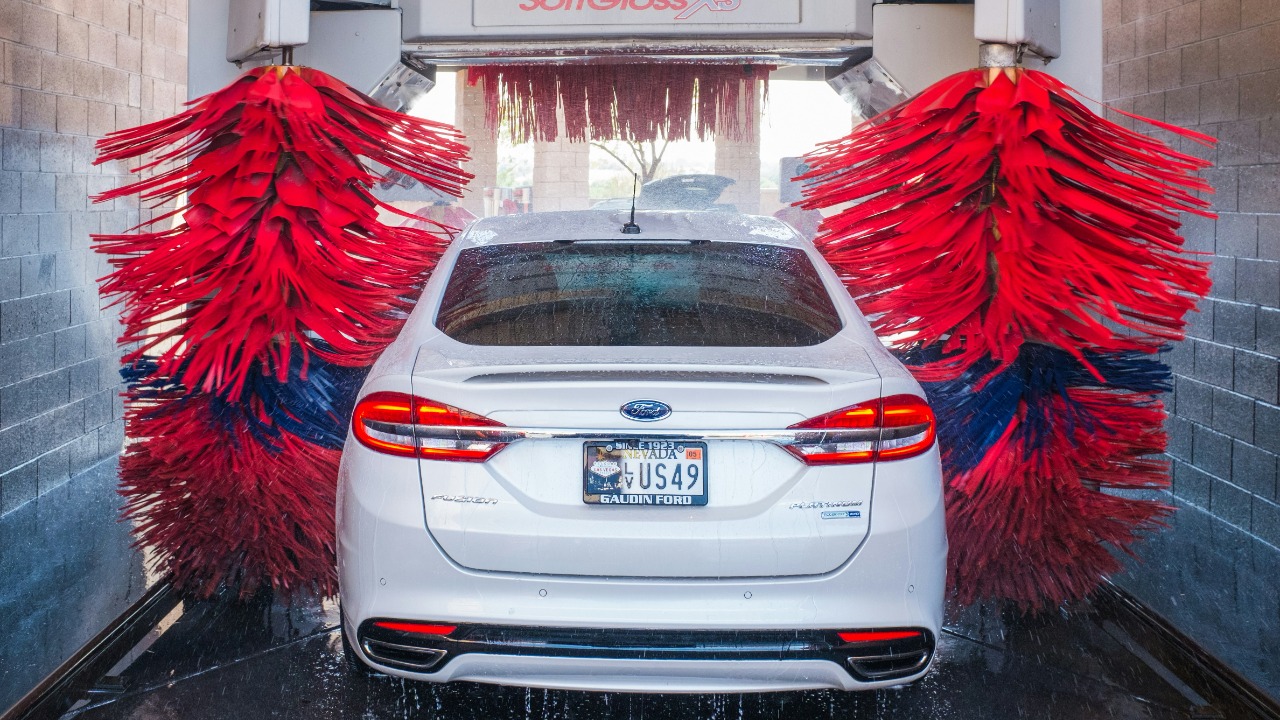
Professional car detailing is not the same as an ordinary automated wash. It can involve vacuuming carpets, extracting stains, cleaning vents, removing pet hair, polishing paint, restoring headlights and applying protective coatings. The service requires patience and physical effort, but it can be started without a university degree, a large office or a complicated product inventory.
A recent Wall Street Journal report on the car-detailing boom described young Americans leaving college, warehouse jobs and conventional employment to build independent detailing businesses. One featured operator, 22-year-old Benjamin Scheets, reportedly left Kent State University and began earning around $5,000 a month in profit from a business operating in his parents’ garage.
A Business That Can Start With Skills Instead of Credentials
Car detailing has become attractive partly because its basic business model is easy to understand. A customer has a vehicle that needs cleaning or restoration. The detailer provides the labor, equipment and expertise, then charges according to the vehicle’s condition and the level of service.
There is no universal professional degree required to begin cleaning cars. A new operator can learn basic techniques through online demonstrations, manufacturer guidance, training courses and repeated practice. Equipment can be purchased gradually as the business gains customers.
A beginner may start with a vacuum, brushes, microfiber towels, cleaning chemicals and a pressure washer. More advanced services require polishing machines, extractors, steam cleaners, lighting equipment and specialized products. Mobile operators may also need a suitable vehicle, water tank, generator, hoses and secure storage.
The low apparent barrier to entry does not mean the business is free to launch. The U.S. Small Business Administration’s startup-cost guidance advises service businesses to account for equipment, supplies, permits, insurance, marketing, communications and website expenses. It also recommends separating one-time purchases from recurring monthly costs before estimating profitability.
This financial discipline matters because a detailer may collect hundreds of dollars from a job while still paying for chemicals, fuel, equipment maintenance, advertising, insurance and travel time. Revenue shown on social media is not necessarily the amount the business owner keeps.
Social Media Has Turned Cleaning Into Entertainment
The rise of detailing is closely connected to the visual nature of social media.
A severely stained seat, muddy floor mat or faded paint panel creates an immediate before-and-after story. Short videos can show years of dirt disappearing in seconds. Viewers may find the process satisfying even when they have no intention of starting a detailing business.
That attention can become free marketing. An operator who records a dramatic transformation can display technical ability, build trust and reach local vehicle owners without paying for traditional advertising. The content demonstrates the value of the service more clearly than a basic written advertisement.
The Wall Street Journal reported that social-media visibility is encouraging more people to enter detailing and related power-washing services. Some operators have expanded beyond local appointments by selling training, branded products, coaching and online content.
The most successful detailers are therefore not only cleaning cars. They are learning photography, video editing, customer communication, online booking and personal branding. A physical service business is being combined with the distribution power of digital media.
Mobile Detailing Removes One of the Biggest Costs
A fixed detailing shop can provide controlled lighting, secure storage, reliable electricity and protection from bad weather. It also introduces rent, utilities, construction costs and long-term financial commitments.
Mobile detailing offers a leaner entry point. The operator travels to homes, offices, apartment buildings or fleet locations and performs the work where the vehicle is parked. Customers gain convenience, while the business avoids the immediate cost of leasing a commercial property.
This model fits modern consumer expectations. Many people already pay for food, groceries and professional services to come directly to them. A mobile detailer can clean a vehicle while its owner works from home or remains inside an office.
Mobility also helps a new business test demand before making a major investment. An operator can begin within a limited service area, learn which packages sell and reinvest earnings into better equipment. That process closely follows the lean startup principle of proving demand before expanding overhead.
However, travel reduces the number of vehicles that can be completed each day. Fuel costs, traffic, parking restrictions and equipment setup time must be included when setting prices. A mobile business that undercharges may stay busy without becoming profitable.
Premium Services Create Higher Earning Potential
Basic interior and exterior cleaning can attract regular customers, but higher-level services can transform the economics of a detailing business.
Paint correction removes or reduces visible swirl marks, oxidation and minor surface defects through machine polishing. Ceramic coatings create a protective layer designed to improve gloss and make future cleaning easier. Headlight restoration, odor removal and specialized interior treatments can also be sold as additional services.
These jobs often require more training, controlled working conditions and expensive products. They can also command much higher prices than a simple maintenance wash.
The growth opportunity comes from moving customers through different levels of service. A first-time client may book a deep interior cleaning. After seeing the results, that customer may return for routine maintenance, paint polishing or a protective coating.
Recurring maintenance plans are particularly valuable because they make revenue more predictable. Instead of constantly searching for new customers, a detailer can return every few weeks to maintain vehicles that have already received an intensive first service.
The Work Is Harder Than It Looks Online
A short transformation video can make detailing appear simple, but the physical reality is demanding.
A full interior restoration may require hours of bending, kneeling, reaching beneath seats and working in hot or cold conditions. Pet hair can become trapped in carpet fibers. Sand may require repeated vacuuming. Stains can return as upholstery dries, while careless chemical use can discolor plastics or fabric.
Exterior work carries similar risks. Incorrect polishing can damage paint, and unsuitable cleaning chemicals may affect trim, wheels or protective surfaces. A detailer is working on an expensive personal asset, so one mistake can create a costly dispute.
Seasonality is another challenge. Demand may decline during cold winters, heavy rain or economic uncertainty. An operator who relies heavily on luxury treatments may struggle when customers reduce discretionary spending.
The industry is also becoming more competitive because the apparent ease of entry attracts new providers. A business cannot depend indefinitely on offering the same basic wash as every local competitor. Reliability, results, communication and customer retention become more important as the market fills.
Environmental Rules Cannot Be Ignored
Professional cleaning generates wastewater containing dirt, oil, brake dust, detergents and other residues. Allowing that water to flow into a storm drain may violate local environmental rules because stormwater systems can discharge into rivers and other waterways without receiving the treatment provided by sanitary sewers.
The U.S. Environmental Protection Agency’s stormwater information explains that municipal storm-sewer discharges are regulated under the National Pollutant Discharge Elimination System. Exact requirements vary by state and municipality, so a mobile operator must understand local restrictions and approved wastewater-management methods.
Responsible businesses may use containment mats, water-recovery equipment, rinseless cleaning techniques or approved disposal systems. These measures can increase startup costs, but they also protect the business from fines and strengthen its professional reputation.
A New Version of Bootstrapping
Car detailing reflects a wider change in entrepreneurship. The tools are physical, but the growth strategy is digital. The initial service may be local, while the audience can be national or global.
The appeal comes from control. A successful operator can choose prices, shape the schedule, build direct relationships with customers and see a visible result at the end of each job. That independence can feel more rewarding than waiting for promotion inside a company.
Yet detailing is not an effortless route to wealth. The dramatic monthly figures highlighted online represent successful examples rather than guaranteed outcomes. A sustainable business still requires accurate pricing, consistent quality, legal compliance and disciplined reinvestment.
The deeper lesson is that the American Dream has not disappeared. It is taking new forms. For some younger entrepreneurs, progress no longer begins with an office desk or corporate title. It begins with a dirty vehicle, a set of practical tools and the willingness to turn an overlooked service into a trusted local brand.