
Only four major car brands had an above-average predicted chance of producing cars capable of reaching 250,000 miles, according to an extensive analysis of long-term vehicle lifespan.
Toyota ranked first, followed by Lexus, Honda and Acura.
Toyota vehicles had a 17.8 percent predicted chance of reaching at least 250,000 miles. Lexus followed at 12.8 percent, Honda at 10.8 percent and Acura at 7.2 percent. The industry average across the high-volume brands studied was just 4.8 percent.
The results came from the 2025 iSeeCars Longest-Lasting Cars study. Researchers analyzed odometer and lifespan information from more than 174 million vehicles for the brand-level ranking. They calculated average mileage at different vehicle ages and used a proprietary model to estimate each brand’s likelihood of reaching the quarter-million-mile threshold.
The findings suggest a considerable durability gap between the four leaders and most of the industry.
However, they do not mean every Toyota, Lexus, Honda or Acura will reach 250,000 miles. They also do not prove that every model from those brands is more reliable than every competing vehicle.
Four Brands, but Only Two Parent Automakers
Describing the result as four automakers is technically misleading.
Toyota and Lexus are both brands belonging to Toyota Motor Corporation. Honda and Acura are divisions of Honda Motor Company.
The study therefore identified four brands produced by two parent automakers.
That distinction does not reduce the significance of the result. It emphasizes how strongly Toyota and Honda, along with their luxury divisions, dominated the brand-level durability ranking.
Toyota and Honda were also the only non-luxury brands to finish above the mainstream-brand average. Lexus and Acura led the luxury category, although several other luxury brands exceeded the lower average calculated specifically for that segment.
Toyota Finished Far Ahead of the Industry
Toyota’s 17.8 percent predicted survival rate was approximately 3.7 times the overall industry average.
The brand’s result was supported by durable trucks, SUVs, sedans and hybrids rather than one unusually successful model.
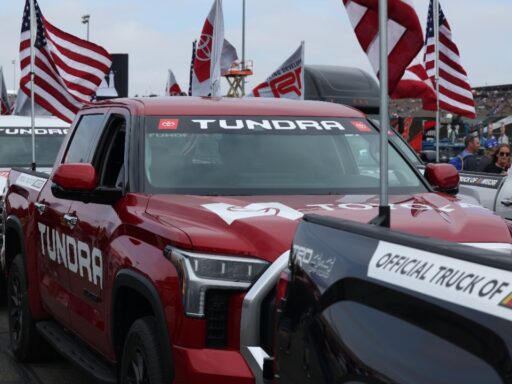
Vehicles such as the Sequoia, 4Runner, Tundra and Tacoma performed strongly. Toyota passenger vehicles and hybrids, including the Avalon, Prius, Camry Hybrid and Highlander Hybrid, also appeared in the model rankings.
This range matters because large trucks and sport-utility vehicles often accumulate high mileage through commercial use, towing or long-distance driving. Toyota’s inclusion of sedans and hybrids suggests its longevity result was not limited to heavy-duty or body-on-frame vehicles.
The study’s overall model leader was the Toyota Sequoia, with a 39.1 percent predicted chance of reaching 250,000 miles. That was more than eight times the 4.8 percent average calculated across all eligible vehicles.
The Toyota 4Runner ranked second at 32.9 percent, followed by the Toyota Highlander Hybrid at 31 percent and the Toyota Tundra at 30 percent.
The full rankings are available in the iSeeCars Longest-Lasting Cars study.
Lexus Ranked Second
Lexus vehicles had a 12.8 percent predicted chance of reaching 250,000 miles, approximately 2.7 times the industry average.
The Lexus IS was the longest-lasting passenger car in the model analysis, with a 27.5 percent predicted probability of reaching the quarter-million-mile mark.
The Lexus GX, RX Hybrid and standard RX also appeared among the 25 longest-lasting overall models.
Luxury vehicles do not always accumulate mileage at the same rate as mainstream family cars, pickups or fleet vehicles. Some are driven fewer miles annually or replaced earlier because their owners prioritize newer technology and styling.
That makes Lexus’s strong result notable. The brand combined luxury positioning with a lifespan rate considerably above the industry benchmark.
Honda Ranked Third
Honda finished with a 10.8 percent predicted chance of reaching at least 250,000 miles.
That was approximately 2.3 times the industry average.
Five Honda models appeared in the overall top 25: the Ridgeline, Pilot, Odyssey, Civic and CR-V.
The Ridgeline ranked highest among them, with a 14.7 percent predicted chance of reaching 250,000 miles. The Pilot followed at 13.1 percent, while the Odyssey minivan reached 13 percent.
The Civic and CR-V are particularly relevant because they are mainstream vehicles commonly used for commuting and family transportation.
Their presence indicates that long lifespan is not reserved for large vehicles with oversized engines or commercial-duty construction.
Acura Was the Fourth and Final Above-Average Brand
Acura recorded a 7.2 percent predicted chance of reaching the mileage threshold.
That was approximately 1.5 times the overall industry average.
The Acura ILX and MDX appeared in the model-level top 25. The ILX had a 10.6 percent predicted chance of reaching 250,000 miles, while the MDX reached 9.1 percent.
The MDX ranked last among the overall top 25, but its probability was still nearly twice the average for all eligible vehicles.
Acura’s result reinforces the pattern seen at Lexus: the luxury division retained much of the long-term durability associated with its mainstream parent company.
The Remaining Brands Fell Below 4.8%
Every other high-volume brand in the study fell below the overall 4.8 percent average.
GMC and Tesla were the closest, each at 4.6 percent. Chevrolet and Cadillac followed at 4.5 percent. Mazda ranked at 3.6 percent, while Ram reached 3.5 percent.
Being slightly below the brand-level average does not mean those manufacturers do not produce durable models.
Chevrolet, for example, placed the Silverado 1500 and Suburban in the top 25 individual vehicles. GMC’s Sierra 1500 also ranked strongly.
A brand average combines many different models, engines, vehicle types and generations.
A manufacturer can therefore produce several exceptional long-lasting vehicles while its broader lineup remains below the overall benchmark.
The opposite is also possible. A highly ranked brand can offer a particular model or model year that performs poorly because of a weak transmission, defective component or design problem.
The Study Predicted Lifespan Rather Than Following New Cars for Decades
The researchers did not purchase new vehicles and drive them until each one reached 250,000 miles.
They studied existing vehicle and odometer data, calculated average mileage at each yearly age and applied a statistical model to predict the probability that a vehicle would remain operational to the mileage threshold.
That approach makes a large-scale comparison possible without waiting several decades.
It also introduces limitations.
The predicted probability depends on the vehicles available in the data, their ages, mileage patterns and how frequently different brands remain registered or appear in the market.
The model estimates future survival from historical evidence. It cannot guarantee that a newly redesigned model will behave like older vehicles carrying the same badge.
Reaching 250,000 Miles Is Still Uncommon
The average vehicle had only a 4.8 percent predicted chance of reaching 250,000 miles.
That means even Toyota’s leading 17.8 percent brand rate leaves most vehicles short of the milestone.
A quarter-million miles is a demanding threshold. A car driven 12,000 miles annually would need more than 20 years to reach it.
During that period, the vehicle may face corrosion, accidents, neglected maintenance, expensive component failures or changing emissions and inspection requirements.
Some mechanically usable vehicles are also retired because repair costs exceed their market value.
The study therefore measures more than whether an engine can physically continue running. It reflects whether vehicles remain operational and economically worthwhile across an unusually long service life.
Durability Is Not the Same as Initial Quality
A vehicle can have few problems during its first months yet fail to provide exceptional long-term service.
Initial-quality studies usually examine defects and complaints reported shortly after purchase. Long-term durability considers how well major systems survive over many years and miles.
The reverse can also occur.
A vehicle may experience annoying electronics, trim or infotainment problems when new but retain a durable engine, transmission and chassis that allow it to remain on the road for decades.
Consumers should therefore avoid treating one quality or dependability ranking as a complete judgment.
A strong long-haul result is particularly relevant to buyers who expect to keep a car beyond the loan period, purchase an older used vehicle or accumulate substantial annual mileage.
Model Choice Matters More Than Brand Reputation Alone
The brand ranking provides a useful starting point, but the individual vehicle remains the more important purchase decision.
Toyota dominated the study, yet its models had very different predicted survival rates.
The Sequoia reached 39.1 percent, while the Corolla’s predicted rate among passenger cars was only 3.2 percent.
That does not necessarily make the Corolla unreliable.
Small cars may be driven, maintained and discarded differently from expensive full-size SUVs. They may also be involved in more urban collisions or retired sooner because their residual value is lower.
Vehicle type, usage pattern and owner behavior can influence observed lifespan alongside engineering quality.
Buyers should therefore investigate the exact model, engine, transmission and production year instead of assuming that every vehicle carrying a top-ranked badge will deliver the same result.
Model Year Can Change the Ownership Experience
A nameplate may remain in production for decades while its mechanical design changes repeatedly.
One generation may use a naturally aspirated engine and conventional automatic transmission. The next may adopt turbocharging, a continuously variable transmission, hybrid components or a new electronic architecture.
A brand’s historical durability cannot completely predict the lifespan of newly introduced technology.
Before buying, consumers should review recall records, technical service bulletins, owner complaints and repair histories for the specific model year.
The US National Highway Traffic Safety Administration provides an official vehicle recall and complaint lookup that can be searched using a vehicle identification number.
A top durability ranking does not cancel an unresolved safety recall.
Maintenance Strongly Influences Lifespan
Even a model with exceptional engineering can fail early when it is poorly maintained.
Oil changes, coolant service, transmission-fluid replacement, brake maintenance and timing-belt replacement should follow the manufacturer’s requirements.
Owners should also address leaks, warning lights, overheating and unusual noises before a minor problem damages a larger system.
Climate and road conditions matter.
Vehicles exposed to road salt may suffer structural corrosion before the engine wears out. Extreme heat can shorten battery, tire, cooling-system and interior-component life.
Towing, repeated short journeys, off-road driving and commercial use may require more frequent service.
A durability ranking estimates what vehicles have achieved across a large population. It does not protect an individual car from neglect.
Used-Car Condition Can Matter More Than the Badge
A well-maintained Chevrolet may be a safer long-term purchase than a neglected Toyota.
Used-car buyers should examine the service history, accident record, current mechanical condition and ownership pattern.
A pre-purchase inspection by an independent qualified mechanic can identify leaks, corrosion, suspension wear, collision repairs and diagnostic fault codes.
Buyers should also confirm the mileage through service records and vehicle-history reports.
Extremely low mileage is not automatically ideal. A vehicle that remained unused for long periods may have deteriorated seals, old fluids, flat-spotted tires or corrosion.
The goal is not simply to find a top-ranked brand. It is to find a sound example of a durable model that has received appropriate care.
Long Lifespan Can Reduce Ownership Costs
Keeping one reliable vehicle for many years can avoid repeated depreciation, sales taxes, registration fees and loan interest.
The largest depreciation often occurs during the early years of ownership. A vehicle that remains useful after the loan is repaid can provide relatively inexpensive transportation.
Long life also spreads the environmental and manufacturing impact of producing the vehicle across more miles.
However, durability does not automatically make an old vehicle cheap.
Major engine, transmission, battery, suspension and rust repairs can become costly. Fuel economy and insurance must also be considered.
A consumer deciding whether to repair or replace an aging car should compare the repair cost with the price and expected reliability of the replacement rather than focusing only on the current vehicle’s market value.
Hybrids Performed Better Than Many Buyers May Expect
Five hybrids appeared in the study’s overall top 25, all from Toyota or Lexus.
The Toyota Highlander Hybrid led the hybrid category with a 31 percent predicted chance of reaching 250,000 miles. It was followed by the Lexus RX Hybrid at 17 percent and the Toyota Prius at 12.2 percent.
The Toyota Camry Hybrid and Avalon Hybrid also exceeded the overall vehicle average.
Hybrid systems are sometimes assumed to have shorter lives because they contain both an internal-combustion engine and a high-voltage battery.
The study suggests that mature hybrid designs can achieve substantial long-term mileage.
Battery replacement remains a possible expense, but the presence of hybrid hardware did not prevent several models from ranking among the industry’s longest-lasting vehicles.
SUVs Held the Most Top Positions
Eleven of the 25 longest-lasting models were SUVs.
Seven were passenger cars, six were pickup trucks and one was a minivan.
Large SUVs may benefit from robust construction, but usage patterns can also influence the result.
Owners may be more willing to repair an expensive SUV than an older economy car. Full-size vehicles may accumulate high mileage through long highway trips, which can be less mechanically stressful than repeated short urban journeys.
Higher resale values can also keep them economically viable for longer.
The study identifies which vehicles remain on the road to high mileage. It cannot completely separate engineering durability from owner behavior and economic incentives.
Heavy-Duty Trucks Were Evaluated Separately
The primary top-25 list excluded heavy-duty vehicles.
When trucks were ranked separately, the Ram 3500 led with a 39.7 percent predicted chance of reaching 250,000 miles. The Toyota Tundra, Ford F-450 Super Duty and Toyota Tacoma followed.
Heavy-duty pickups frequently receive regular fleet maintenance and are designed for commercial workloads.
Their high mileage therefore should not be compared directly with ordinary passenger cars without considering how they are built and used.
The exclusion also explains why Toyota led the main vehicle list with the Sequoia even though the Ram 3500 recorded a slightly higher percentage in the truck-specific analysis.
The Four-Brand Result Does Not Mean Every Other Vehicle Is Disposable
More than 95 percent of average vehicles were not predicted to reach 250,000 miles, but many can still provide excellent service for 100,000, 150,000 or 200,000 miles.
A buyer may not need quarter-million-mile durability.
Someone who leases, changes vehicles frequently or drives only a few thousand miles annually may prioritize safety technology, comfort, fuel economy or purchase price instead.
A vehicle that reaches 180,000 miles with affordable maintenance can still represent strong value.
The study’s threshold is useful because it distinguishes the vehicles most likely to survive extreme mileage. It should not be treated as the only definition of a good car.
What Buyers Should Take From the Study
Toyota, Lexus, Honda and Acura deserve consideration from shoppers who prioritize long-term ownership.
Their brand-level probabilities were meaningfully higher than the overall industry benchmark, and they also placed numerous individual models near the top of the rankings.
Brand reputation should still be followed by model-specific research.
A buyer should examine the exact generation, powertrain, maintenance requirements, recall status and common repair problems.
For a used vehicle, service history and present condition are essential.
The best long-term purchase is not automatically the model with the highest statistical probability. It is the durable model that also fits the buyer’s budget, safety needs, driving conditions and ability to maintain it.
The Main Takeaway
Toyota, Lexus, Honda and Acura were the only four brands with an above-average predicted chance of reaching 250,000 miles in the 2025 iSeeCars brand-longevity study.
Toyota led at 17.8 percent, followed by Lexus at 12.8 percent, Honda at 10.8 percent and Acura at 7.2 percent. The overall industry average was 4.8 percent.
They were four brands, not four independent automakers. Toyota owns Lexus, while Honda owns Acura.
The study used historical vehicle and odometer data to estimate the likelihood of reaching extreme mileage. It did not guarantee that every vehicle from the winning brands will last 250,000 miles.
Toyota’s Sequoia led the individual vehicle ranking with a 39.1 percent predicted probability, while models from Lexus, Honda and Acura also appeared repeatedly throughout the top 25.
The rankings support the long-standing durability reputation of Toyota and Honda. They also show that buyers should look beyond the badge.
Model, generation, maintenance, condition and ownership history remain decisive. A respected brand creates favorable odds, but the way a specific vehicle was built, driven and maintained determines whether it actually goes the distance.