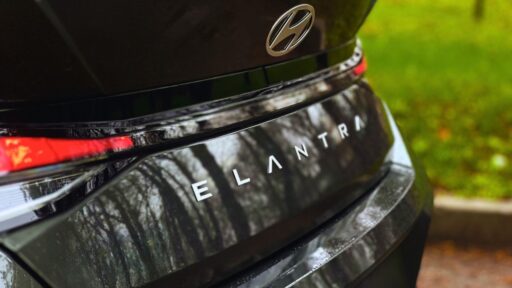
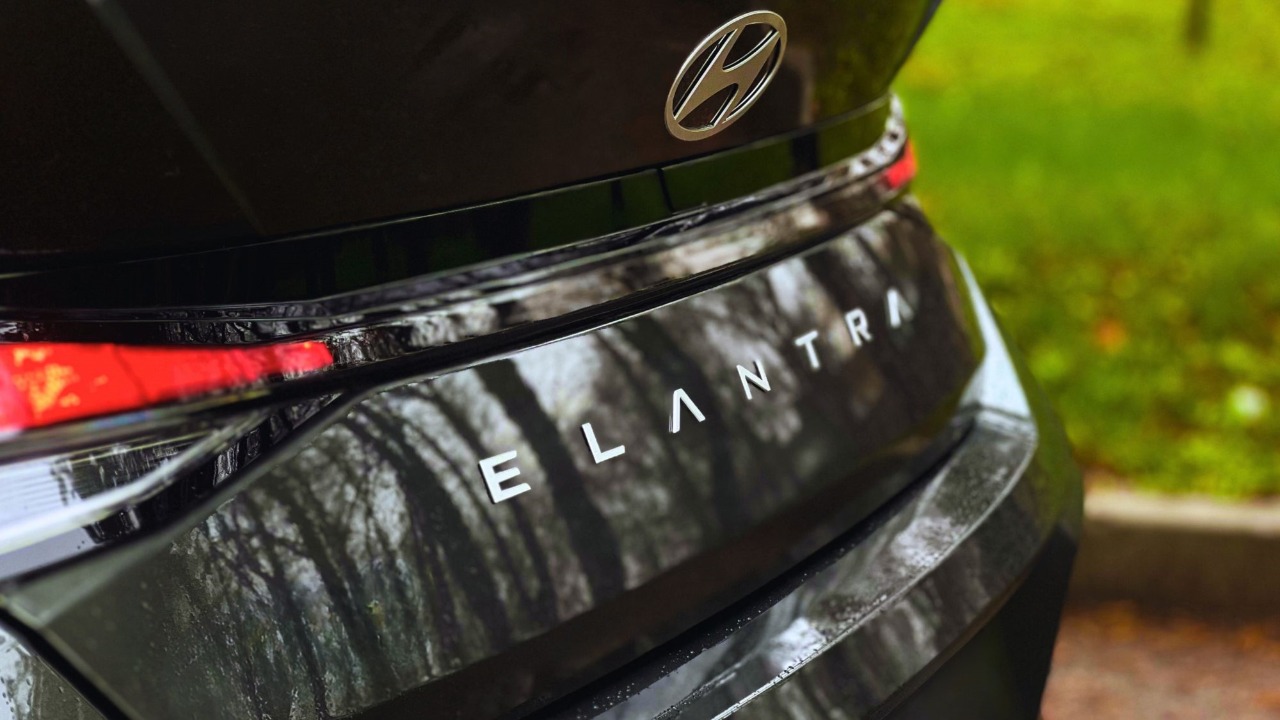

The Hyundai Elantra has become an unlikely symbol of the auto theft crisis, topping national rankings with more than 21,000 reported thefts in a single year. That surge did not just inconvenience owners; it reshaped insurance markets, strained police departments and forced the automaker into an expensive scramble to retrofit basic security features.
The story of how a mainstream compact sedan rose to the top of America’s stolen-vehicle charts reveals a mix of design choices, social media trends and policy gaps that are still playing out on city streets. It also offers a preview of how quickly risk can shift in a car market increasingly split between older analog hardware and newer connected systems.
How the Elantra climbed to the top of the theft rankings
The Hyundai Elantra did not suddenly become rare or exotic. It became a target because it was common, relatively easy to steal and heavily concentrated in urban areas already struggling with property crime. According to national theft data cited in one recent analysis, more than 21,000 Elantras were reported stolen across the United States in a single year, putting the compact ahead of far more expensive models as the most frequently taken passenger car. That tally reflects reported incidents, meaning the true number of theft attempts was higher.
The pattern shows up at the state level as well. In Michigan, where car culture and insurance costs are both central facts of daily life, the Elantra appears alongside other mainstream models on lists of the most targeted vehicles. A review of statewide data on commonly stolen vehicles shows how compact sedans and older SUVs dominate the rankings, not luxury badges. That alignment between national and state figures suggests the Elantra problem is not confined to a few cities; it is part of a wider shift toward thefts of lower priced, lightly protected cars.
Several factors combined to push the Elantra to the top. Many examples from the early and mid 2010s were sold without engine immobilizers, devices that prevent a car from starting without a coded key. That omission, which saved cost at the time, later allowed thieves to start certain Elantras with improvised tools in a matter of seconds. As videos circulated on social media showing how quickly a vulnerable Hyundai or Kia could be taken, opportunistic thefts spiked in cities from Milwaukee to New York.
The Elantra’s popularity with budget conscious buyers also meant there were hundreds of thousands of similar vehicles parked on streets and in apartment lots. High volume gave thieves more chances to find a vulnerable car and made it easier to blend in. In some neighborhoods, rows of nearly identical compact sedans turned into a menu of options for crews looking for transportation or a quick profit from parts.
Insurance and law enforcement data show that thefts were not evenly distributed across all Elantra model years. Newer versions equipped with immobilizers and improved key systems were less likely to be taken, while older trims without those protections accounted for a disproportionate share of the 21,000 thefts. That split helps explain why Hyundai’s later design changes did not immediately pull the model out of the top slot in national rankings.
Why the Elantra theft wave matters for drivers and cities now
The Elantra’s place at the top of the national theft list is more than a statistical oddity. It has concrete consequences for owners, insurers and local governments. For drivers, the most direct impact has been on insurance. In several markets, companies raised premiums or limited coverage for certain Hyundai and Kia models after seeing loss ratios spike. Owners of older Elantras who had never filed a claim found themselves paying more simply because the model name on their registration had become a red flag.
Communities have also absorbed the cost. Stolen compact sedans are often used for other crimes, from retail break ins to reckless joyriding, which multiplies the damage beyond the initial theft. Police departments in cities with high Elantra concentrations report devoting significant investigative resources to repeat theft crews. Each recovered vehicle requires towing, storage and processing, and many are returned to owners with heavy damage or written off entirely.
The same pattern emerges in state data sets that track which vehicles are most likely to disappear from driveways and parking lots. In Michigan, the review of the most stolen vehicles nationally has echoes in local rankings, where mainstream sedans and older SUVs dominate. That overlap suggests that theft waves tied to specific models can quickly become a statewide budget problem, as prosecutors, public defenders and courts all handle more property crime cases.
The Elantra surge also matters because it exposed how slowly safety regulations and market incentives can adapt. Engine immobilizers have been standard on many vehicles for years, yet they were not universally adopted across all trims and brands. When theft data finally made the cost of that gap visible, it was owners and cities that paid first, not the companies that had omitted the hardware.
For Hyundai, the reputational hit has been significant. The company has rolled out software updates and offered steering wheel locks to some owners, but the Elantra’s appearance at the top of national theft lists has already shaped perceptions among buyers and insurers. That kind of association can linger even after technical fixes arrive, particularly when social media videos of quick thefts remain easy to find.
There is also a generational angle. Younger drivers, including many first time buyers, were drawn to used Elantras because of their low purchase price and good fuel economy. Those same drivers are now more likely to face the stress of a stolen car, an insurance dispute or a denied claim. For a household that depends on a single vehicle for work, school and childcare, losing that car for weeks or permanently can be a severe financial shock.
How automakers, regulators and drivers may respond next
The Elantra theft wave has already pushed Hyundai and regulators to act, but the response is still evolving. Hyundai has expanded retrofits for older models, adding software that requires a key in the ignition for the car to start and distributing steering wheel locks in partnership with local police departments. The company has also accelerated the rollout of standard immobilizers and more advanced anti theft systems on new Elantras, aiming to close the gap that made earlier versions such attractive targets.
Regulators are watching closely. The scale of the Elantra and related Hyundai and Kia thefts has prompted calls for federal standards that would effectively make immobilizers mandatory on all new vehicles, regardless of trim level. Safety advocates argue that when a mainstream compact can record more than 21,000 thefts in a year, leaving anti theft hardware as an optional feature is no longer defensible. Industry groups counter that many manufacturers already exceed current requirements, but the Elantra data has given momentum to those pushing for clearer rules.
Insurers are likely to keep adjusting their models as new data arrives. If retrofits and software updates significantly reduce thefts of older Elantras, premiums could eventually fall for those specific VIN ranges. If not, companies may continue to treat certain model years as high risk, which would keep pressure on Hyundai to expand and verify its fixes. The experience has also reinforced the value of granular, model year specific underwriting, rather than treating all sedans from a brand as equivalent.
For drivers, the immediate steps are practical rather than political. Owners of older Elantras can check whether their vehicle is eligible for a security software update or a steering wheel lock program and should take advantage of both if offered. Parking in well lit areas, using secondary devices like brake locks and avoiding leaving keys or fobs in the car remain basic but effective measures. In neighborhoods where theft rates are high, some owners have turned to aftermarket immobilizers and tracking devices to add another layer of protection.