
Rivian has begun delivering its R2 sport-utility vehicle, a smaller and cheaper model that targets roughly 330 miles of range for under 50,000 dollars. The launch moves the company beyond a niche premium segment into a broader market where price, efficiency, and manufacturing discipline will determine how far the brand can go.
Key upgrades and design choices in the R2 rollout
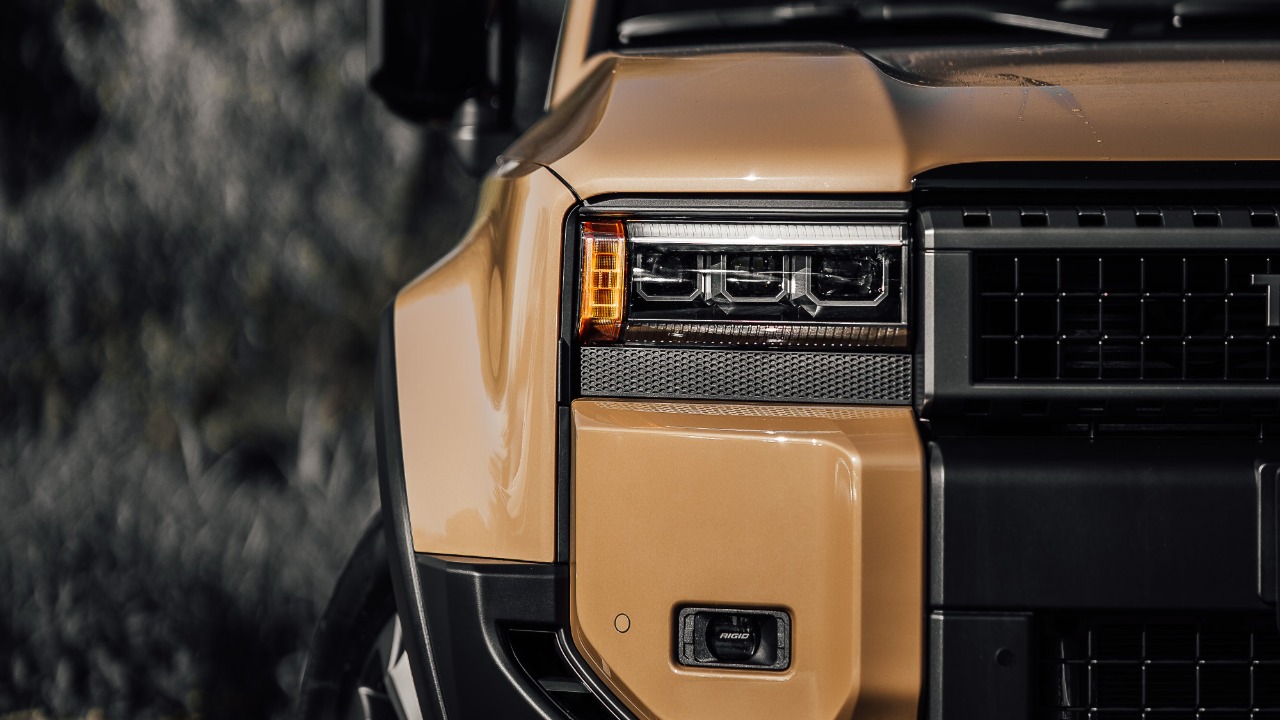
Arriving as a compact SUV that sits below the R1T pickup and R1S SUV, the R2 has proportions closer to a mainstream crossover than a full-size truck. Rivian has kept the family look, including the vertical headlights and upright stance, but the R2 is packaged for daily use in tighter urban spaces and for buyers who do not need a full off-road rig. Reporting on early specifications describes a targeted driving range of about 330 miles on a single charge for the most efficient configuration, paired with a starting price that slots under 50,000 dollars for entry trims.
To reach that price point, Rivian reworked its platform and manufacturing approach. The R2 uses a simplified skateboard architecture and a more cost-focused battery and motor layout compared with the R1 line. Analysts point to a mix of single and dual motor variants, with the higher range figure associated with the most efficient setup and larger battery pack. The company has also leaned on a more streamlined interior, with fewer bespoke materials than the R1S but a similar minimalist layout and large central display.
Production of the R2 is centered at Rivian’s existing plant in Normal, Illinois, which already builds the R1T, R1S, and commercial vans. The company began preparing that facility for R2 assembly earlier in the year, and reports now indicate that R2 production is with initial units heading to customers after a spring launch window. By reusing and upgrading its current factory instead of waiting on a new site, Rivian has shortened the path from reveal to driveway.
Customer-facing milestones have followed quickly. Reservation holders started receiving order invitations as Rivian opened up final configuration choices, with early communication detailing trim levels, battery options, and expected delivery windows. According to reporting on those invitations, deliveries began in for a first wave of buyers, aligning with the company’s stated goal of getting the R2 into customer hands this year.
The hardware package reflects a balance between capability and cost. Coverage of the launch highlights that the R2 keeps hallmark Rivian touches such as strong off-road geometry and available all-wheel drive, while trimming back some of the more expensive features of the R1 series. For example, the R2 platform is designed to support fast charging and over-the-air software updates, but it is not burdened with the same level of bespoke adventure gear that helped push R1 prices far above the 70,000 dollar mark.
Why a sub-50,000 dollar, 330-mile Rivian matters in 2026
The R2’s combination of price and range puts Rivian squarely in the mass-market electric SUV contest. A roughly 330 mile rating for under 50,000 dollars positions the vehicle against popular models from established automakers, while still carrying the cachet of a younger, EV-native brand. Analysts see this as Rivian’s first genuine attempt to reach buyers who might otherwise default to a gasoline crossover or a lower-priced electric hatchback.
Market context adds weight to the timing. Several reports have described a cooling in high-end EV demand and a sharper focus on affordability. Rivian’s earlier products, the R1T and R1S, built strong enthusiasm but remained out of reach for many households. By dropping the entry price significantly with the R2, the company is trying to convert brand interest into volume sales. Coverage of the launch notes that the R2 is expected to be Rivian’s volume driver, with internal planning built around far higher unit counts than the R1 line can sustain.
Early reaction from EV-focused outlets has been largely positive about the product formula. One detailed first look described how R2 slots into with a mix of range, performance, and practicality that could appeal to both existing EV owners and first-timers. That coverage emphasized the significance of offering a long-range configuration at a price that competes with well-equipped gasoline SUVs, rather than only with other premium EVs.
From a financial perspective, the R2 is arriving at a moment when Rivian must prove it can scale while controlling costs. Recent reporting on the company’s quarterly results highlighted that Rivian’s second quarter deliveries, helped by the early R2 ramp and continued R1 shipments. That performance suggests that demand for Rivian vehicles remains solid, but it also raises expectations for the R2 to keep volumes climbing as the year progresses.
At the same time, analysts caution that the R2 will test Rivian’s ability to execute on a more complex mix of trims and options at a lower price band. One assessment framed the start of R2 deliveries as the moment when company’s real test, since profitability depends on building the SUV efficiently and avoiding the production bottlenecks that have challenged other EV newcomers. The sub-50,000 dollar target leaves less room for error on materials, labor, and warranty costs.
Consumer expectations also shape the stakes. Rivian has built a reputation for over-the-air feature updates and thoughtful design touches in the R1 series, which set a high bar for the R2 even at a lower price. Buyers will expect that the cheaper SUV still feels like a Rivian, not a stripped-down compromise. Software polish, ride quality, and charging performance will matter just as much as the headline range figure once more vehicles are on the road.
What Rivian’s next steps with the R2 will reveal
With the first R2 SUVs now in customer hands, attention shifts to how quickly Rivian can ramp production and broaden availability. Reports on the manufacturing plan indicate that the Illinois plant is configured for higher output, with the company prioritizing R2 volumes while continuing to build R1T and R1S trucks. The early phase will likely focus on higher margin trims and regions close to the factory, simplifying logistics as Rivian refines its production processes.
Order activity provides another signal. Coverage of the launch period described strong interest from existing Rivian fans and new shoppers once the company opened up reservations and sent configuration links. One report noted that order invitations went to early reservation holders ahead of the first deliveries, suggesting that Rivian is sequencing demand in waves. The pace at which those invitations expand to a broader audience will show how confident the company is in its supply chain and factory throughput.
Strategically, Rivian is also positioning the R2 as a foundation for future models. Some reporting on the product roadmap has described the R2 platform as flexible enough to support additional body styles, including potential crossover variants that could share components and manufacturing lines. The ability to spin multiple vehicles off a single architecture would help spread development and tooling costs, a key factor for any automaker trying to compete at lower price points.
External analysts will watch several metrics over the next few quarters. Delivery numbers will indicate whether Rivian can sustain the momentum that helped its recent quarter beat. Gross margin trends will show whether the R2 is moving the company closer to profitability or adding volume at the expense of unit economics. Customer satisfaction, reflected in early owner feedback and reliability data, will influence whether the R2 builds the brand or risks diluting it.
Rivian’s decision to keep R2 production in Illinois rather than waiting on a new facility also has broader implications. By leveraging its existing plant, the company has created manufacturing jobs in Normal and surrounding areas while avoiding the delays that often accompany greenfield factories. Reporting that R2 output is reinforces the idea that Rivian is trying to move quickly from concept to scale, rather than stretching out the timeline with major new construction.