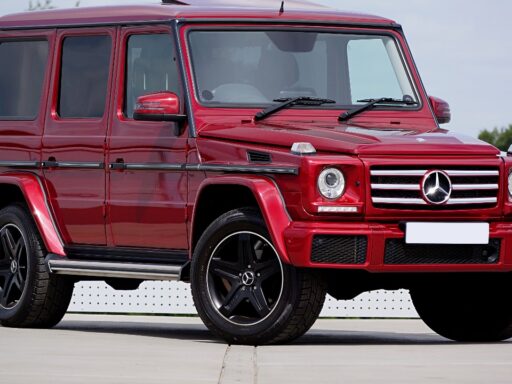


General Motors has taken the rare step of telling some customers to park their vehicles immediately because a missing part in the drivetrain can cause the wheels to lock without warning. The company has paired the blunt “do not drive” instruction with a recall that sweeps in multiple Chevrolet, GMC, and Cadillac models and leaves affected owners scrambling for answers. The move raises fresh questions about how modern vehicles are engineered, monitored, and repaired when a single absent tube can turn a routine trip into a loss-of-control emergency.
What changed in GM’s warning about sudden wheel lockups
The alert centers on a defect in the transfer case assembly that can leave a key tube out of place or missing entirely. That tube is meant to help route lubrication and keep internal components aligned. Without it, gears inside the transfer case can bind, seize, and abruptly stop rotating, which can cause the wheels to lock even at speed. In its recall filings, GM has acknowledged that the problem is tied to a specific production issue in the transfer case supplier’s process, not to driver behavior or routine wear.
The recall covers 22 different GM vehicles across the Chevrolet, GMC, and Cadillac brands, including popular pickups and SUVs that share the same transfer case design. Reporting on the campaign lists a wide mix of full-size trucks and large sport-utility vehicles under the warning, with some owners told explicitly not to drive their vehicles until a dealer has inspected them. One local report described 22 different GM flagged under the “do not drive” advisory, a breadth that reflects how widely the defective component was used across GM’s lineup.
GM’s internal review traced the defect to a missing tube inside the transfer case that can allow parts to shift out of position. According to technical descriptions of the recall, this can lead to gear teeth colliding or jamming, which in turn can lock the output shaft that feeds power to the wheels. Unlike a typical mechanical failure that might cause a gradual loss of drive, this type of jam can happen suddenly and without warning, which is why GM has treated it as a high-risk safety issue.
The company has issued detailed service instructions for dealers that require inspection of the transfer case and replacement of the entire unit if the tube is missing or damaged. In some cases, GM has also advised dealers to provide towing so that affected vehicles do not need to be driven to the service appointment at all. An industry write-up of the recall notes that missing part could and confirms that GM is replacing transfer cases where the tube is absent.
GM’s communications to owners have used unusually direct language. Customers whose vehicles are believed to contain the defective transfer cases have received notices instructing them to stop driving immediately and contact a dealer. One analysis of the alert explains that GM has instructed owners to if their vehicles are on the affected list, emphasizing that the risk of a sudden wheel lockup is too severe to ignore.
Why GM’s “do not drive” order over locked wheels matters now
Automakers issue recalls frequently, but a full “do not drive” order is rare because it signals a defect that can cause sudden loss of control or fire. Here, the concern is that a driver could be traveling at highway speed when the transfer case seizes and the wheels stop rotating. That kind of event can send a vehicle into a skid, trigger a rollover, or cause a pileup if traffic is dense. Safety advocates point out that drivers have almost no time to react when driveline components lock solid.
The scale of the recall is also significant. GM’s trucks and SUVs are among the best-selling vehicles in North America, which means even a limited production window can translate into tens of thousands of vehicles on the road. A safety-focused report on the campaign describes GM’s action as an urgent not-drive warning that affects a wide range of late-model Chevrolet, GMC, and Cadillac vehicles. For owners, that urgency translates into immediate disruption of daily life, since many rely on these vehicles for commuting, work, and family transport.
The defect also highlights how a small internal component can carry disproportionate risk in modern vehicles. The missing tube is not a high-tech sensor or software module. It is a straightforward mechanical part that nonetheless plays a critical role in keeping the transfer case stable. Its absence shows how tightly integrated driveline components are and how a single oversight in manufacturing can create a cascading failure that only becomes obvious once vehicles are in service.
From a regulatory perspective, the episode adds to the ongoing debate over how quickly automakers should act when early signs of severe defects appear. GM has faced scrutiny in the past for delayed responses to safety issues, and any new “do not drive” directive inevitably invites comparisons. Safety experts argue that when a defect can cause sudden wheel lockup, the threshold for action should be low, even if the number of confirmed incidents is small. A fast, highly visible recall can prevent crashes and send a message to suppliers that quality lapses will not be tolerated.
For owners, the recall underscores the importance of paying attention to recall notices and dealer communications. Because the risk involves sudden mechanical seizure, drivers cannot rely on warning lights or strange noises to know that something is wrong. Many transfer case failures provide little or no advance symptom. That reality makes proactive inspection and repair the only reliable way to remove the danger, which is why GM’s message has stressed that affected vehicles should not be driven at all until they are checked.
There is also a broader trust issue at stake. GM has invested heavily in marketing its trucks and SUVs as durable, long-lasting workhorses. A defect that can cause wheels to lock up without warning cuts directly against that image. How the company handles owner support, courtesy transportation, and transparent communication in the coming weeks will influence whether customers see this as an honest safety response or another chapter in a pattern of quality lapses.
What comes next for GM, owners, and regulators after the wheel-lock recall
The immediate next step for GM is to get affected vehicles inspected and repaired as quickly as possible. Dealers have been instructed to prioritize appointments for owners under the “do not drive” advisory and to arrange towing where necessary so that vehicles are not driven in for service. In many cases, that will mean replacing the entire transfer case rather than attempting a partial repair, both to save time and to ensure that no hidden damage remains.
The company will also need to keep expanding its outreach to ensure that every owner who might be affected receives and understands the warning. That includes working through state motor vehicle records, dealer databases, and digital owner portals to reach people who bought their vehicles used or outside the dealer network. GM’s own recall campaign materials emphasize that some vehicles may be parked or used infrequently, which means it can take time for every owner to see the message.
On the regulatory side, federal safety officials are likely to scrutinize both the underlying defect and GM’s response. Investigators will want to know how the missing tube issue first came to light, how many transfer cases were affected at the supplier level, and whether there were any early warning signs in warranty data or field reports. If evidence emerges that the problem was known but not disclosed promptly, regulators could open a broader defect investigation or consider penalties.
Suppliers are also under the microscope. The transfer case manufacturer will be expected to explain how a basic assembly step could be skipped and how its quality checks failed to catch the missing tubes before the units left the factory. That conversation is likely to feed into a wider review of supplier oversight within GM’s purchasing and engineering organizations, especially for critical safety-related components in the driveline and braking systems.