
NATO’s air policing mission over Eastern Europe briefly appeared to have entered a new and riskier phase when officials said Royal Air Force jets were scrambled to intercept Russian drones near alliance territory. Within hours, that account shifted, raising questions about how NATO communicates fast-moving incidents in a war zone and how close the alliance is willing to get to Russian hardware in the air.
The episode, involving RAF Typhoons and Russian drones operating near the border with NATO member states, highlights both the speed of alliance reactions and the sensitivity around any hint of direct contact with Russian systems. It also exposes a complex command structure that must move quickly without feeding misperceptions in Moscow or among NATO publics.
What happened
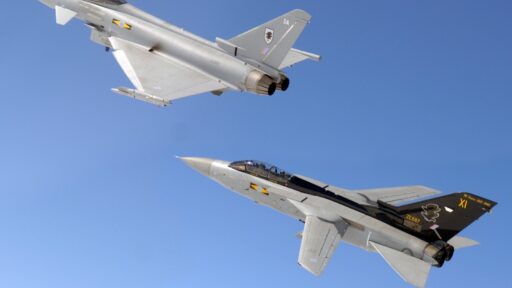
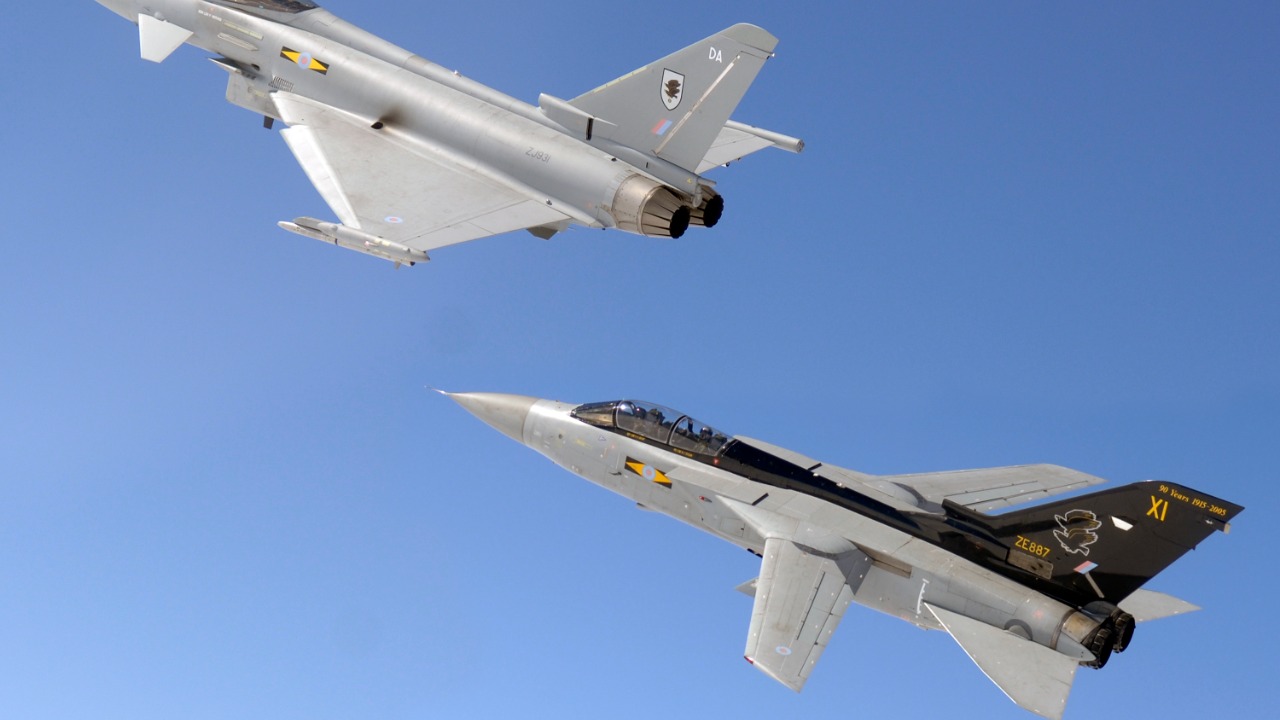
The incident grew out of routine air policing that has become anything but routine since Russia expanded its war against Ukraine. NATO maintains a rotating presence of fighter aircraft in member states such as Romania and Poland, with RAF Typhoons among the jets tasked to respond when Russian aircraft or drones approach allied airspace. According to an official account, the alliance activated what it called its first fighter mission in response to a Russian drone threat, scrambling RAF jets from a base in Eastern Europe to investigate suspicious activity along the frontier.
That initial description suggested Russian drones were moving close enough to alliance borders to trigger a direct reaction from NATO fighters. Commanders framed the launch as part of a broader effort to shield NATO territory from spillover as Russia intensifies long-range strikes on Ukraine, including attacks that involve drones flying parallel to or briefly crossing near NATO airspace. The RAF Typhoons were reported to have taken off under NATO command, climbed to an intercept altitude and moved toward the projected drone track in what officials presented as a defensive measure designed to reassure local populations and deter any miscalculation.
As more details emerged, however, the narrative shifted. NATO officials later clarified that the jets had not been sent to intercept specific drones in flight, but had been scrambled as a precaution in response to a perceived threat that did not materialize in the way early briefings implied. The revised account stressed that there had been no direct engagement with Russian systems and that the mission was consistent with the standing rules under which NATO aircraft patrol allied skies. That clarification appeared to walk back any suggestion that NATO fighters had come close to Russian drones or that a near encounter had taken place.
The episode unfolded against the backdrop of Russia’s expanding use of unmanned systems for strikes across Ukraine and near NATO borders. Russian forces have used drones to hit infrastructure in Odesa, Lviv and other cities close to alliance territory, forcing NATO to refine how it monitors and responds to aerial activity that might stray into member states. The alliance has already documented multiple instances of debris from Russian missiles or drones landing inside NATO countries, including incidents in Poland and Romania, which have tested both local nerves and alliance messaging.
The RAF mission that NATO initially described as a direct response to drones was part of a broader operation that alliance officials have framed as a new phase in air policing. The scramble was characterized as the first fighter sortie tied specifically to a Russian drone threat under this framework, a distinction intended to show that NATO is adapting to the changing character of the air war. That framing, reported in detail in an account of the fighter mission, later sat awkwardly with the more cautious description that followed.
Why it matters
The confusion around what exactly the RAF jets were responding to matters for two reasons: deterrence and escalation management. NATO wants to signal that it will defend every inch of allied territory while avoiding any step that might be read in Moscow as an attempt to interfere directly with Russian operations over Ukraine. When officials suggest that NATO fighters are moving to intercept Russian drones, that can sound like the alliance is edging toward a more active role in the conflict, even if the mission remains strictly within NATO airspace.
Messaging missteps can carry strategic costs. If the initial account is more dramatic than the eventual clarification, audiences in frontline states may feel that NATO is overstating threats or using ambiguous language to mask the limits of its engagement. At the same time, Russian officials and state media are quick to seize on any mention of NATO jets and Russian hardware in the same airspace, portraying routine air policing as aggressive behavior. A narrative that NATO fighters are hunting Russian drones, even if inaccurate, could be used to justify new Russian deployments or threats against alliance assets.
The incident also highlights the growing challenge of drone-era air defense. Traditional air policing was designed around manned aircraft that file flight plans or fly predictable profiles. Russian drones over Ukraine often fly low, slow and along complex routes that hug borders or skirt radar coverage. NATO must decide when such activity constitutes a threat to allied territory and when it is part of the war inside Ukraine that the alliance has pledged not to join directly. The scramble of RAF Typhoons in response to a perceived drone threat shows how thin that line can be in practice.
For the United Kingdom, the episode underscores the political stakes of its prominent role in NATO’s eastern posture. RAF deployments to Romania and other states are presented in London as evidence that the UK is a leading contributor to European security. When those aircraft are launched on missions framed as responses to Russian threats, domestic audiences may assume that British pilots are one misjudgment away from direct confrontation with Russian forces. Any subsequent walk back by NATO can feed debates in Westminster about transparency, risk and the clarity of the mission.
The alliance’s internal dynamics are also at play. NATO’s integrated air and missile defense involves national assets under both national and alliance command. When an incident occurs, multiple chains of communication must align before a public statement is made. The shifting account of the RAF scramble suggests that those chains did not fully synchronize before the first description was released. For an alliance that prides itself on unity and discipline, such discrepancies can be uncomfortable, especially when adversaries are watching for signs of disarray.
What to watch next
The key question is how NATO will refine its procedures for both action and communication as Russian drone activity near its borders continues. Alliance officials are already reviewing thresholds for scrambling fighters in response to unmanned systems, looking at factors such as flight path, altitude and proximity to critical infrastructure inside member states. Future guidance may emphasize the use of ground-based air defenses and surveillance assets before committing fighters to investigate ambiguous radar tracks.
Observers will also be watching for changes in public language. NATO may adopt more cautious phrasing when describing air policing missions that involve potential Russian drones, focusing on generic references to unidentified aerial activity rather than specific Russian systems unless there is high confidence in the identification. Such a shift would aim to reduce the risk of misinterpretation while still reassuring populations in countries such as Romania, Poland and the Baltic states that the alliance is actively guarding their skies.
On the operational side, the RAF and other air forces are likely to expand training that pairs fighter crews with drone specialists and intelligence analysts. Pilots need better tools to distinguish between drones that pose a direct threat to NATO territory and those that are part of combat operations inside Ukraine. Exercises in Eastern Europe increasingly feature scenarios where fighters must respond to swarms of small drones, larger unmanned aircraft and mixed formations that include both drones and manned aircraft, all near alliance borders.