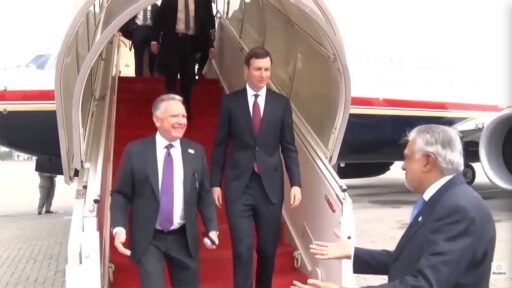
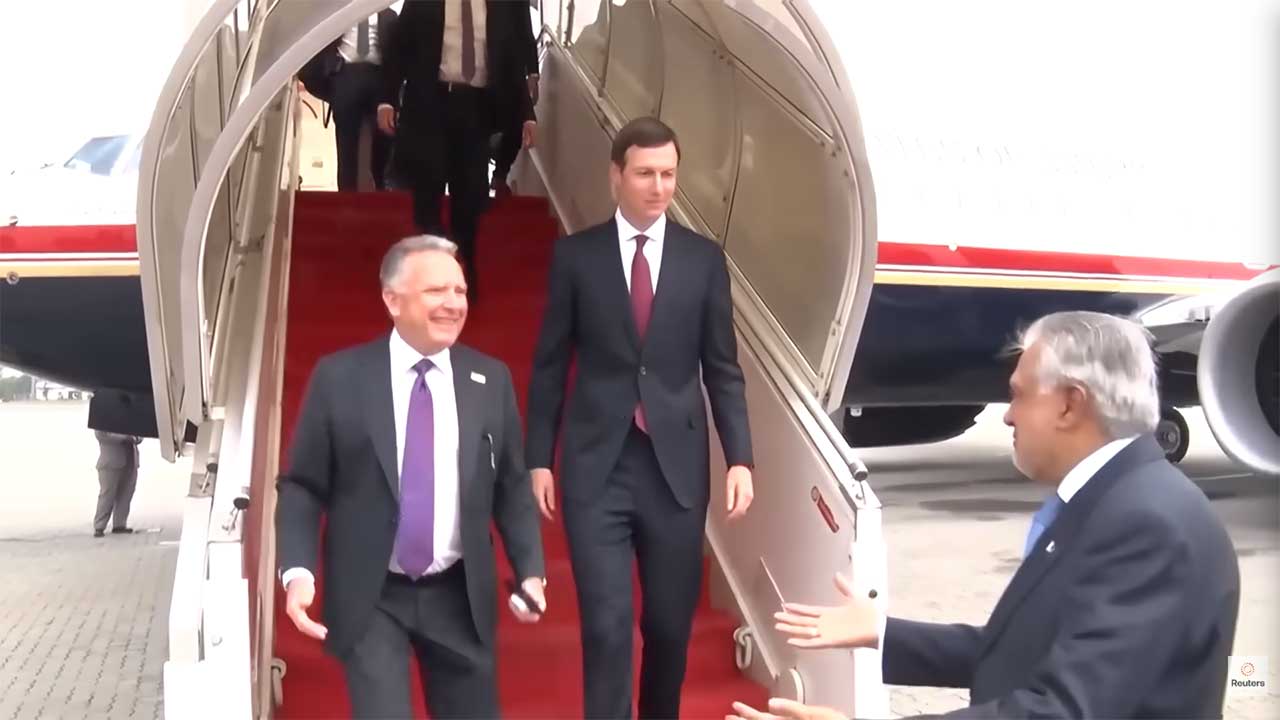

A U.S. government aircraft carrying senior American officials for talks with Iranian representatives has arrived in Islamabad, marking the most direct engagement between Washington and Tehran in years on Pakistani soil. The flight, which followed heightened regional tensions and a fraught journey for the Iranian side, signals that both adversaries have at least agreed to sit in the same city to address a widening list of crises.
The delegations are gathering as the Middle East absorbs the shock of recent attacks, cross-border strikes, and threats to commercial shipping, while Pakistan steps forward as an unlikely but willing host. The Islamabad meetings will test whether quiet back-channel contacts can be converted into a structured dialogue that slows escalation and opens space for limited understandings.
What happened
According to two Pakistani officials cited in local briefings, a U.S. government plane carrying a team designated for talks with Iranian counterparts landed in Islamabad after a direct flight routed through the Gulf. The aircraft, described by the officials as a chartered U.S. Air Force jet, brought in senior diplomats and security specialists tasked with exploring de-escalation options with Tehran, as reported by Pakistani sources.
The American team’s arrival followed a more dramatic journey for the Iranian negotiators. Their plane, which departed from Tehran bound for Pakistan, was forced to make an emergency landing in the northeastern Iranian city of Mashhad after what Iranian officials described as threats transmitted to the crew. Iranian media accounts say the aircraft diverted for security checks and refueling before later resuming its route toward Islamabad, a sequence detailed in reports on the Mashhad landing.
Despite the disruption, Iranian representatives eventually reached Islamabad, where Pakistani authorities had already tightened security around diplomatic districts and Islamabad International Airport. Local reports described roadblocks near key hotels, additional checkpoints on routes from the airport, and a visible increase in paramilitary patrols as both delegations arrived for what were described as high-stakes, closed-door discussions on regional security and nuclear issues, according to coverage of the delegations’ arrival.
Pakistani officials have not released a formal agenda, but briefings to local media suggest that the talks will be held at a secure government compound in Islamabad’s diplomatic enclave. The sessions are expected to involve multiple working groups, with Pakistan’s foreign ministry playing host and providing logistical support, while substantive exchanges occur directly between U.S. and Iranian envoys.
Regional outlets monitoring the arrivals reported that the U.S. delegation includes senior State Department officials and security advisers who have previously worked on Iran-related portfolios, although their exact titles have not been disclosed publicly. Live updates from Islamabad also described a staggered arrival pattern, with some American officials landing earlier on commercial flights before the main government aircraft touched down, a sequence reflected in coverage of top U.S. officials reaching Pakistan.
On the Iranian side, the delegation is reported to include representatives from the foreign ministry and security institutions, along with technical experts on nuclear and energy matters. Iranian media framed the trip as a response to Pakistani mediation efforts, stressing that Tehran was attending to defend its security interests and to challenge what it describes as U.S. pressure and sanctions.
Why it matters
The Islamabad meetings carry significance on several levels. At the most basic, they bring U.S. and Iranian officials into the same venue at a time when indirect channels had dominated contacts for months. The fact that Washington dispatched a dedicated aircraft and a focused team, confirmed by regional reporting, signals that the United States sees value in at least testing whether limited understandings are possible.
For Iran, the decision to send a high-level delegation despite the emergency landing episode underscores a calculation that engagement in Islamabad offers potential benefits, even if only to manage the risk of miscalculation with U.S. forces and allies. The reported threats to the Iranian plane, detailed in accounts of the Mashhad diversion, highlight the volatile environment in which these talks are taking place and the perception among Iranian officials that their movements are being closely watched and potentially targeted.
Pakistan’s role as host is also notable. Islamabad has longstanding ties with Washington, including security cooperation and financial support, while maintaining a working relationship with Tehran shaped by shared borders, energy interests, and occasional tensions. By offering its capital as a venue, Pakistan positions itself as a facilitator at a moment when other traditional intermediaries are constrained by their own regional alignments, a role highlighted in reporting on Pakistani mediation.
The substance of the talks is expected to range from nuclear activities to regional flashpoints. U.S. officials are likely to press concerns about Iran’s uranium enrichment levels and its support for armed groups that have targeted American forces and commercial shipping. Iranian negotiators, in turn, are expected to demand relief from U.S. sanctions that have squeezed Iran’s economy and limited its access to global financial systems, as suggested by analyses of regional tensions.
Beyond the nuclear file, the war in Gaza, cross-border strikes involving Iranian-linked groups, and attacks on Red Sea and Gulf shipping have created a dense web of grievances. Any progress in Islamabad, even if modest, could help cool some of these flashpoints. Conversely, a breakdown or public failure could reinforce hardline narratives in both capitals that dialogue is futile and that only pressure or deterrence will shape the other side’s behavior.
The talks also matter for regional actors who are not at the table. Gulf states, Israel, and European governments have a direct stake in whether U.S. and Iranian positions shift, even slightly, on issues such as missile deployments, maritime security, and the future of sanctions. For them, Islamabad is an early test of whether the current cycle of confrontation can be slowed before it spills into a broader conflict that would disrupt energy markets and global trade.
What to watch next
The first indicator to watch is whether the Islamabad meetings produce any agreed mechanism for follow-up. Diplomats will be looking for signs of a structured channel, such as working groups or a commitment to reconvene in another neutral city, rather than a one-off encounter. Reporting on the arrival of both delegations for high-stakes talks suggests that expectations are modest but real, with Pakistani officials hoping at minimum for a roadmap to continued engagement.
Another key signal will be how each side frames the talks in public statements after the initial sessions. If U.S. officials characterize the meetings as “frank and direct” but leave open the door to further contacts, that would point to a managed process rather than an immediate breakthrough. Iranian messaging will be closely parsed for any reference to specific issues such as enrichment levels, sanctions relief, or regional militias, which would hint at where negotiators spent their time.
Regional markets and security watchers will also track whether there is any immediate change in activity around known flashpoints. A reduction in drone or rocket launches by groups linked to Iran, a pause in attacks on commercial vessels, or a slowdown in tit-for-tat strikes would suggest that the Islamabad channel has at least nudged both sides toward restraint. Conversely, a spike in incidents shortly after the meetings would reinforce the perception that hardliners remain in control of key levers of escalation.
Pakistan’s next moves will matter as well. If Islamabad emerges from the talks with a visible role, such as hosting a small liaison group or facilitating technical discussions on humanitarian or energy issues, it could entrench its position as a regional go-between. Coverage of Pakistani sources already points to sustained efforts by its foreign ministry to keep both sides engaged.
Observers will also watch for any sign that other states seek to plug into the process. European governments that were part of earlier nuclear negotiations, as well as Gulf states that feel directly threatened by Iranian missiles and drones, may push for briefings or side channels that connect to the Islamabad track. Whether Washington and Tehran are willing to widen the circle will say a great deal about how serious they are about moving beyond crisis management.