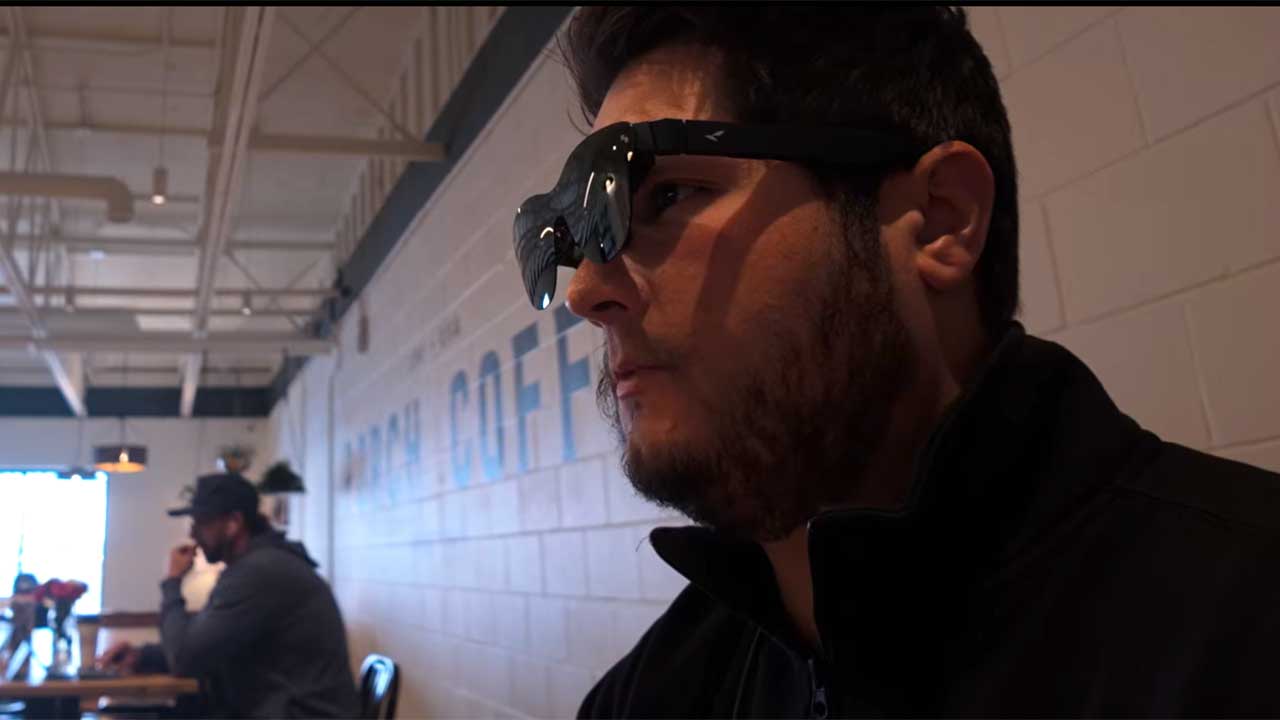

RayNeo is pushing augmented reality eyewear into premium display territory with the launch of the RayNeo Air 4 Pro, billed as the world’s first pair of AR glasses prepared for HDR10 playback. Rather than treating smart glasses as a quirky smartphone accessory, the company is positioning this model as a serious big-screen alternative that hangs on the bridge of a nose instead of on a living-room wall. The result is a headset that aims to blend cinema-grade visuals, console-friendly latency and everyday comfort into a single, relatively affordable package.
The RayNeo Air 4 Pro arrives at a moment when AR hardware is under pressure to prove it can do more than float notifications in front of a user’s eyes. With HDR10-ready microdisplays, a dedicated image-processing chip and audio tuned for long sessions, the glasses target people who want to watch HDR films, stream games from a PC or console, and carry a private virtual screen on the road. Early hands-on tests describe the experience less like peering at a gadget and more like staring at a compact OLED TV that just happens to be wearable.
HDR10-ready displays turn AR into a personal cinema
The headline feature of the RayNeo Air 4 Pro is its support for HDR10, which allows compatible content to use higher peak brightness, deeper blacks and 10-bit color. RayNeo describes the Air 4 Pro as the world’s first HDR10 display glasses, a claim that puts these lenses in a distinct category from earlier microdisplay viewers that were limited to standard dynamic range. Launch materials emphasize that this capability is designed to reproduce light and shadow with the fidelity that photographers and cinematographers expect from professional monitors, rather than the washed-out look that has often plagued portable screens.
Under the hood, the Air 4 Pro relies on dual 0.6-inch Micro OLED panels that combine HDR10 support with high brightness and contrast. Product listings specify that the Micro OLED Displays deliver a 0.6-inch diagonal per eye, a peak brightness of around 1200 nits and a 200,000:1 contrast ratio, figures that are far closer to premium TVs than to typical laptop panels. One retailer describes these Features Micro OLED as 0.6-inch units with 200,000:1 contrast, while a separate specification sheet lists a Vision 0.6 Micro-OLED module that underpins the Smart AR optics. Together, these details help explain why early reviewers compare the effect to wearing an OLED TV on the face rather than glancing at a tiny floating window.
Independent Image Quality Chip and Vision4000 processing
Beyond the raw panel specs, RayNeo is banking on dedicated processing to make HDR10 content look consistent across sources. Community documentation of the Air 4 Pro highlights the Introduction of an Independent Image Quality Chip, which takes the incoming video feed and applies its own tone mapping and color management before the signal reaches the displays. Traditional viewing glasses often pass through whatever the host device provides, which can lead to inconsistent brightness and color if a phone or laptop is not tuned for head-mounted use. By inserting its own visual brain into the chain, the Air 4 Pro attempts to normalize the experience whether it is connected to a gaming PC, a Nintendo Switch or a smartphone.
That same documentation notes that the screen’s refresh rate is paired with a 0.6-inch Micro OLED engine and a 200,000:1 contrast ratio, and that the independent chip helps the Air 4 Pro scale from consumer AR glasses to industrial headsets. A separate product listing identifies the Vision4000 processor as the dedicated chip inside the Smart AR system, with the Specifications describing the Product Name as Smart AR Glasses built around the Vision 0.6 Micro-OLED display and a high contrast Rat for deep blacks. Taken together, the Independent Image Quality and Vision4000 platform suggest that RayNeo is treating image quality as a first-class feature, not an afterthought to connectivity.
From China launch to CES spotlight and global sales
The Air 4 Pro did not appear overnight on store shelves. The TCL-backed brand first unveiled the Pro AR glasses in China, then used CES to mark their global debut. Coverage of the global rollout notes that the RayNeo Air 4 Pro AR glasses with HDR10 support were initially introduced in China and later showcased at CES, where the TCL connection helped the product stand out among a crowded field of XR prototypes. That staging allowed RayNeo to validate the hardware in its home market before subjecting it to the scrutiny of international reviewers and early adopters.
By early this year the company had moved from trade-show demos to full retail availability, including listings on major marketplaces. One shopping entry for the product highlights the RayNeo Air 4 Pro AR/XR Smart Glass as a model that has undergone careful inspection and testing and is sold in Excellent condition, which hints at a refurb or graded program that sits alongside new units. Another listing emphasizes the Specifications of the Air 4 Pro, including the Product Name Smart AR Glasses, the Vision 0.6 Micro-OLED display and the focus on a high contrast Rat for HDR performance. Together, these product listings show how RayNeo is positioning the Air 4 Pro not just as a tech demo, but as a repeatable SKU with clear specs and condition grades.
Hands-on impressions: “an OLED TV for my face”
Early hands-on coverage paints a vivid picture of how the Air 4 Pro behaves in real use. One reviewer who tried the glasses around CES described the experience as akin to wearing an OLED TV for the face, with HDR10 content delivering punchy highlights and rich color that held up even in brighter rooms. The same account notes that the glasses were part of a lineup of smart eyewear at CES, yet the Air 4 Pro stood out thanks to its combination of display quality and relatively low weight, which made extended viewing sessions feel more like watching a laptop screen than wearing a bulky headset.
Another segment of the same review focuses on gaming and latency, reporting that the Air 4 Pro handled console and PC feeds without obvious lag and that 2D content could be converted to a simulated 3D effect. The author mentions getting to try a ton of smart glasses at CES and still coming back to the Air 4 Pro as one of the most exciting pairs, particularly for movie playback and cloud gaming. Those impressions are backed by a separate hands-on that reiterates the OLED TV comparison and praises the clarity of subtitles and UI text in streaming apps. Together, these hands-on tests and the follow-up segment that notes the reviewer got to try a ton of glasses at CES before highlighting the Air 4 Pro as a standout, linked through got to try, suggest that RayNeo’s HDR10 pitch is resonating with people who care about visual fidelity.
Pricing, positioning and the HDR10 arms race
RayNeo and TCL are also trying to win on value. Launch coverage of the Air 4 Pro smart glasses notes that the base version is priced at $299, with limited-edition variants offered at higher MSRPs but discounted at launch. Separate reporting on XR use cases repeats that the Air 4 Pro is available with a regular price of $299 and frames it as an XR device that can replace a travel monitor or bedroom TV for people who are comfortable wearing glasses. That pricing puts the Air 4 Pro in the same general bracket as mid-range tablets and gaming monitors rather than premium headsets, which may help it appeal to travelers, students and remote workers who want a private screen without committing to a full mixed-reality ecosystem.