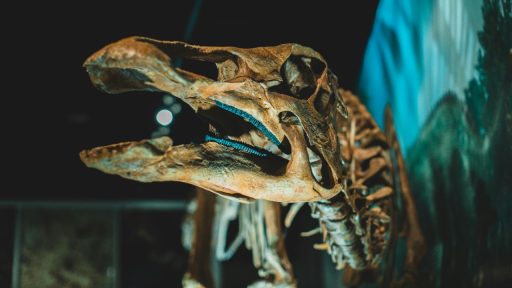
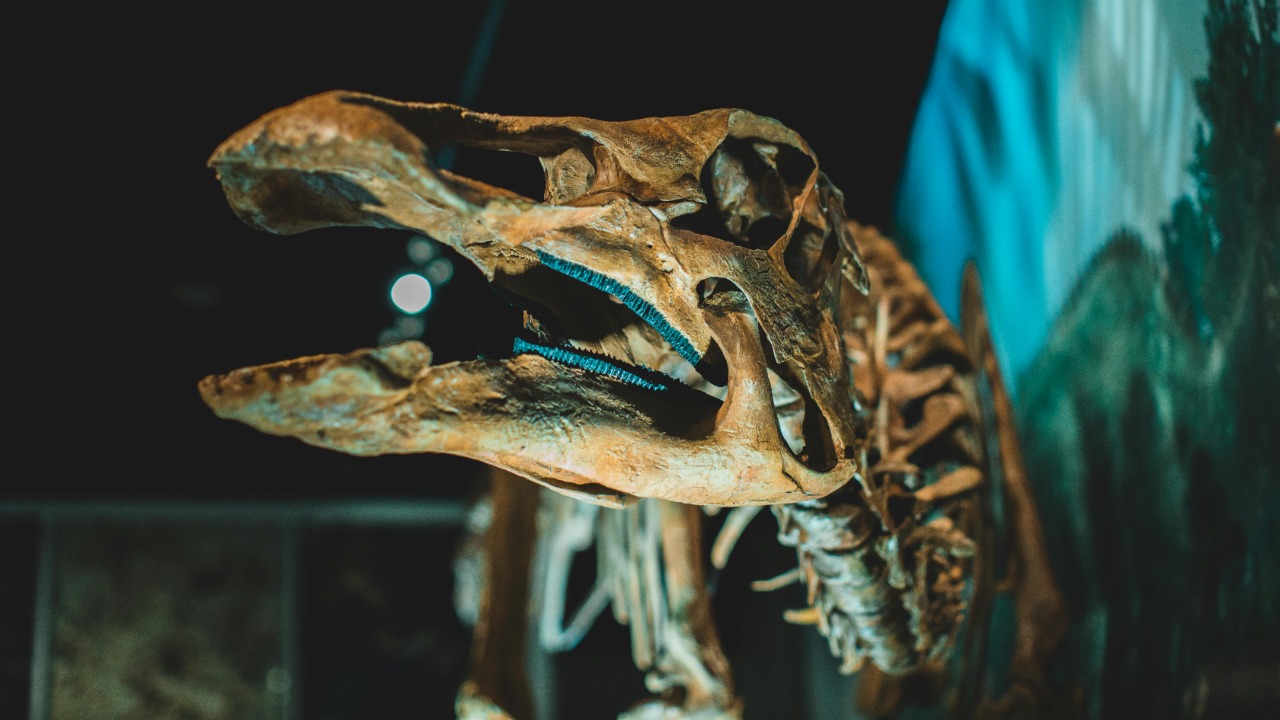

A newly described predator has joined the dinosaur pantheon, seemingly built to haunt shallow rivers. The new species, a giant Spinosaurus with a towering horn on its snout, appears to have specialized in hunting fish, turning its skull into both a weapon and a billboard in the murky waters of ancient Africa. Its discovery offers a rare glimpse of how a top carnivore could dominate not by sprinting across plains, but by stalking like a heron the size of a city bus.
Researchers argue that this horned fish hunter did not just tweak the Spinosaurus blueprint, it rewrote it. From its sabre-like crest to its wading limbs and sensory snout, the animal shows how far evolution pushed one dinosaur lineage into a semi-aquatic niche, and why that shift is still stirring debate among paleontologists.
The sabre-crested predator that rewrites Spinosaurus
The new species, named Spinosaurus mirabilis, was identified from fossils pulled from the Sahara Desert in Niger, where an international team uncovered a skull with a blade-like horn rising from the snout. The animal stretched roughly the length of a school bus and combined the bulk of a traditional theropod with a head that looked more like a crocodile fitted with a sword. Researchers describe the horn as a head-mounted structure large enough to transform the dinosaur’s profile into something closer to a unicorn from a nightmare than a standard meat-eating reptile, a description echoed in early coverage of this horned dinosaur.
Spinosaurus dinosaurs were already famous for their tall back sails and crocodile-like jaws, but scientists say Spinosaurus mirabilis stands out as the first new species of this group identified in more than 100 years. The fossils, recovered in Niger and described by Paleontologist Paul Sereno and colleagues, show a skull with elongated jaws, conical teeth, and that striking horn, features that together suggest a predator adapted to a very specific lifestyle in rivers and wetlands. One image that has stuck in the scientific conversation compares the animal to a hellish heron, a towering wader that traded delicate beaks for a skull full of knives.
A giant built to kill fish
At the heart of the discovery is the argument that Spinosaurus mirabilis was a dedicated fish eater. Its jaws are lined with long, conical teeth that lack the serrations typical of land-focused meat eaters, a shape far better suited to gripping slippery prey than to slicing through thick hide. The snout is narrow and crocodile-like, with bony pits that likely housed pressure sensors, allowing the animal to detect movements in water the way modern crocodilians do. These traits match descriptions in reports that describe the new fossil as a large fish specialist and emphasize that this is the first time in over 100 years that scientists have identified a new Spinosaurus fish eater.
Researchers bolster the fish-hunting case with evidence that goes beyond skull shape. Chemical analysis of the fossilized bones, specifically stable isotope ratios, points to a diet that included a significant amount of aquatic food. That isotopic fingerprint matches what would be expected from an animal that spent much of its time feeding on fish rather than on land-dwelling dinosaurs or other vertebrates, as outlined in detailed analysis of the. Taken together, the horned skull, crocodile-like snout, and chemical signatures sketch a predator that dominated the shallows rather than the open floodplain.
The horn that signaled power
The most visually arresting feature of Spinosaurus mirabilis is its massive horn, a sabre-like crest that rises from the top of the snout. The team first encountered one of the crucial crest bones during a scientific expedition in 2019 and only later realized how large the full structure would have been once more pieces were recovered. By the time they returned in 2022, they had enough of the skull to show that the horn formed a tall blade, not a modest bump, and that it would have been visible from a distance even in murky river light, according to accounts of how the crest fossil was.
Scientists suggest the horn likely played a role in display rather than in stabbing prey. A tall, blade-like crest would have been ideal for signaling to mates and rivals, much as modern antelope use horns or birds use bright plumage. One report describes the skull as sabre crested and notes that such structures are often used to attract mates and compete with rivals, a pattern that fits with the idea that this dinosaur’s headgear was as much about social life as about hunting. Fossils from the Sahara Desert show that this sabre-crested Spinosaurus was not hiding in the reeds; it was advertising its presence.
Hell heron in the Sahara shallows
To understand how Spinosaurus mirabilis lived, paleontologists point to its environment. The fossils come from the Sahara Desert in Niger, a region that during the Cretaceous period was laced with rivers and wetlands teeming with large fish. The new dinosaur appears to have waded into shallow waters, using relatively short hind limbs and a powerful tail to maneuver while it hunted. One account describes the animal as a hell heron that stalked the shallows to nab slippery fish, comparing its lifestyle to a scaled-up version of modern wading birds that spear fish from the water’s surface. In this view, the dinosaur’s long body, estimated at 32 to 46 feet tall when fully reared, and its crocodile-like skull made it a dominant predator in the Sahara Desert rivers.
The setting also matters for how the discovery was made. Paleontologist Paul Sereno has described the thrill of unearthing the skull in Niger, emphasizing that it is not every day that a new dinosaur is uncovered in such a well-explored region. The fieldwork involved multiple expeditions, careful excavation in harsh desert conditions, and collaboration among researchers from several countries. Accounts of the work stress how the head-mounted sword of bone immediately stood out from the surrounding rock, a moment that signaled to the team that they were looking at a predator unlike any Spinosaurus they had seen before, as detailed in a profile of Paleontologist Paul Sereno and his Niger expeditions.
A fresh twist in the Spinosaurus debate
The new fossils land in the middle of a long-running argument over how aquatic Spinosaurus dinosaurs really were. Earlier work on related species suggested that some members of this group might have been capable swimmers that spent much of their lives in deep water. The anatomy of Spinosaurus mirabilis, however, points to a different strategy. Its limb proportions and body plan look better suited to wading and ambush in shallow channels than to pursuit in open water, a conclusion that has been used to challenge the idea of Spinosaurus as a dinosaur equivalent of a crocodile or seal. One analysis describes the find as a Marvelous new Spinosaurus species that could settle the aquatic debate, highlighting jaws ideal for gripping slippery prey and limbs tuned for stalking rather than swimming, as seen in a feature on the Marvelous new Spinosaurus.
The debate has deep roots. Earlier reconstructions of Spinosaurus from North Africa proposed a more fully aquatic lifestyle, complete with paddle-like tails and dense bones that might have aided diving. Critics argued that the fossils were too fragmentary to support such a sweeping claim. The new species from Niger, described in the journal Science and highlighted in coverage that traces the history of Spinosaurus research, adds a data point that seems to favor a wading predator that still relied on land for much of its activity. In this context, the discovery of Spinosaurus mirabilis is not just about a single dinosaur with a spectacular horn; it is about refining how scientists think a whole lineage of predators lived, hunted, and evolved along the margins of ancient rivers.