
NASA’s next crewed trip to the Moon is not just a technical milestone, it is a visual break with the past. Artemis II will send four astronauts farther from Earth than any humans have ever traveled, and the faces inside the capsule will signal who belongs in American spaceflight in the 21st century. The mission’s diverse crew, its ambitious trajectory, and the broader Artemis strategy together are poised to reset public expectations of what an American astronaut looks like and what human exploration is for.
Where Apollo projected a narrow slice of the country, Artemis II is designed to look more like the United States, and to operate more like a long‑term infrastructure project than a one‑off flag‑planting. That shift, backed by explicit diversity policies and a new generation of hardware, will shape how a rising “Artemis Generation” understands space, science, and national identity.
The mission that takes humans farther than ever
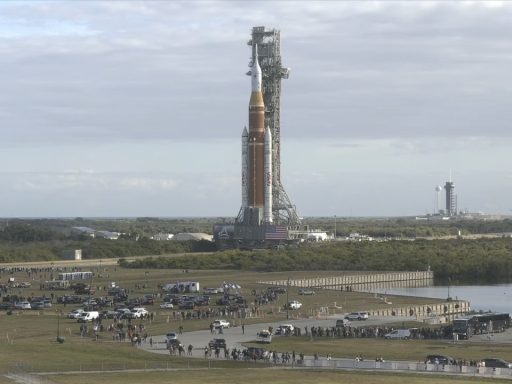
Artemis II is the first crewed flight in NASA’s modern lunar program, a roughly ten‑day journey that will loop around the Moon before returning to Earth. The mission sits inside the broader Artemis architecture, which aims to establish a sustained human presence beyond low Earth orbit. According to the current mission plan, the crew will ride the Space Launch System into orbit, test critical systems on the Orion spacecraft, then fire engines for a distant lunar flyby trajectory before splashing down in the Pacific.
Unlike later sorties that will land near the Moon’s south pole, Artemis II is a shakedown cruise for people and hardware. Engineers want to prove Orion’s life‑support and navigation in deep space, a point underscored in technical briefings that stress that, unlike future landings, Artemis II will not touch down on the surface. Instead, the flight is designed to wring out Orion’s environmental controls and propulsion in the harsh radiation environment around the Moon, confirming that the capsule can safely carry crews on longer missions that will rely on lunar resources such as water, oxygen, and rocket fuel.
Meet the four astronauts reshaping the American image
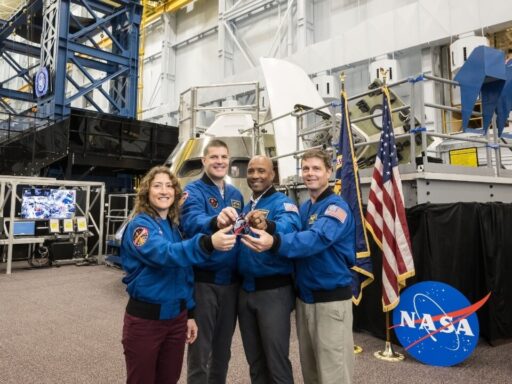
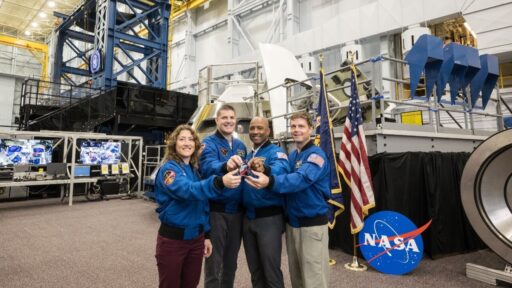
The crew of Artemis II is small in number and outsized in symbolism. NASA has named Wiseman as commander of Artemis II, with Victor Glover serving as pilot and Christina Koch and Jeremy Hansen as mission specialists. Agency profiles describe how Commander Reid Wiseman, pilot Victor Glover, engineer Christina Koch and Canadian astronaut Jeremy Hansen bring a mix of test‑pilot experience, long‑duration spaceflight, and international partnership to the flight, a combination that reflects how Artemis II will as a joint effort rather than a purely national one.
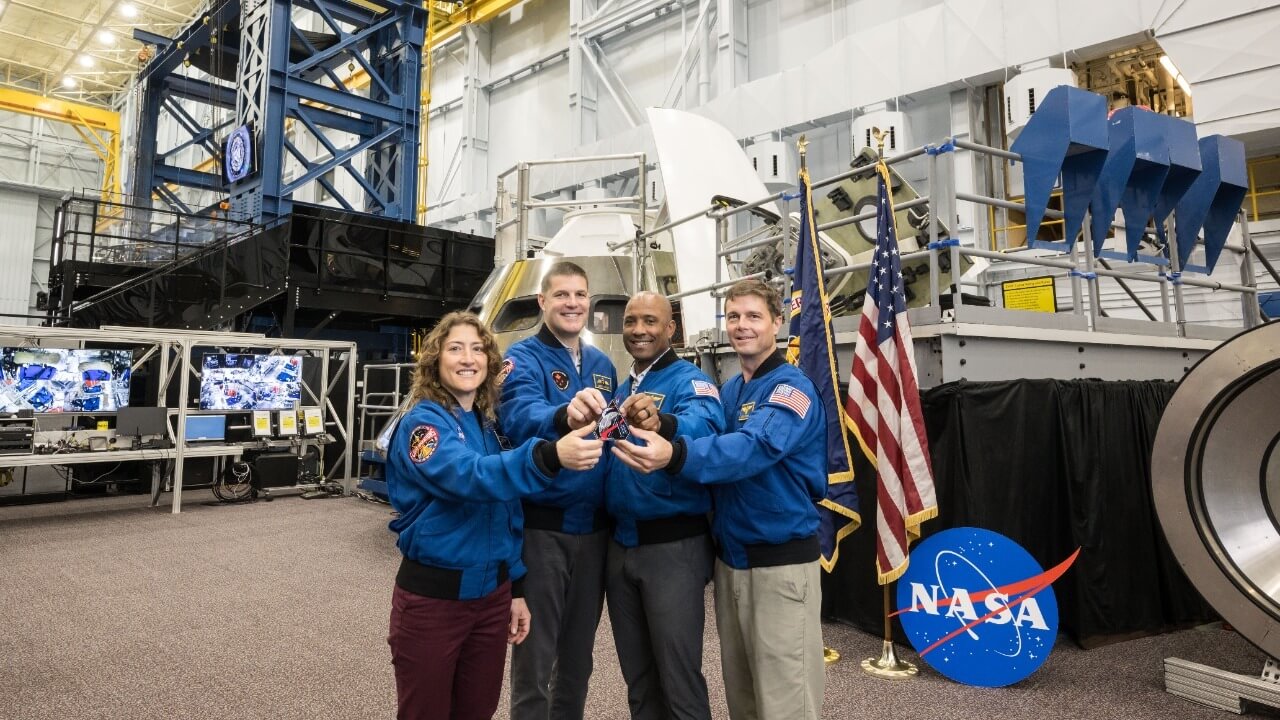
NASA’s own biographies invite the public to Meet the Astronauts, emphasizing that Four astronauts have been selected for NASA’s Artemis II mission: Commander Reid Wiseman, pilot Victor Glover, mission specialist Christina Koch, and mission specialist Jeremy Hansen. Visuals released with the announcement show the Artemis II Crew lined up left to right as Christina Koch, Victor Glover, Reid Wiseman, and Jeremy Hansen, a composition that has been widely shared as a snapshot of the new NASA astronaut corps.
Diversity as strategy, not slogan
NASA officials have been explicit that Artemis is meant to correct the demographic narrowness of Apollo. Internal policy statements describe how, in human space exploration, the agency intends to go forward as the Artemis Generation to further explore the Moon and beyond, for the good of all people on Earth. A companion presentation on that Artemis Generation initiative underscores that it focuses on inclusivity, aspiring to have diverse individuals, including the first woman and person of color, participate in lunar missions so that everyone can contribute to space exploration, a goal laid out in detail in a slideshare briefing.
Analysts who study space policy argue that the Artemis II crew is the first concrete expression of that strategy. Commentaries republished under a Creative Commons license note that, On April 3, 2023, NASA announced the four astronauts for Artemis II and highlighted how their mix of gender, race, and nationality signals a long‑term plan for exploration. A related analysis of The Artemis II crew stresses that the four are quite diverse compared with earlier lunar teams and that this composition is meant to show that future missions will be organized in a diverse and collaborative way, a point made explicitly in an opinion piece that tracks how NASA is trying to align its astronaut corps with its public commitments.
From Apollo nostalgia to a long-term lunar presence
Artemis II also marks a strategic break with the Apollo era. With Artemis, NASA is instead pursuing a long‑term goal, venturing beyond Earth to stay, unlike Apollo, which targeted the Moon’s surface for short visits before retreating, a contrast drawn sharply in program overviews that compare With Artemis to the earlier program. NASA’s own framing is that it is going back to the Moon for scientific discovery, economic benefits, and inspiration for a new generation of explorers, while building the ability to use lunar resources like water, oxygen, and rocket fuel to push deeper into the solar system.
Public interest in human spaceflight remains high, and that attention shapes policy. One analysis recalls that, When Apollo 13 looped around the Moon in April 1970, more than 40 m people watched, and it cites a poll to argue that crewed missions still carry a different weight than robotic missions in the public imagination, a point used to explain why Artemis II is central to U.S. space strategy. NASA’s own messaging from Headquarters reinforces that Artemis II will be a crucial test of the systems that will carry astronauts back to the lunar surface and eventually on to Mars, a framing laid out in a detailed briefing that positions the mission as a hinge between test flights and permanent infrastructure.
Risk, reach and the “Artemis Generation”
Technically, Artemis II will push human spaceflight into new territory. Mission planners note that Artemis 2’s official trajectory will push humans 4,700 miles, or 7,560 kilometers, beyond the far side of the Moon, farther than even Apollo 13 traveled, a figure highlighted in coverage of the Artemis profile. NASA officials describe Artemis II as the first mission with crew aboard its foundational deep space rocket, the Space La, and label the four astronauts the Next Generation of Explorers, language that appears prominently in a dedicated mission portal.
That reach comes with risk and delay. Cold weather in Cape Canaveral, Florida, has already prompted NASA to postpone a critical dress rehearsal for the Artemis II launch, pushing key milestones to Feb. 8 or later and underscoring how even a highly choreographed campaign can be slowed by Cold fronts. Yet NASA continues to present Artemis II as a defining moment for the Artemis Generation, a phrase that appears in policy documents and outreach materials that describe how young people watching Reid Wisman, Victor Glover, Christina Koch and Jeremy Hansen fly will be invited to see themselves in the cockpit, a theme echoed in a video that notes that arteimus 2 will bring astronauts back to deep space for the first time in over 50 years.