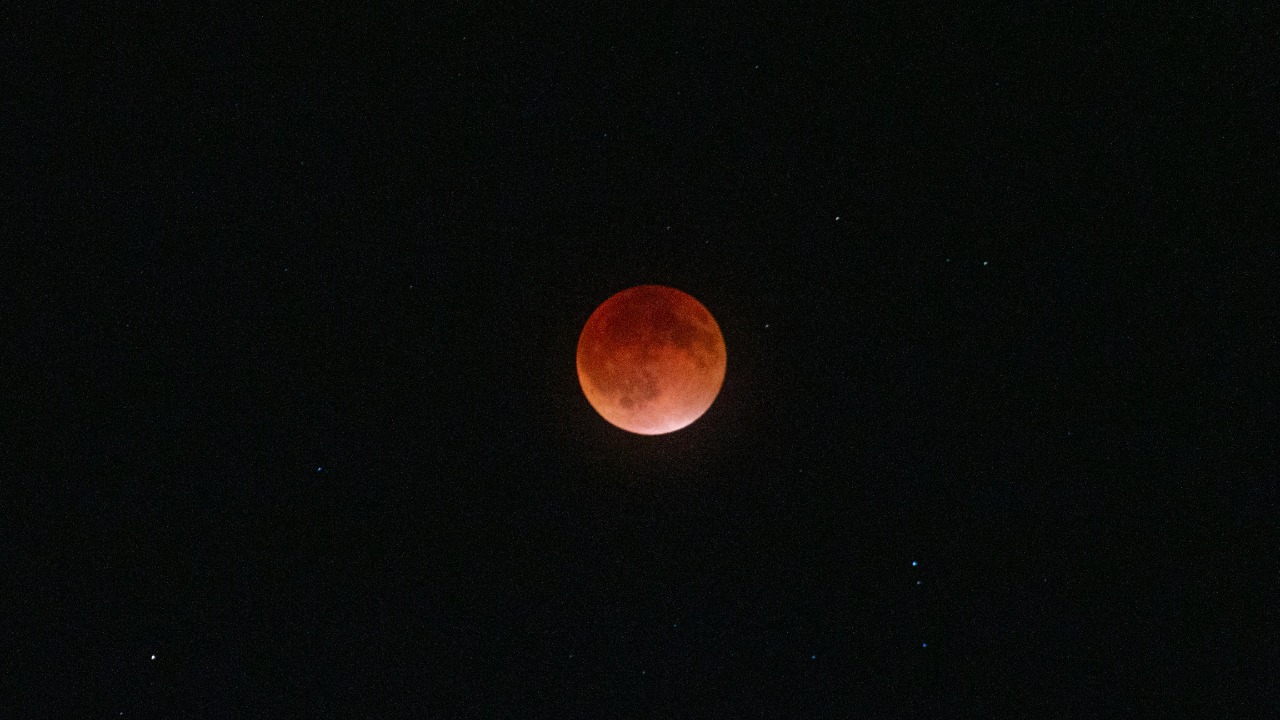

The first full moon of 2026 is not just bright, it is busy. Across a single weekend, the Moon will swell to supermoon status, line up with a major meteor shower and slide into a close encounter with Jupiter, turning an ordinary calendar page into a compact sky show. It is a convergence of events that makes this weekend’s full moon feel like a trick of timing, even if astronomers caution that similar combinations will return in future years.
What sets this moment apart is how many different cycles happen to peak together. The Moon is near its closest point to Earth, the Quadrantid meteor shower is firing, and Jupiter is poised for a striking conjunction, all within a few nights. For casual skywatchers, it is the kind of alignment that can make a winter weekend feel like a front‑row seat on the solar system.
Why this weekend’s full moon is doing so much at once
The year opened with the Moon already in a special configuration. The first full moon of 2026 arrives on a Saturday in early Jan, and it is described as a supermoon because it occurs when the Moon is closer to Earth than average, making it appear larger and brighter in the sky. One forecast notes that This Saturday, January 3rd, the first full moon of 2026 will rise as a prominent target for evening observers, underscoring how the lunar cycle is kicking off with an unusually eye‑catching phase.
At almost the same time, the Moon’s orbit brings it to perigee, the closest point to Earth in its monthly path. A detailed moonrise calendar highlights that on a Thursday later in Jan, The Moon reaches perigee relative to Earth, reinforcing how tightly the distance and phase cycles are intertwined this year. When a full phase and perigee line up closely in time, astronomers and communicators alike reach for the term supermoon to capture the subtle but real boost in apparent size and brightness.
A full Wolf Super Moon and a meteor shower share the stage
The supermoon label is not just marketing in early 2026, it reflects a genuine geometric coincidence. One explainer describes a “cool cosmic coincidence” in which the first full moon of the year, identified as a supermoon, coincides with Earth’s closest approach to the Sun, known as perihelion. In that account, the Earth is near perihelion just as the Moon swells to its first supermoon of 2026, stacking two separate orbital rhythms into one weekend. That overlap subtly enhances the amount of sunlight falling on the Moon and the apparent size of the lunar disk, even if the difference is modest to the naked eye.
Layered on top of that geometry is a shower of falling debris. A separate advisory points out that Adding to the spectacle is the Quadrantid meteor shower, which is peaking on the same night that the full Wolf Super Moon rises. The note on Adding the Quadrantid meteors makes clear that the bright moonlight will wash out many of the fainter streaks, but it also frames the pairing as the opening act in what is described as an incredible year of lunar events. For observers, that means fewer meteors per hour than under a dark sky, but a richer overall scene, with a blazing Moon anchoring the view.
Jupiter steps into the frame with the Moon
The weekend’s “trick” is not limited to the Moon’s size and the meteor shower. As Jan unfolds, Jupiter moves into position for a close pairing with the lunar disk, turning the sky into a two‑planet‑plus‑Moon tableau. Social media alerts invite people to watch as Moon and Jupiter Meet in the Night Sky, describing how, At the end of Jan, the two bright objects will share the same general patch of sky for several evenings. One post urges skywatchers to prepare for an extraordinary cosmic alignment, framing the Moon and Jupiter sequence as a family‑friendly reason to step outside.
Another description emphasizes that on January 31, 2026, the Moon and Jupiter will form a particularly tight conjunction, visible in the Night Sky as a rare, close embrace of two bright points. That account of the Night Sky pairing encourages people to share the show with friends and family, underscoring how accessible such conjunctions are to the unaided eye. A related note adds that On January, Moon and Jupiter will appear in a rare, close embrace, highlighting the moment as a chance to see our celestial neighbors in a compact configuration without any special equipment, as long as clouds cooperate.
A year of named moons and rare labels
Part of what makes this weekend feel like the start of a long‑running performance is the crowded lunar calendar that follows. A comprehensive Full moon guide lists all 13 full moons expected in 2026, including a blue moon and a blood moon later in the year, and it organizes them by date and time so observers can plan ahead. In that listing, the Jan Full phase is only the first act, with the guide explaining When each full moon will rise and offering context on traditional names and viewing conditions, summarized with a simple invitation that Here are the key dates for anyone tracking the lunar cycle.
Those traditional names are already being attached to specific nights. One post highlights the Snow Moon as Winter’s Brightest Night On February 1, 2026, describing how the Full Moon will shine in the heart of the season’s heaviest snowfall. The description of the Snow Moon leans into the contrast between cold air and bright light, inviting people to see the February full moon as Winter’s Brightest Night On February rather than just another date on a chart. Earlier in the month, another advisory framed the first full moon of the year as a Wolf Super Moon and stressed that This Saturday would be the moment to look up, reinforcing how Jan is setting a tone of heightened lunar awareness.
From “hasn’t happened in 100 years” to a RARE SUPER BLUE MOON
Communicators have not been shy about stressing how unusual the opening of 2026 feels. One meteorologist’s video, labeled in all caps as THIS HASN’T HAPPENED IN OVER 100 YEARS, describes how, as 2026 begins, we are getting a rare cosmic double feature with the year’s first full moon and a major meteor shower arriving together. The phrasing in that clip, which repeats the sequence THIS, HASN, HAPPENED, OVER, YEARS, reflects a sense that the specific combination of timing is uncommon, even if the underlying cycles themselves are well understood. I read that as an attempt to translate orbital mechanics into a simple message: this is not an every‑January occurrence.
The sense of rarity will return later in the year with a different kind of lunar branding. A separate alert urges people, “Don’t miss out!” and tells them to mark May 31, 2026, for what it calls a RARE SUPER BLUE MOON on a Monday night. That notice explains that a full moon that qualifies simultaneously as a supermoon and a blue moon will not happen again for years, and it frames the RARE SUPER BLUE MOON as a once‑in‑a‑blue‑moon experience in more ways than one. Another version of the same message repeats the RARE, SUPER, BLUE, MOON phrasing, underscoring how 2026 will bookend its first half with two very different but equally hyped lunar spectacles.