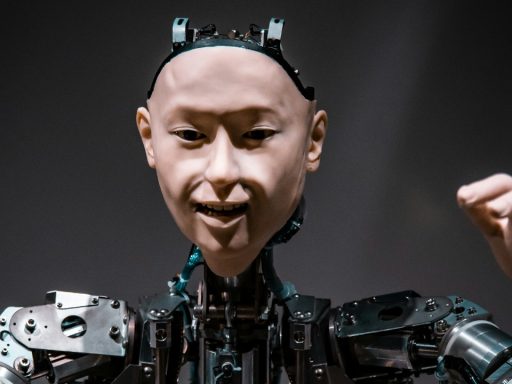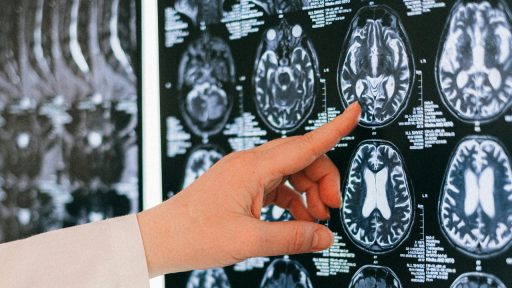


Cosmologists have long worried about a bizarre possibility: that a lone brain, complete with a lifetime of detailed memories, could briefly flicker into existence out of random chaos. If that scenario is more likely than an entire universe evolving in an orderly way, then your past, your relationships and even the device you are reading on could be nothing more than a convincing hallucination. New work on memory, entropy and time is now pushing back on that nightmare, arguing that the very structure of experience makes such “fake lives” far less plausible than they first appear.
Instead of treating the Boltzmann brain idea as a late-night stoner thought experiment, researchers are using it to probe how trustworthy memory really is and what it means for a universe to have a genuine history. Their emerging view is that the way memories are stitched together, and the way they interact with the surrounding world, carries a signature that random fluctuations are unlikely to reproduce.
How a lonely brain became a cosmology problem
The Boltzmann brain puzzle starts with a simple statistical intuition: in a vast or infinite cosmos, rare events eventually happen, including wildly improbable fluctuations that momentarily assemble complex structures. In that setting, it can seem more likely for a single conscious brain to pop out of thermal noise, fully formed with a backstory, than for an entire low entropy universe to evolve from a smooth beginning into the rich structure we see today, a scenario captured in the classic description of The Boltzmann brain thought experiment. If that probability counting is right, then typical observers should be such freak brains, not embodied beings embedded in a long cosmic narrative, which would undercut the reliability of every observation on which physics is built.
Physicists like Fabio Pacucci have popularized the unsettling question of how you know you are “a person who has lived your life rather than a just formed brain full of artificial memories,” a line he explores in an Aug video that helped push the paradox into the public imagination. In that framing, the problem is not only philosophical but methodological: if most conscious experiences are fake histories in random brains, then using experience to test cosmological theories becomes circular. The Boltzmann brain idea has therefore become a stress test for models of the universe, forcing cosmologists to demand that any viable theory make ordinary observers like us overwhelmingly more common than these statistical phantoms.
Jan’s entropy rethink: why time’s arrow matters for memory
Recent work by Jan and collaborators reframes the debate by focusing on how memory, entropy and time fit together in a lawful universe. Their analysis starts from the fact that the microscopic physics underlying familiar processes is itself symmetric in time, yet our experiences are not: we remember the past, not the future, and we see broken eggs, not spontaneously reassembled ones. In their study on Disentangling the Boltzmann brain hypothesis, they argue that this arrow of time is not an add-on to consciousness but is baked into what it means to store and retrieve information in a physical system.
On this view, a genuine memory is not just a pattern in a brain, it is a correlation between that pattern and an earlier, lower entropy state of the world that left a trace. Jan’s team emphasizes that such correlations are built up through irreversible processes that increase entropy, such as photons scattering off a scene and being absorbed by a retina, or synapses strengthening after a learning event. A Boltzmann brain that simply fluctuates into existence with a set of internal patterns would lack those deep links to an external past, because the fluctuation does not replay the entire chain of entropy-producing events that normally create memories. That mismatch between internal records and the thermodynamic history of the environment becomes a key lever for rejecting the idea that randomly assembled brains can stand in for observers like us.
Could the memories be an accidental illusion?
Psychologists and physicists are also converging on a more nuanced view of how reliable memory really is, which indirectly bears on the Boltzmann brain puzzle. A recent analysis framed the issue bluntly with the question, “Could the memories be an accidental illusion?”, noting that people once assumed memories were straightforward records of what actually happened to them. The work, which explicitly asks whether memories can be trusted, highlights how recollection is reconstructive and prone to distortion, yet still anchored in real events through consistent patterns and cross checks, a tension explored in detail in the piece titled Could the you be sure your memories are real.
From a cosmology perspective, that fallibility does not help the Boltzmann brain case, it hurts it. If ordinary human memory is already noisy and context dependent, then a random fluctuation would have to conjure not only a coherent life story but also a messy, self-consistent web of partial recollections, forgotten details and corroborating records in the outside world. The study’s focus on how people cross validate memories with photographs, messages and other people’s accounts underscores that our sense of a shared past depends on a network of physical traces, not just private mental images. That network is exactly what a fleeting, isolated brain would lack, which means the more we understand memory as a distributed, entropy-laden process, the less plausible it becomes that a single fluctuation could fake it convincingly.
From ASTROPHILESZ to Brian Cox: popularizing a paradox
While specialists debate entropy and correlation, the Boltzmann brain idea has spilled into popular science culture, where it is often presented as a kind of cosmic horror story. In one widely shared discussion, an OCR transcript tagged @ASTROPHILESZ describes how “The Boltzmann brain paradox comes from the idea that in an infinite universe random fluctuations could create” a conscious mind with fabricated memories, then asks whether we might be one of these rare spontaneous brains, a scenario laid out in a OCR post. That framing captures the emotional punch of the problem, but it can also obscure the technical constraints that make such brains unlikely in realistic models.
Physicists like Brian Cox have tried to bridge that gap, stressing that “the universe is Stranger than we imagine” while also explaining why current theories do not actually predict that most observers are freak fluctuations. In an Aug explainer, Cox walks through how cosmological models with a well defined beginning and a low entropy initial state can avoid the runaway production of Boltzmann brains that would otherwise dominate. By bringing in both the weirdness and the safeguards, these public conversations help people see the paradox not as a reason to despair about fake memories, but as a tool for sharpening our understanding of which universes are compatible with the kind of ordered experiences we actually have.
Can quantum worlds and low entropy rescue ordinary experience?
One of the most intriguing responses to the Boltzmann brain problem comes from quantum theory, in particular the idea that all possible outcomes of quantum events actually occur in a branching multiverse. Advocates of this “many worlds” picture argue that if the low entropy state of the Big Bang was not a random fluke but part of a broader quantum structure, then the naive probability counting that favors isolated brains over full histories breaks down. A detailed analysis of whether this framework can “rescue” us from Boltzmann brains notes that if the early universe’s smoothness is explained by deeper law rather than chance, then the runaway production of random observers is no longer generic, a point developed in an Apr discussion that invokes the Big Bang and even “Infinite” monkeys.