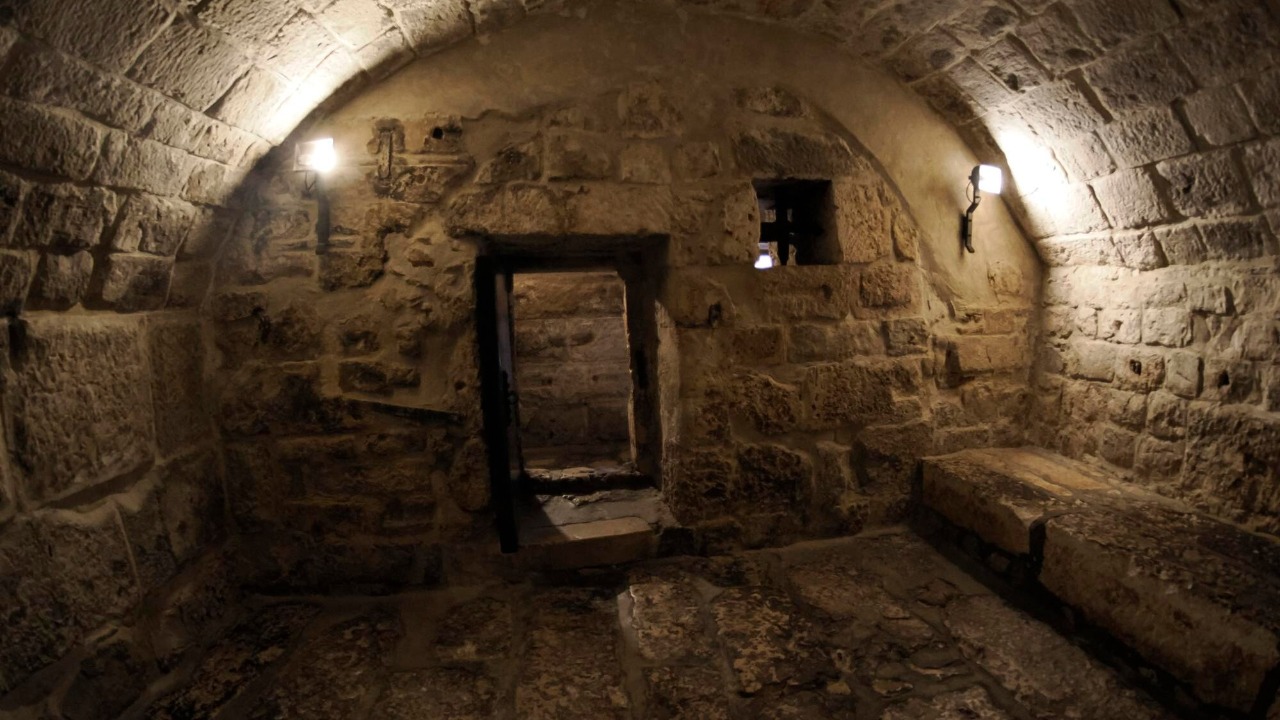

When sensors in a newly excavated underground room suddenly registered a surge of heat at the exact moment instruments in a second chamber, roughly 1,000 miles away, spiked in the same pattern, researchers were forced to confront a puzzle that sounded more like fiction than fieldwork. The twin anomalies, separated by a continent yet linked in time, have become a test case for how far science can go in explaining apparent synchronicity in the deep past.
Investigators now face two intertwined questions: what these ancient spaces were for, and why their modern monitoring systems seemed to react in lockstep. The answers, if they come, will depend on a mix of painstaking excavation, geophysics, and a clear-eyed separation of evidence from the kind of conspiratorial storytelling that has long surrounded buried chambers and lost civilizations.
The first chamber and a mystery beneath the surface
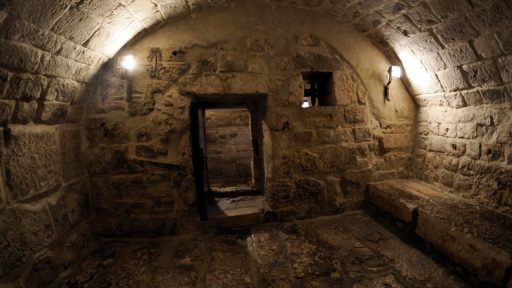
The story begins with a carefully documented excavation of a Mysterious Underground Chamber attributed to an Ancient Civilization, a structure that had been sealed for centuries and only recently detected through surface surveys. Archaeologists describe a carefully engineered passage leading into a central room, with stonework that suggests a community capable of complex planning but that left no written explanation of its purpose. The team catalogued every cut in the rock and every shard of material, yet the function of the chamber, whether ritual, storage, or something more technical, remains explicitly unresolved in the field notes.
To protect the fragile interior, researchers installed a network of environmental sensors, including thermometers and vibration monitors, before fully opening the space to foot traffic. The instruments were meant to provide a baseline of the chamber’s natural conditions and to flag any disturbance from excavation equipment. Instead, they delivered a surprise: a sharp, short-lived rise in temperature and low-frequency vibration that did not match any activity on site, and that would later be matched, almost identically, in a second, distant structure.
A second site, 1,000 miles away, stirs at the same moment
The second anomaly came from a very different landscape, in a region of arid plateaus and canyons where ancient architecture is carved into and aligned with the surrounding rock. One of the most evocative examples of this kind of environment is The Chaco Ca region, described by visitors as an impressive and mysterious place that feels like stepping back in time, particularly at night, when the ruins take on a haunting quality that hints at their original ceremonial weight Aug. In a comparable canyon complex roughly 1,000 miles from the first excavation, researchers had recently identified a partially collapsed underground room that shared several architectural traits with the newly opened chamber.
Here too, before any major digging, a small array of instruments was installed to monitor the stability of the overlying rock. When the first chamber’s sensors registered their unexplained spike, the second site’s monitors recorded a nearly simultaneous pattern of heat and vibration, despite no personnel being present and no machinery operating nearby. The distance between the two locations, combined with the lack of obvious local triggers, is what led investigators to describe the event as one chamber apparently “triggering” another, even as they caution that the word describes timing, not a proven mechanism.
Evidence of deliberate engineering, not magic
To understand whether the twin anomalies point to a shared ancient design, researchers have turned to the construction history of the first site. Stratigraphic work there shows that inhabitants deliberately filled in part of a surrounding ditch and then cut an underground passage into the bedrock, a sequence that appears to have taken place around 400 B.C.E., based on associated material. Within that passage, archaeologists identified a furnace used for metalworking, a clear sign that the builders were manipulating heat and airflow in sophisticated ways rather than simply carving a symbolic space.
The presence of a furnace has prompted some in the team to consider whether the chamber’s geometry could have been tuned to amplify sound or channel air in ways that might, under the right conditions, produce measurable vibrations. If both sites were designed around similar principles of airflow or resonance, then a regional event, such as a distant tremor or pressure wave, could conceivably have produced matching sensor signatures without any direct link between the two rooms. In that scenario, the “trigger” would be the environment itself, interacting with human-made structures that happen to respond in comparable ways.
Planet-scale structures and the limits of coincidence
Geophysicists consulted on the case point out that the Earth is riddled with large-scale features that can transmit energy across great distances in ways that are not always intuitive at the surface. One example is the Haruj volcanic field, a vast formation that spans about 44,000 square kilometers, a footprint larger than entire countries and a reminder that subterranean structures can operate on continental scales. In that context, a pressure wave or microseismic event traveling through deep rock and emerging in two distant but similarly shaped cavities is not inherently implausible, even if it is difficult to model precisely.
What remains uncertain is whether the timing of the anomalies is a statistical fluke or a sign that the chambers occupy particularly sensitive points in the crust. Seismologists are now combing through regional data to see whether any subtle tremors or atmospheric disturbances coincided with the sensor spikes. Until that work is complete, the apparent synchronicity sits in a gray zone: intriguing enough to warrant serious study, but not yet strong enough to justify claims of a deliberate ancient signaling system.
Myths, hidden chambers, and the pull of conspiracy
As soon as word of the twin events leaked beyond the research teams, familiar narratives rushed in to fill the explanatory gap. Online forums quickly linked the story to long-running speculation about a Hidden Chamber Beneath the Sphinx, a motif that has been amplified by videos with titles such as They Just Opened and And It is Worse Than We Thought, which frame any new void or passage as evidence of suppressed revelations rather than routine archaeology Worse Than We. In that ecosystem, the idea of one chamber “waking up” another 1,000 miles away fits neatly into a preexisting script about global networks of forgotten knowledge.
Researchers who specialize in the public understanding of science warn that such stories often lean on a recurring claim: that humans once possessed advanced knowledge, then collectively forgot it, and that modern experts are now hiding any trace of that earlier civilization because it threatens their existing theories. That pattern is spelled out in critiques of so-called ancient apocalypse narratives, which note how some authors insist that humans have forgotten an entire civilization and then accuse archaeologists of suppressing evidence to protect their careers archa. The twin-chamber anomaly risks being absorbed into that narrative unless the underlying data and uncertainties are communicated clearly and early.