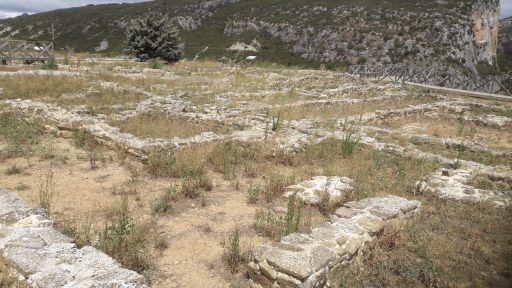
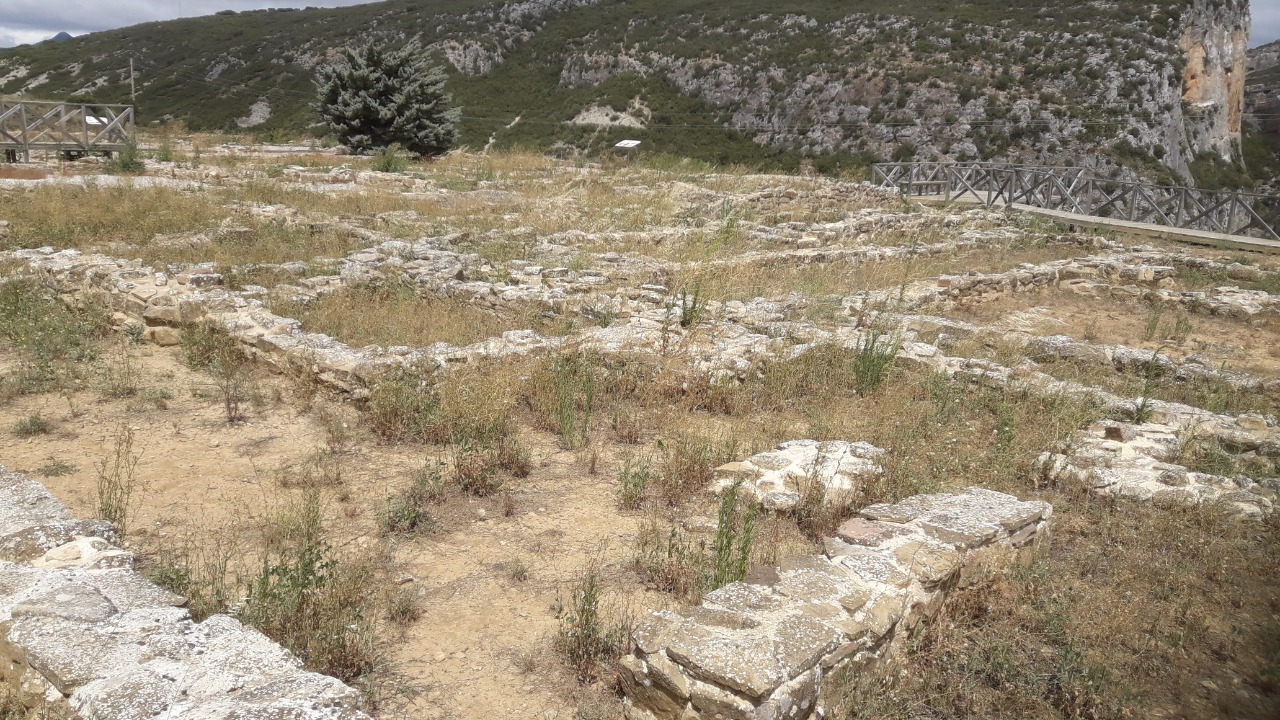

In a quiet corner of Margam Country Park in South Wales, what looked like an ordinary stretch of grass has turned out to be anything but. Beneath an empty city park, archaeologists have mapped an untouched Roman villa that appears to be the largest of its kind ever found in Wales, preserved beneath centuries of soil rather than streets or housing. The discovery is already reshaping how I understand Roman life on the western edge of the empire, revealing a lavish rural estate hiding in plain sight beneath a modern landscape of dog walkers and day-trippers.
What makes this villa so striking is not only its scale but its survival. Because the ground above it was never built over, the buried complex has escaped the foundations, utilities, and landscaping that usually slice through ancient remains. Archaeologists now have the rare chance to study a high-status Roman residence in situ, with its layout, surroundings, and later history still legible beneath the turf.
The quiet park hiding a “local Pompeii”
The villa lies under Margam Country Park, part of a historic estate that also includes Margam Castle and Margam Abbey Church, on the outskirts of modern Margam in South Wales. Archaeologists working with Neath Port Talbot Council and Margam Abbey Church have traced a sprawling complex beneath what had been treated as open parkland, revealing a residence that specialists now describe as Largest Roman Villa in Wales. The comparison some experts are making to a “Local Pompeii” is less about volcanic ash and more about the sense of a frozen moment, a whole domestic world sealed beneath a landscape that never quite forgot it was special.
Earlier work at Margam had already highlighted Bronze and Iro age activity and the later rise of a Christian center around Margam Abbey, but the scale of this Roman complex suggests a much deeper and more continuous story of elite occupation. Reporting on the excavation notes that the villa’s footprint appears far more extensive than previously thought, tying the Roman estate into the long arc of the Margam Park landscape that later became a place of Christian worship and then a Victorian country seat anchored by Margam Castle and the wider Margam Country Park Margam Park.
How geophysical surveys revealed a buried palace
What unlocked this hidden villa was not a dramatic trench but a battery of geophysical tools. Using a combination of high-resolution magnetometry and ground penetrating radar, a university-led team working with Neath Port Talbot Council and Margam Abbey Church was able to “see” through the turf and map walls, rooms, and courtyards without lifting a single stone. Those non-invasive techniques, deployed across the open lawns of the park, produced a plan that shows a remarkably intact complex with a high degree of preservation, according to the project team’s high-resolution survey.
Those same geophysical surveys, described in multiple accounts as the key to the discovery, allowed researchers to identify a previously unknown Roman villa under the surface of the park in Margam, Wales, without the disruption of large-scale excavation. The data show a complex arrangement of ranges and outbuildings that point to a substantial rural estate, and the fact that the ground above is an undisturbed park rather than a housing estate means the archaeological layers are likely to be intact. As one summary of the work puts it, Using geophysical surveys, the team could trace the villa’s footprint and even hints of internal features while leaving the site largely untouched.
An untouched Roman villa beneath an empty park
What sets this site apart from many Roman villas in Britain is its untouched character. Accounts of the work stress that archaeologists found an untouched Roman villa buried under an empty park, rather than beneath a modern neighborhood or farmyard that might have churned up its remains. Using similar geophysical surveys, researchers discovered a previously unknown Roman complex under the surface of a park in Margam, Wales, with the villa preserved beneath the ground of an undisturbed park that had never been heavily landscaped or built over Using geophysical surveys.
For archaeologists, that context is almost as valuable as the masonry itself. Because the villa lies under an empty park, the soils above it still hold the subtle traces of gardens, paths, and agricultural activity that once framed the house. A separate summary of the project emphasizes that using geophysical surveys, researchers discovered a previously unknown Roman villa under the surface of a park in Margam, Wales, and that the complex survives beneath the ground of an undisturbed park, a combination that promises a rare window into how a Roman estate was organized in the countryside of South Wales Roman Margam.
Rewriting the story of Roman Wales
The scale and setting of the Margam villa are already prompting a rethink of Roman influence in this part of Britain. For years, the dominant picture of Roman Wales has centered on forts, roads, and the military presence that enforced imperial control along the frontier. The newly mapped complex beneath Margam Country Park, however, suggests a wealthy civilian estate that functioned as far more than just a support system for nearby garrisons. Archaeological surveys beneath the parkland around Margam Castle and the wider estate suggest something else entirely, a high-status residence that points to a landscape of villas and farms integrated into imperial economic and social networks rather than a purely martial outpost on the edge of the map Local Pompeii.
That shift matters because villas like this one were not just farmhouses, they were statements of power and identity. The Margam complex, identified as The Largest Roman Villa in Wales, implies the presence of landowners with the means and motivation to build in the Roman style, complete with formal courtyards and reception spaces. The fact that this villa sits within what later became the Margam Castle estate and today’s Margam Country Park hints at a continuity of elite control over the same landscape, from Roman magnates to medieval Christian institutions and on to modern aristocratic and civic custodians Margam Country Park.
From South Wales to Vesuvius: what villas reveal about Roman life
Although the Margam villa is only beginning to be explored, its discovery invites comparison with better-known Roman sites. Excavations at villas buried by the 79 CE eruption of Mount Vesuvius, for example, have revealed a blend of rural retreat and high-status residence, where agricultural production sat alongside elaborate dining rooms, gardens, and art that served the performative function of Roman domestic space. Those Italian examples show how villas operated as both working estates and stages for elite life, a pattern that likely has echoes in the newly mapped complex in South Wales, even if its decoration and exact layout remain to be uncovered Excavations.
What I find most striking is how similar methods and questions now link these distant sites. At Margam, archaeologists found an untouched Roman villa buried under an empty park using geophysical surveys that mapped its plan without excavation, a technique that complements the more invasive work at Vesuvius where ash preserved walls and frescoes in three dimensions. One account of the Welsh project notes that archaeologists found an untouched Roman villa buried under an empty park and that using geophysical surveys, researchers discovered a previously unknown Roman villa under the surface of a park in South Wales, a reminder that even in a densely studied country, entire chapters of the Roman story can still be hiding beneath everyday spaces Archaeologists Found.