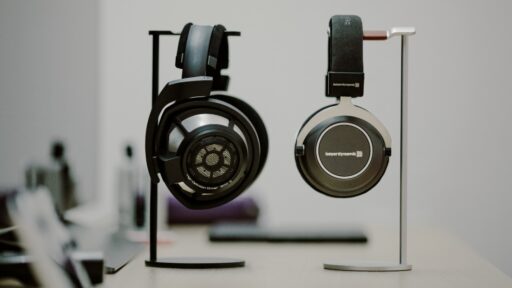
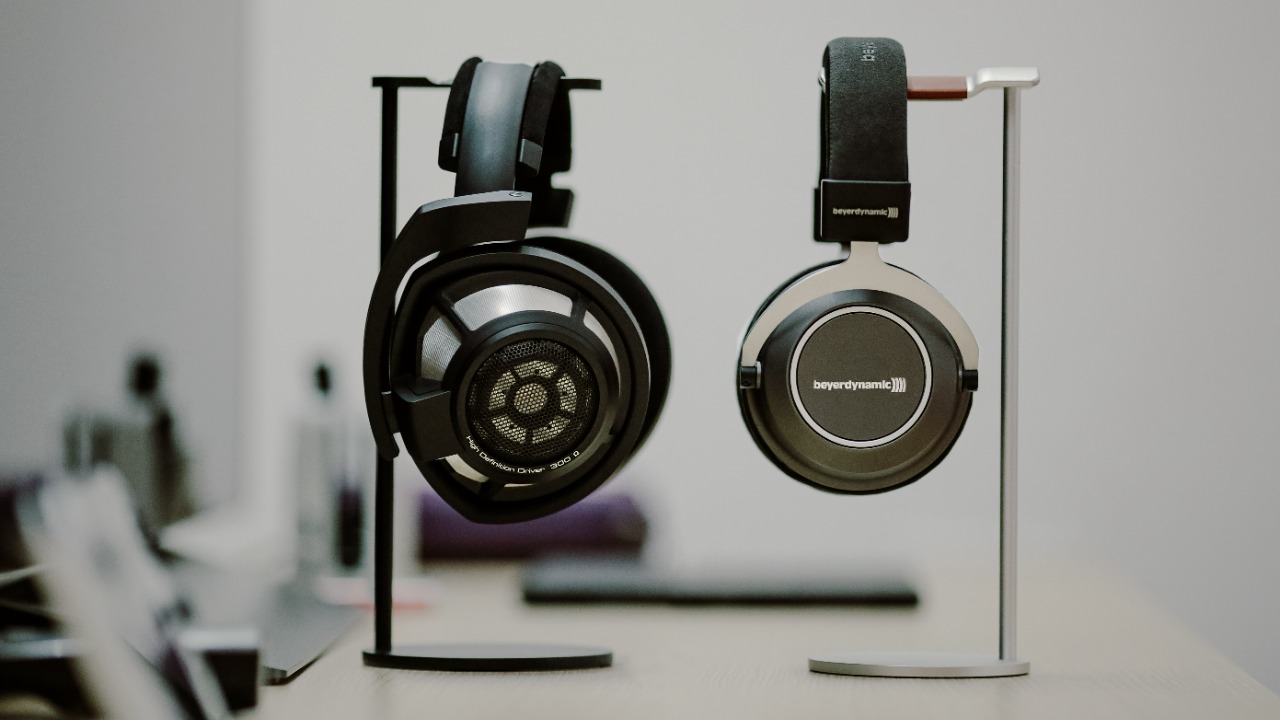

Gaming-headset marketing often focuses on surround-sound labels, wireless features, RGB lighting and companion software. Yet many experienced gamers continue choosing Sennheiser headphones that were designed primarily for music listening rather than gaming.
Models such as the HD 560S have built a strong following among competitive players because they emphasize accurate sound, directional detail and long-session comfort. Sennheiser itself now promotes selected audiophile models for gaming, describing the HD 560S as an open-back headphone capable of revealing subtle details and helping players identify the direction of sounds.
That does not make every Sennheiser model ideal for every player. Most audiophile headphones lack a built-in microphone, open-back designs leak sound, and wired operation may feel restrictive beside modern wireless headsets. However, for gamers who prioritize audio performance over extra features, the trade-offs can be worthwhile.
1. Their Directional Imaging Can Make Positional Audio Easier to Read
Competitive gaming depends on more than loud explosions and powerful bass. Players often need to determine whether a footstep came from the left, right, above, below or behind them.
This ability is commonly associated with imaging, which describes how precisely headphones place individual sounds across the stereo field. A wide soundstage can make the game environment feel spacious, while accurate imaging helps distinguish exact positions inside that space.
The Sennheiser HD 560S is especially popular for this purpose. Independent testing found that its left and right drivers are closely matched, allowing users to identify the position of enemies accurately within the stereo field. Its wired connection also avoids the latency that can accompany some wireless systems.
Sennheiser describes the same model as offering natural and accurate sound, strong detail retrieval and the ability to reveal the direction of individual sounds.
These characteristics can be valuable in tactical shooters, battle royale games and competitive multiplayer titles where a quiet reload, distant footstep or change in surface texture may provide useful information.
This does not mean a Sennheiser headphone automatically makes someone a better player. Game audio design, sound settings and experience still matter. However, a headphone that separates sounds clearly can make those cues easier to interpret.
2. Open-Back Designs Create a More Spacious Gaming Experience
Several of Sennheiser’s most popular gaming choices use an open-back design.
Instead of sealing the rear of the driver inside a solid earcup, an open-back headphone allows air and sound to move through the outer housing. This often creates a more natural sense of space than a tightly sealed headset.
The HD 560S uses an open-back enclosure specifically designed to allow more natural propagation of sound waves. It has a published frequency response of 6 Hz to 38,000 Hz and weighs approximately 280 grams.
In games, that open presentation can make large environments feel less confined. Ambient sounds, dialogue and effects may appear to occupy distinct positions rather than being compressed into the center of the player’s head.
The design can also feel less fatiguing for some users because the ears are not fully isolated inside a sealed chamber. Air circulation may help during long sessions, particularly in warm rooms.
The disadvantage is that open-back headphones allow outside noise in and game audio out. Someone sitting nearby may hear the action, while a fan, television or conversation in the room can interfere with quiet in-game details.
For that reason, Sennheiser’s open-back models are best suited to quiet bedrooms, offices and dedicated gaming spaces. A closed-back gaming headset remains more practical for shared rooms, tournaments and noisy environments.
3. Their Balanced Sound Can Reveal Details That Bass-Heavy Headsets Hide
Many gaming headsets are tuned to emphasize bass and treble. This can make gunfire, vehicle engines and cinematic effects sound exciting, but excessive bass can cover quieter midrange details.
Sennheiser’s audiophile headphones often pursue a more neutral or balanced sound profile.
Testing of the HD 560S found that its relatively flat presentation gives similar emphasis to dialogue and sound effects rather than allowing one part of the mix to dominate.
That approach can make voices clearer and help separate subtle sounds from explosions or music. In competitive games, accuracy may be more useful than dramatic impact.
The balanced tuning also makes these headphones versatile outside gaming. The same model can be used for music, films, editing and general computer audio without sounding like a specialized gaming accessory.
RTINGS continues to describe the HD 560S as a comparatively affordable audiophile option with controlled midrange and treble performance that suits a wide variety of content.
The trade-off is that some players may find the sound too restrained. Open-back models usually provide less deep bass impact than sealed gaming headsets, so explosions may feel less physically powerful.
Equalization can add some warmth, but buyers who want heavy low-end rumble may prefer a closed-back model or a headphone with a more energetic factory tuning.
4. Comfort Makes Them Suitable for Long Gaming Sessions
Audio quality matters less when the headphone becomes uncomfortable after an hour.
Sennheiser has built much of its reputation around lightweight over-ear designs with replaceable pads and headbands that distribute pressure across the head. The HD 560S weighs about 280 grams, which is lighter than many wireless gaming headsets containing batteries, radios and boom microphones.
Independent reviewers describe the HD 560S as very comfortable, with a fit and build quality similar to more expensive Sennheiser audiophile models.
A wired headphone can also avoid the battery anxiety associated with wireless headsets. It does not need charging and will not shut down during an extended session.
Velour-style ear pads used on many Sennheiser models generally feel more breathable than imitation leather, although they provide less isolation. Replaceable cables and pads can also extend the useful life of the headphone when those parts wear out.
Comfort remains highly personal. Sennheiser headphones can have noticeable clamping force when new, and head size affects how pressure is distributed. Glasses may also change the fit.
A buyer should therefore avoid treating comfort reviews as a guarantee. Trying the headphone or buying from a seller with a reasonable return policy is safer than assuming one design fits everyone.
5. They Avoid Much of the Software and Feature Clutter
Many gaming headsets depend on proprietary software for equalization, virtual surround sound, microphone processing, firmware updates and battery management.
Sennheiser’s wired audiophile headphones are much simpler. They connect through an audio jack and work without an account, application or wireless dongle.
That simplicity can be attractive to players who want consistent audio across a desktop computer, console controller, audio interface or amplifier. A standard wired connection also avoids Bluetooth compression and reduces the possibility of wireless interference.
The HD 560S includes 3.5 mm and 6.3 mm connectivity, making it compatible with ordinary consumer devices as well as larger audio equipment.
This feature-light approach also means fewer things can become obsolete. A well-maintained wired headphone can remain useful long after a gaming headset’s battery weakens, companion application loses support or wireless receiver is misplaced.
However, simplicity creates its own limitations. There is normally no built-in chat mixer, wireless connection, active noise cancellation or programmable control wheel.
Players who frequently switch between consoles, phones and PCs may find a modern multiplatform wireless headset more convenient. Sennheiser headphones appeal most strongly to gamers who are willing to sacrifice convenience for audio quality and longevity.
The Missing Microphone Is the Biggest Compromise
Most Sennheiser audiophile headphones are headphones rather than complete gaming headsets.
The HD 560S does not include a microphone. RTINGS therefore considers it suitable for wired gaming only when the user does not need voice chat or already owns an external microphone.
A separate USB microphone can provide better voice quality than the small boom attached to an inexpensive headset, but it adds cost and desk clutter. It may also capture keyboard noise and require careful positioning.
Another option is an attachable microphone cable, although compatibility depends on the headphone’s connector design. Buyers should verify that an aftermarket microphone supports the exact model rather than assuming every detachable-cable headphone will work.
Sennheiser’s former dedicated gaming products were closely connected to EPOS, but EPOS later announced that it was winding down its gaming-headset portfolio to focus on enterprise products.
That makes Sennheiser’s current appeal to gamers more audiophile-focused: buyers often combine a high-quality headphone with a separate microphone rather than purchasing a traditional all-in-one headset.
They Are Not Always Easy to Drive
Impedance and sensitivity determine how much power a headphone needs.
The HD 560S is relatively manageable for many computers, controllers and audio interfaces, but other Sennheiser models may benefit from a stronger headphone output or dedicated amplifier.
Buying an expensive amplifier automatically is unnecessary. The headphone should first be tested with the intended device. An amplifier is useful only when the available volume is too low, dynamics feel restricted or the source produces audible noise.
Console players should pay particular attention to controller output. A headphone that reaches comfortable levels from a desktop interface may sound quieter when plugged into a gamepad.
This is another reason the HD 560S has become a common recommendation: it offers much of Sennheiser’s spacious, analytical sound without requiring an especially elaborate setup for typical users.
Are Sennheiser Headphones Worth It for Gaming in 2026?
Sennheiser headphones remain appealing because they focus on the parts of gaming audio that matter most to serious listeners: positional accuracy, detail, comfort and natural sound.
Their strengths are especially noticeable in competitive games and immersive single-player titles played in a quiet environment. A model such as the HD 560S can provide accurate directional information while remaining useful for music, films and everyday listening.
They are less suitable for players who need wireless freedom, strong noise isolation, powerful bass or a built-in microphone. Open-back leakage can also make them impractical in shared rooms.
The best choice depends on priorities. A conventional gaming headset provides more convenience in one package. A Sennheiser audiophile headphone can offer better sound and longer useful life when paired with the right microphone and source.
That is why some gamers continue swearing by them. Sennheiser does not always provide the most features, but for listeners who value hearing the game clearly and naturally, fewer features can be part of the appeal.