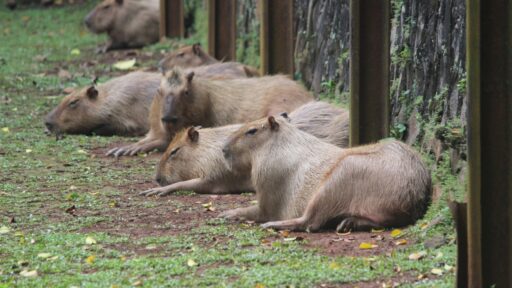
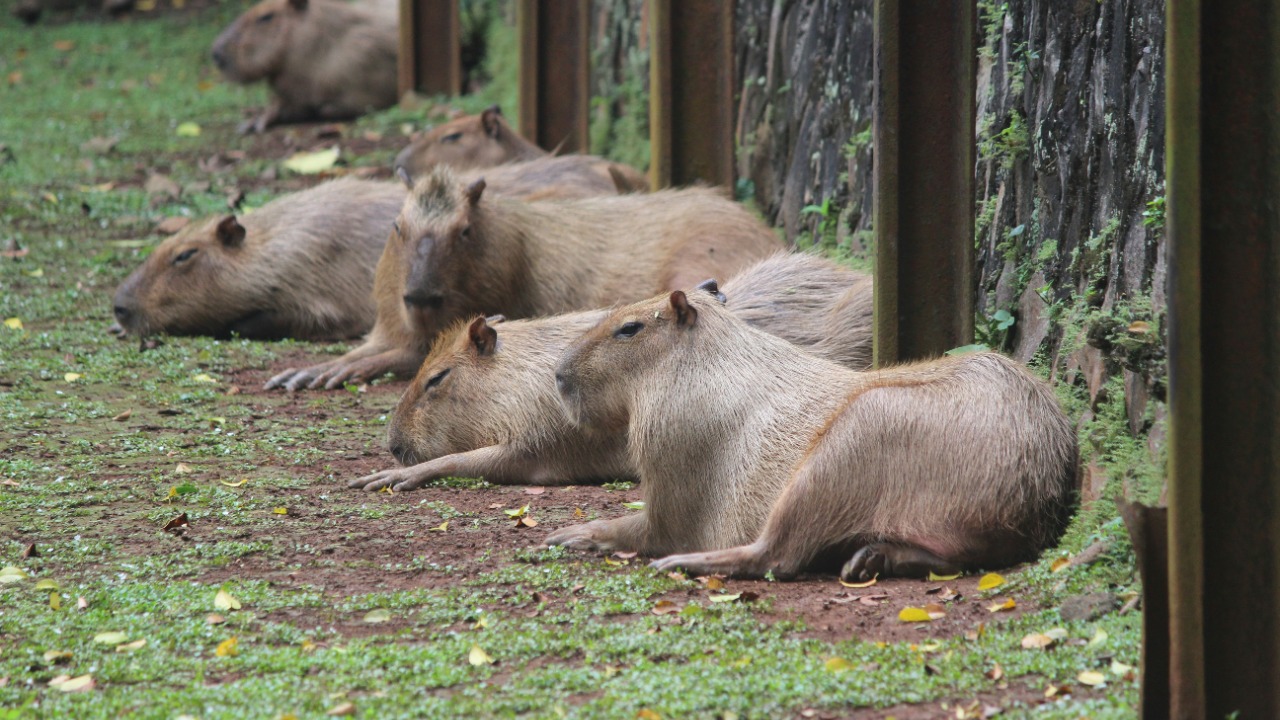

Newquay Zoo’s decision to put down a capybara and a tapir on the same day was not just a medical call but a judgment about companionship, suffering, and what a “good death” can look like for animals in human care. Johnson the capybara and Al the Brazilian tapir had formed an unusually close bond that shaped how keepers approached the end of their lives.
The choice to euthanize both animals together, after age related decline affected them in different ways, has stirred strong emotions among visitors and online audiences. It also offers a rare, detailed look at how modern zoos weigh animal welfare, species biology, and social ties when there is no painless way to keep an elderly animal alive.
The unlikely friendship at the heart of the decision
Johnson the capybara and Al the Brazilian tapir were not just enclosure mates; Newquay Zoo framed them as best friends whose relationship “defied biology itself.” Johnson, a nine year old capybara, shared his habitat with Al, a 20 year old Brazilian tapir, and over time the pair developed a routine of resting together, moving around the paddock side by side, and engaging with keepers as a unit rather than as separate animals. The zoo described Al as a steady and much loved presence in the enclosure who had become known for his calm nature after arriving from Gdańsk Zoo in 2014, while Johnson brought a younger capybara’s curiosity into the mix, creating a partnership that visitors came to recognize instantly.
The depth of that bond is clear in the way Newquay Zoo announced their deaths, referring to the loss of “Johnson, our nine year old capybara, and Al, our 20 year old Brazilian tapir” in a single statement and emphasizing the friendship that had grown between them. Social media tributes repeated the language of best friends and highlighted images of the pair resting nose to nose, reinforcing the idea that any decision about one animal’s future would inevitably affect the other. That context, laid out in the zoo’s own important update, set the stage for a joint euthanasia framed less as two separate medical events and more as the end of a shared story.
Age related decline and the medical case for euthanasia
Behind the emotional narrative sat a straightforward clinical reality. Both Johnson and Al were described as experiencing age related health decline that had begun to affect their quality of life. For Al, who at 20 had reached an advanced age for a Brazilian tapir, keepers reported a steady deterioration consistent with geriatric tapirs, a species that in the wild faces intense pressure on its joints and teeth due to its size and foraging habits. Johnson, although only nine, was also said to be struggling with health problems that were not responding to supportive care, which led veterinarians to conclude that continued treatment would prolong discomfort rather than restore a comfortable baseline.
Newquay Zoo explained that, in recent months, both animals had been monitored closely as their conditions worsened, and that veterinary teams had explored options before recommending euthanasia. The zoo’s account of a joint procedure described it as a peaceful process carried out by professionals, with the explicit aim of preventing further suffering once it became clear that age related issues were “affecting their quality of life.” That phrase, echoed in coverage that detailed how both animals were put to sleep together on a Friday in Feb, appears in reporting that cites the zoo’s own justification for the timing and manner of the decision, including a detailed breakdown of the age related health that shaped the outcome.
Why both animals were put to sleep together
The most striking aspect of the story is that Johnson and Al were euthanized on the same day, rather than waiting to see how the surviving animal would cope. Newquay Zoo framed this as a deliberate welfare choice, explaining that the two had such a close relationship that leaving one behind risked significant distress and confusion. Keepers had watched the pair for years and concluded that Johnson and Al functioned as a social unit, which meant that the death of one could have triggered prolonged grief or behavioral problems in the other at precisely the moment when each was already struggling physically.
In public statements, the zoo described the decision to let them go together as the kindest option in a situation with no perfect answers. Coverage of the case reported that the animals were euthanized together on a Friday in Feb so that “neither would be lonely,” a phrase that captured the logic behind the joint procedure and quickly spread across social media. Reports that drew on the zoo’s explanation highlighted how staff balanced the medical need to end suffering with the emotional reality of separating bonded animals, noting that Newquay Zoo explicitly linked the timing to the friendship between Johnson the capybara and Al the Brazilian tapir and to concerns about the surviving animal’s welfare after the loss.
How species biology and behavior shaped the call
The species involved added another layer to the decision. Capybaras are highly social rodents that, in the wild, live in groups and rely on constant contact with companions for security and stress regulation. A capybara that loses a close partner can show signs of depression, reduced appetite, or repetitive pacing, especially in a managed setting where its main social anchor is suddenly gone. Johnson’s bond with Al was therefore not just a charming quirk for visitors; it was central to his emotional stability as a capybara, a species often highlighted in zoo education materials as the world’s largest rodent and a textbook example of herd living, as reflected in general references to capybara habitats such as the South American range where these animals typically roam in groups.
Al’s species background also mattered. The Brazilian tapir is a large, browsing mammal native to South American forests and wetlands, with a natural history that includes solitary foraging but also a strong reliance on predictable routines and familiar companions in captivity. At 20, Al had surpassed the age at which many wild Brazilian tapirs are expected to survive, and geriatric care for such a large animal involves careful management of mobility, dental health, and chronic pain. General references to the Brazilian tapir highlight its status as a species that can live longer in zoos than in the wild, which increases the likelihood of age related decline that cannot be fully reversed. In that context, keeping Al alive after Johnson’s death might have meant asking a frail, elderly tapir to adapt to a major emotional loss at the very end of his life.
Public grief, ethical questions, and what the zoo says it learned
The story of Johnson and Al quickly moved beyond Cornwall as images and short clips of the pair circulated online, sparking a wave of sympathy and debate. Many commenters focused on the idea that a zoo would choose to euthanize two best friends together, some praising the decision as compassionate and others questioning whether more could have been done to extend their lives. Newquay Zoo’s social media posts, which described the animals as much loved and thanked supporters for their kindness, became a focal point for that conversation as people shared their own experiences of pet loss and asked how zoos decide when an animal’s quality of life has fallen too far.