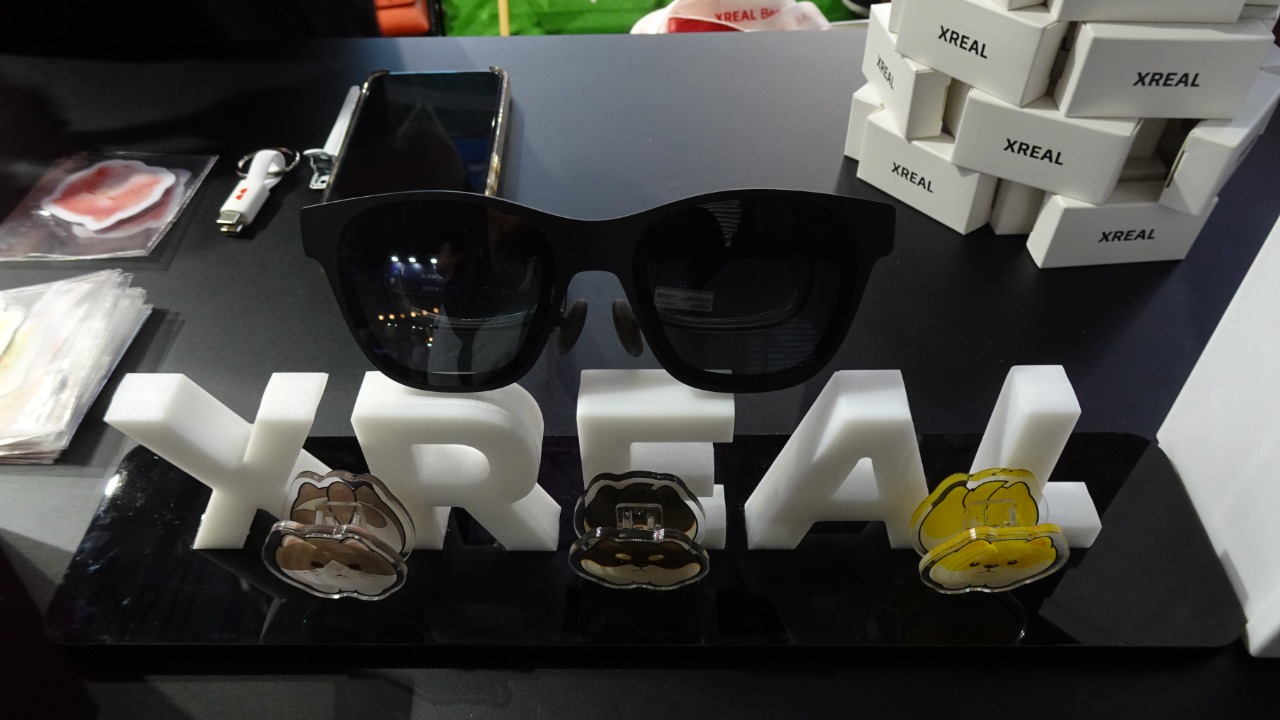

XREAL is turning a long standing AR promise into something that looks a lot more like a default feature than a tech demo. With its new automatic real time 3D conversion, the company’s glasses can now take almost any flat image or video feed and render it with depth directly in front of your eyes. Instead of hunting for scarce native 3D apps, owners of the One Series and newer 1S hardware can suddenly treat everyday 2D content as stereoscopic.
The move builds on XREAL’s push to make lightweight glasses feel like a general purpose display, not a niche gaming peripheral. By baking the conversion into firmware and running it on the glasses themselves, the company is betting that convenience, not raw specs, will decide who wins the next phase of consumer AR.
How XREAL’s automatic 3D conversion actually works
The core of XREAL’s update is a firmware level feature that intercepts a standard 2D signal and generates a separate view for each eye in real time. Instead of asking developers to ship special builds, the glasses analyze the incoming frame, infer depth and then re project the scene as a stereoscopic image that appears on a virtual screen in front of the wearer. XREAL describes this as Automatic Real 3D Conversion Feature for Its AR Glasses, and the company positions it as a way to handle streaming apps, locally stored media and games with the same pipeline.
Crucially, the processing happens on the glasses, not on the phone, PC or console that is feeding them content. Reporting on the One Series notes that, because the processing happens on the glasses themselves, the feature functions consistently whether the device is connected to a handheld, a laptop or a console, which is exactly the kind of hardware independence AR has lacked so far, as detailed in coverage of how Xreal Brings Real 3D to the One Series that highlights this on device approach in depth through Because the.
From 1S debut to One Series rollout
Earlier this year, XREAL used the launch of its 1S glasses to preview what this kind of conversion could feel like in everyday use. The company framed Real 3D as “3D Content, No Apps, No DRM, No Setup,” promising that any 2D content could be turned into immersive depth without extra software, a pitch it laid out in detail in its own description of Content, No Apps,. Independent hands on tests of Real 3D on the XReal 1S AR smart glasses found the conversion surprisingly effective at turning games and movies into 3D, even if not every scene looked like a native stereoscopic production, as reviewers noted when assessing Real.
That debut was not a one off experiment. XREAL has since expanded Real 3D across its dominant One Series AR ecosystem, positioning the update as a way to Experience Content in New Ways and to keep the platform simple, universal and frictionless, according to a detailed breakdown of how Real 3D lets users Experience Content. Fans tracking CES 2026 moves saw the 1S launch at a price of $449 with 2D to 3D conversion as a headline capability, a detail that helped frame Xreal’s strategy to scratch the big screen itch without a bulky headset, as summarized in analysis of Why these AR moves at CES.
What Real 3D feels like for games and video
On paper, automatic conversion sounds like a simple checkbox feature, but the lived experience is more nuanced. Reviewers who spent time with Real 3D on the XReal 1S reported that games benefit the most, with HUD elements and environments gaining a convincing sense of depth that makes a virtual screen feel more like a physical monitor floating in space. That impression lines up with XREAL’s own framing of Real 3D as a way to turn any 2D content into immersive depth without setup, which the company promotes through its broader XREAL branding and product pages.
Video is more complicated. One early tester noted that Video converted to 3D is less impressive, describing how watching Fallout on the glasses produced some shots with a bit of depth but not a consistent cinematic 3D effect, a caveat that tempers the hype around the feature and underscores that algorithms still struggle with certain camera moves and edits, as captured in a review that singled out Video. That split between strong gaming performance and mixed film results is typical of early 2D to 3D systems, but the fact that it runs automatically on a pair of glasses rather than a gaming PC is what makes XREAL’s approach notable.
Who gets the update and how to turn it on
Real 3D is not limited to a single flagship. XREAL has rolled the feature out to Xreal One, Xreal One Pro and Xreal 1S glasses, turning the One Series into a family of devices that all share the same conversion pipeline. The company has been explicit that Real 3D is a firmware level feature that converts 2D content on your XREAL One and XREAL One Pro, a point it reiterated when telling its community “We’re excited to officially launch REAL 3D” and explaining that the update runs directly on the glasses, as detailed in a community post from XREAL.
Enabling the feature is intentionally simple. Release Notes for XREAL One and One Pro describe REAL 3D Support that can be toggled by a Double tap of the red Mode button, then a Select of 3D in the Spatial Screen menu, after which the view transforms into a stereoscopic image, a sequence laid out step by step in the firmware v1.8.1 REAL Support notes. For those who have not yet updated, guidance explains that users should go to xreal.com/ota, then connect their XREAL One Series Glasses to a computer via USB to install the new firmware, a process outlined in a how to that walks through the steps from “Here” to “Then” for Here.
Pricing, promotions and the broader AR stakes
XREAL is pairing the software upgrade with aggressive pricing to pull more people into its ecosystem. The company has temporarily dropped the Xreal One Pro price, with one report highlighting that Xreal One Pro’s huge 3D update just landed and the $170 discount could not be better timed, cutting the cost from $549 to $449 at Amazon, a promotion that underscores how central Real 3D has become to the product story, as detailed in a deals focused breakdown of $170. Other coverage notes that XREAL is also discounting these models while rolling out REAL 3D to One and One Pro, positioning the glasses as a relatively affordable way to get a personal theater that can project anywhere at any time, a pitch that aligns with descriptions of how The Xreal One and Xreal One Pro are meant to project content anywhere, as seen in hands on reports about Xreal.
For consumers, the bigger story is that AR glasses are starting to feel less like experimental gadgets and more like flexible displays that can plug into whatever they already own. XREAL’s own site now presents a lineup that ranges from the Air series to the One Series and 1S, all pitched as lightweight glasses that can replace a TV or monitor, a message that runs through product pages for devices like the Air. Retail listings for these glasses emphasize their role as portable big screens, with multiple product entries highlighting resolution, field of view and compatibility, such as one product listing that focuses on display quality and another product entry that calls out comfort and portability, alongside a third product page that leans on compatibility with phones and PCs. When I look across the reporting, the pattern is clear: by making Real 3D automatic, shipping it widely and tying it to aggressive pricing, XREAL is trying to turn AR glasses from a speculative future into a practical, plug in display that just happens to live on your face.