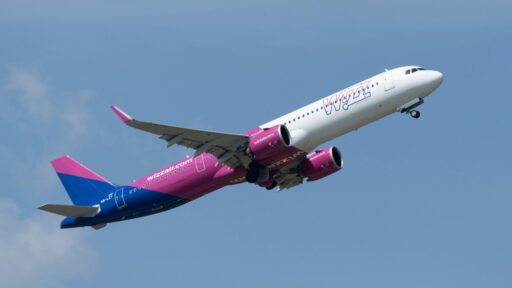
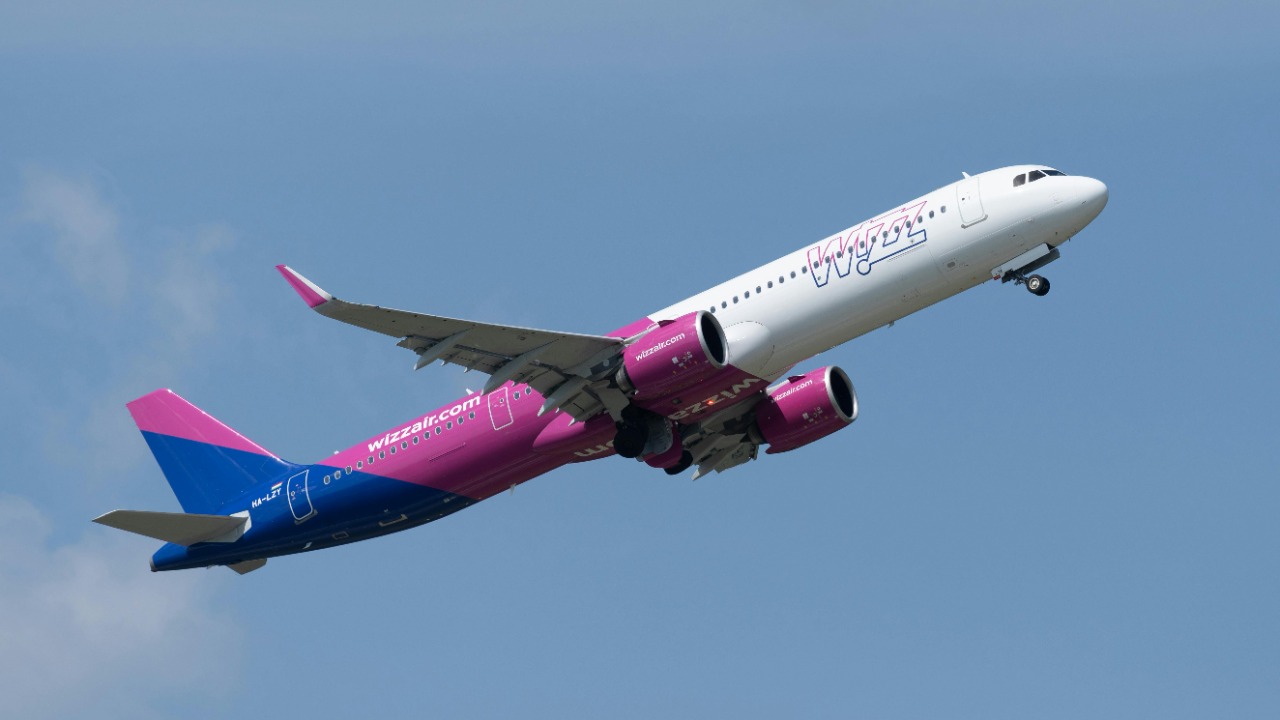

Wizz Air has moved to cool speculation about a major push into the United States, even as its name appears on a fresh application for transatlantic flying rights. Management has stressed that any US operations would be tightly focused and temporary, ruling out the kind of regular scheduled services that have reshaped other low cost carriers.
The clarification matters because it shows how carefully the airline is managing expectations around long haul growth while it concentrates on its core European and regional strategy. Rather than heralding a new network era, the US filing is being framed as a tactical move tied to a single global event.
Management message: rights first, routes later
In recent investor discussions, Wizz Air executives have been explicit that the US filing is about keeping options open, not launching a new long haul franchise. The company’s Chief Financial Officer, Ian Malin, has played down the significance of the application, describing it as a way to ensure flexibility rather than a commitment to operate a fixed schedule, a stance reflected in detailed comments on US flights. That framing is consistent with Wizz Air’s broader habit of securing traffic rights ahead of demand spikes, then deciding later whether the economics justify actual flying.
Malin’s remarks sit alongside reporting that identifies him clearly as Wizz Air’s Chief Financial Officer and situates the discussion within the airline’s regular financial briefings, where capacity, cost, and network decisions are scrutinised line by line. In that context, the US application is being treated as a technical step rather than a strategic pivot, a point underscored in coverage that links Malin’s comments to the airline’s disciplined approach to growth and references to the work of Jan and Miquel Ros in tracking the carrier’s moves in UTC briefings.
World Cup charters, not a transatlantic revolution
The clearest signal of Wizz Air’s intentions comes from the way executives tie the US rights request to the 2026 FIFA World Cup. The Hungarian discount carrier has been described as laying the groundwork for limited flights to the United States specifically around that tournament, with reporting highlighting that the focus is on charter operations rather than a permanent network, a distinction spelled out in coverage of the Hungarian carrier. That framing aligns with the airline’s long standing preference for high utilisation, event driven flying where demand is concentrated and predictable.
Further detail from Europe-focused reporting makes it explicit that Wizz Air has clarified its US rights request is for World Cup charters and not scheduled services, with the company stressing that speculation about a broader transatlantic push has been blown out of proportion. In those accounts, the airline links the application directly to the World Cup and emphasises that any operations would be temporary and contingent on regulatory approval, a point captured in analysis of how World Cup charters fit into the airline’s model. That message is reinforced by separate coverage noting that the airline has told consumer outlets it plans only charter operations, with no named US destinations, and that its priority remains achieving “the most profitability” from its fleet, as reflected in its comments to US readers.
CEO Joszef Váradi’s strategic framing
Chief executive Joszef Váradi has reinforced that message by casting the US application as a matter of prudence rather than ambition. In a recent call, Wizz Air’s CEO, Joszef Váradi, referred directly to the US Department of Transportation process, explaining that the filing was about having a legal framework in place so the airline can respond quickly if a specific mission, such as a World Cup charter, becomes attractive. Reporting on that call notes that Váradi was careful to say the move should not be read as a step toward a large scale US presence in terms of revenue or profit, a nuance captured in detailed accounts of his comments on the DOT application.
That stance fits with Váradi’s broader strategy of focusing Wizz Air on high density, short and medium haul markets where its ultra low cost structure can be fully leveraged. Rather than chasing prestige routes, he has repeatedly prioritised markets where the airline can sustain high aircraft utilisation and low unit costs, and the World Cup concept is being framed as an extension of that logic. The emphasis on a “mission that aircraft can fly” and on not overinterpreting the US filing has been echoed in updated commentary that clarifies Wizz’s intentions for US flights, including an editor’s note that spells out the limited nature of the plan for US flights.
Wizz Air UK and the charter playbook
The approach is not confined to the parent company. Wizz Air UK has also set out a strategy that explicitly sidesteps scheduled US routes in favour of specialised charters, particularly in North America. In a detailed outline of its North Ameri ambitions, Wizz Air UK has formally described how it intends to use newly requested rights to enable specialised charter operations rather than daily services, a plan that has been presented from London as a way to tap high yield, event based demand without the overhead of a permanent transatlantic network, as seen in reporting on Wizz Air UK flying.
This charter playbook allows Wizz Air UK to align with the group’s broader risk management philosophy. By focusing on one off or seasonal contracts, the airline can deploy capacity where it sees the strongest returns, then redeploy aircraft back into its core European network once the event driven demand fades. That flexibility is particularly valuable for a carrier that has grown rapidly in recent years and must now balance expansion with operational resilience, a tension that is evident in the way Wizz Air UK positions its North Ameri plans as complementary to, rather than a replacement for, its existing short haul focus on routes from LONDON and other bases.
Growth discipline and what comes next
Behind the cautious language on US flying lies a broader story about how Wizz Air is pacing its expansion. The airline has mapped out a phased growth plan in which capacity growth is expected to slow to the midteens in the winter of 2026 to 2027 before settling into a stated target of 10 to 12 percent annually, a trajectory described in detail in analysis of how capacity growth will evolve. That moderation reflects both the realities of aircraft deliveries and the need to consolidate after a period of rapid expansion, including the suspension of bases in Kyiv and Lviv.
Within that framework, the World Cup charters look less like a new frontier and more like a tactical overlay on a still Europe centric business. By securing rights early, Wizz Air can decide closer to the tournament whether the yields on specific charter contracts justify diverting aircraft from its core markets, a calculation that will depend on factors such as fuel prices, crew availability, and the strength of demand on its bread and butter routes. The airline’s repeated insistence that it is not planning regular US services, combined with its focus on profitability and disciplined capacity growth, suggests that any American presence will remain tightly bounded, even as the World Cup offers a high profile test of its ability to project its low cost model across the Atlantic.