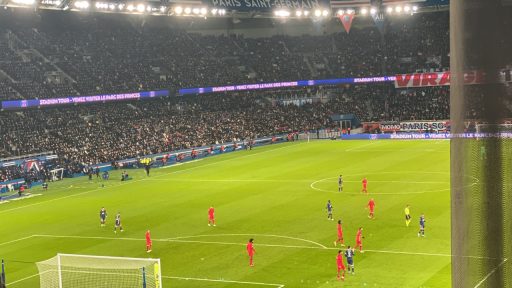
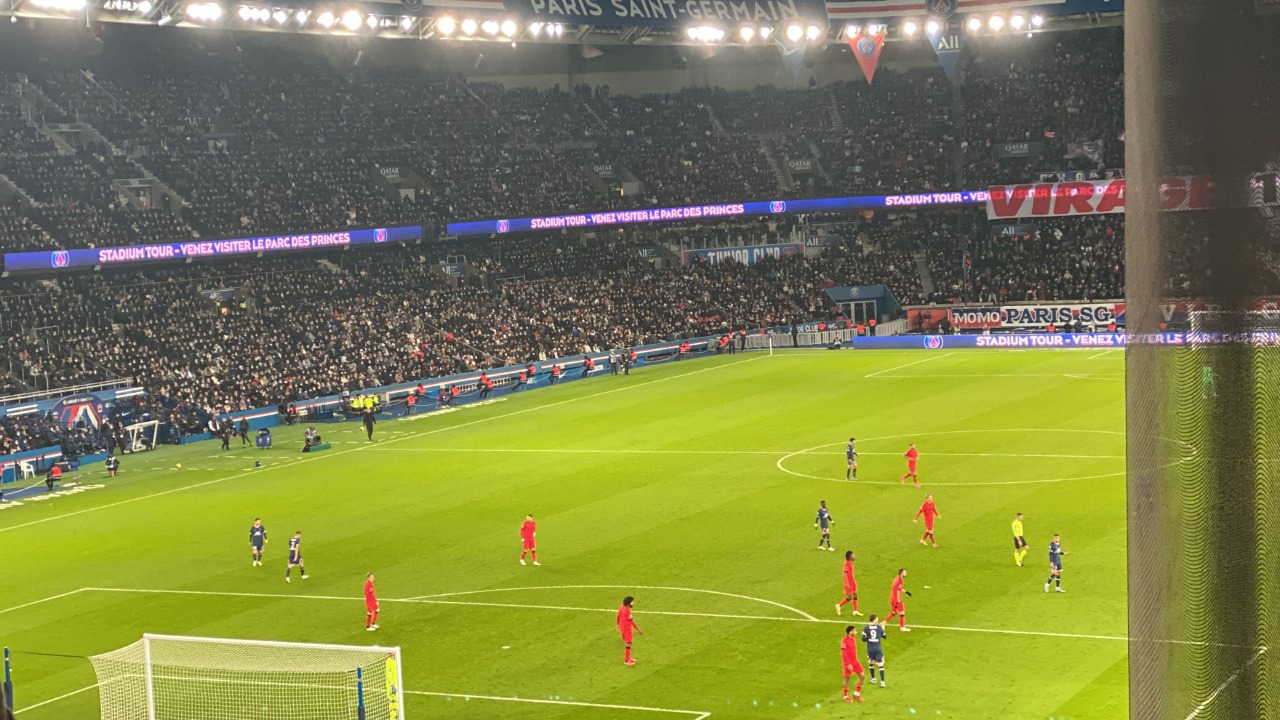

Paris St-Germain are still winning more often than not, yet the fluency that carried them to a treble last season has gone missing. The French champions look more laboured, less ruthless and far easier to disrupt, even as results keep them near the top of Ligue 1 and in the Champions League mix. I see a team caught between eras, paying the price for success, schedule congestion and a deliberate shift in identity.
To understand why Paris St-Germain are struggling to hit top form, it helps to set their current wobble against the scale of what came before. Last year, the spectacular turnaround in form which culminated in a treble was fuelled by clinical finishing and a side that felt settled and sharp from winter onwards, particularly away from home. This season, the same club is grinding rather than gliding, and the reasons stretch from fatigue and injuries to tactical evolution and a changing squad hierarchy.
The hangover from being Kings of Europe
The first thing I look at is the simple reality that last year’s most dominant team in Europe is now living with the physical and mental cost of that success. PSG won last year’s Champions Lea, then rolled straight into a new campaign with barely any breathing space. The principal ramification of PSG’s success in reaching the inaugural Club World Cup final was an even more congested calendar, with the French champions forced to extend their previous season and then compress their pre-season.
That schedule has clear knock-on effects. PSG, under the guidance of Luis Enrique, have often arrived into domestic fixtures just days after emotionally draining European nights, such as the heart‑wrenching 2‑1 defeat to Sporting CP that preceded a crucial trip to Auxerre. Luis Enrique has argued that it would be a mistake to read too much into individual setbacks, insisting after a derby loss that it was “a very easy game to analyze”, yet even he has acknowledged that the demands of what he calls a hypercompetitive environment will eventually catch up with any squad. When a team goes from Kings of Europe to flirting with Chaos, the calendar is rarely a minor detail.
Results look fine, performances tell a different story
On paper, PSG are still doing what champions are supposed to do. In the current Ligue 1 campaign, PSG have won 72.22 % of their matches according to the club’s Ligue Overview, and PSG won their last game, extending a run of four consecutive league victories. The European champions even opened their Champions League title defence with a stronger squad and a perfect domestic start, with The European champions extending their perfect start in Ligue 1 to four straight wins as European champion Paris kept rolling.
Dig a little deeper, though, and the picture is less comfortable. In the 2025‑26 League season, Paris Saint-Germain are listed as W14 in the domestic competition and D1 L2 in Champions League group play on their season Overview of Stats, Fixtures, Roster and History, a reminder that the European campaign has already featured more turbulence than last year. Supporters have noticed the drop in fluency too, with one detailed fan discussion lamenting that “we play with less intensity, we make way more technical mistakes” and asking bluntly, “How do we fix it?” in a thread titled Despite yesterday’s victory, our form has been pretty bad. When the eye test and the numbers diverge like this, it usually points to structural issues that results alone can mask only for so long.
Injuries, rotation and a thinner margin for error
Another factor dragging PSG away from their peak is the sheer volume of absences in key positions. PSG’s star fullbacks Achraf Hakimi (ankle) and Nuno Mendes (knee) are out for weeks along with forward Désiré Doué (thigh) and Ballon d’Or contender Kylian Mbappé, a cluster of injuries that has left Luis Enrique without his first‑choice outlets on both flanks and one of his most explosive forwards, as detailed in reports on how PSG are struggling to open a sizeable gap. A parallel account underlines the same point, again stressing that PSG’s star fullbacks Achraf Hakimi and Nuno Mendes plus Désiré Doué and Ballon d’Or level talent are sidelined, leaving the champions exposed in wide areas and in transition, as another piece on PSG makes clear.
Those injuries have forced Luis Enrique into constant rotation, which in turn has disrupted rhythm. PSG, under the guidance of Luis Enrique, have travelled to Auxerre with a squad in which every defensive and midfield position has seen changes, as highlighted in coverage of that Auxerre clash. Luis Enrique himself has pushed back on the idea that this churn reflects panic, telling reporters in mid‑Jan that it would be wrong to overreact to a single derby defeat and that he still finds such games “very easy” to break down, as recounted in a piece asking whether Luis Enrique could leave. Yet even if the coach is calm, the constant reshuffling has clearly narrowed PSG’s margin for error in tight domestic games.
A changing squad and the cost of fast‑tracking youth
Beyond injuries, PSG are also a different team in terms of personnel and hierarchy. While PSG’s recent fast‑tracking of academy graduates into the first team has been a success in terms of raw talent, their rise in playing time has inevitably brought inconsistency as young players find their feet in senior football, a tension captured in analysis of why While PSG are struggling. The club’s identity has shifted from a star‑heavy, veteran‑led dressing room to a more developmental model, and that transition rarely happens without bumps in form.
The women’s side offers a parallel cautionary tale. Why PSG are in trouble ahead of Manchester United UWCL trip is rooted in a talent exodus that has stripped Paris Saint‑Germain of several established leaders, with key figures leaving for clubs such as Chelsea and the squad left to rebuild on the fly, as detailed in coverage of Why PSG are in trouble ahead of Manchester United UWCL. Paris Saint and Germain have long been one of the top women’s clubs in Europe, yet even they have struggled to maintain standards after so much turnover. The men’s team have not endured an exodus on that scale, but the principle is the same: change the core too quickly and performance levels fluctuate.
Tactical evolution and a dip in cutting edge
On the pitch, PSG are also playing a slightly different game. Last year, the spectacular turnaround in form which culminated in a treble was helped by some clinical finishing, especially in away matches where they punished opponents with ruthless counter‑attacks, as highlighted in detailed analysis of Last season’s surge. This time around, the same report notes that PSG are creating similar volumes of chances but converting fewer of them, which naturally makes every game feel more fragile and every defensive lapse more costly.
The Champions League data backs up the sense of a team still searching for the right balance. Paris Saint‑Germain’s European campaign features 141 Runs into key play area and 63 Runs into penalty area, with a Distribution accuracy of 91.15 in the current Champions League season, according to official Runs and Distribution statistics. Those numbers suggest a side that still dominates territory and possession but does not always translate that control into goals. It is a pattern echoed in broader tactical breakdowns that describe how last year’s most dominant team in Europe is not running away with its domestic league this year, even though PSG won last year’s Champions Lea and still look structurally sound, as one widely discussed Champions Lea analysis puts it.