
Alphabet’s autonomous driving unit Waymo is courting investors for a massive new funding round that would bring in about $16 billion and value the company at roughly $110 billion. The raise would cement Waymo as one of the most richly valued players in mobility technology, rivaling established automakers despite still-limited commercial operations. It also signals how aggressively Alphabet is willing to back robotaxis as a long‑term bet on the future of urban transport.
The scale of the planned financing underscores how capital intensive self‑driving remains, from building custom hardware to operating fleets of robotaxis in cities like San Francisco and Phoenix. It also raises a sharper question for investors and regulators alike: can a business that still serves only a handful of markets grow fast enough to justify a valuation on par with some global car brands.
Inside the $16 billion raise and $110 Billion price tag
Waymo is aiming to secure about $16 billion in fresh capital at a valuation near $110 Billion, a level that would put it among the most valuable private or semi‑independent mobility companies in the world. People familiar with the process have described it as a structured funding round that could wrap up as early as February, giving Alphabet and outside backers a clearer view of how much they are willing to pay for a controlling stake in the robotaxi pioneer. The fundraising effort has been widely reported as a major step in crystallizing the market value of Waymo within the broader Alphabet empire.
Confidential term sheets described in recent coverage suggest that the company is positioning itself as a late‑stage growth asset rather than an early‑stage moonshot, with the $110 Billion figure framed as a reflection of both its technical lead and its operating footprint. A separate account of the same process notes that Waymo is marketing the round off the back of its commercial robotaxi services and a growing fleet of autonomous vehicles. Another report on the same negotiations, citing Jan sources, similarly describes Alphabet’s unit as “aiming to raise about $16 billion” at a valuation in that range, reinforcing that the size and pricing of the deal are not outliers but central to the pitch being made to investors through Reuters.
Alphabet’s strategy and Waymo’s place in the portfolio
For Alphabet Inc, which also owns Google, the prospective raise is as much about corporate structure as it is about cash. Waymo has long sat inside the “Other Bets” bucket, alongside projects like life‑sciences spin‑offs and experimental connectivity ventures, but a $110 Billion valuation would effectively turn it into a quasi‑independent giant within the group. Reporting on the deal notes that Alphabet Inc is using the round to bring in external investors while still retaining control, a familiar pattern for the company’s most ambitious spin‑outs.
Earlier funding cycles already hinted at this trajectory. One analysis recalls that in October, Waymo completed a previous round led by Alphab, a detail that underscores how the parent has repeatedly stepped in as anchor investor even as it courts outside capital for Waymo. Another investor‑focused note describes Alphabet’s Waymo as “eyeing $16B funding at $110B valuation,” and points out that the unit had previously been valued at $45B in October 2024, highlighting how sharply expectations have risen for Alphabet’s driverless gamble.
From San Francisco streets to new cities like Portland
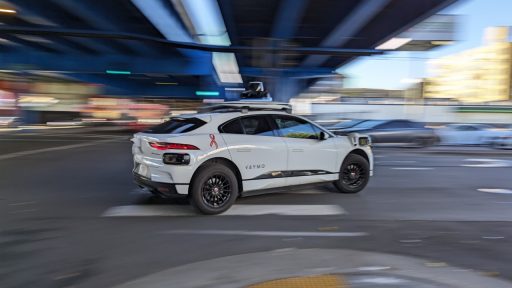
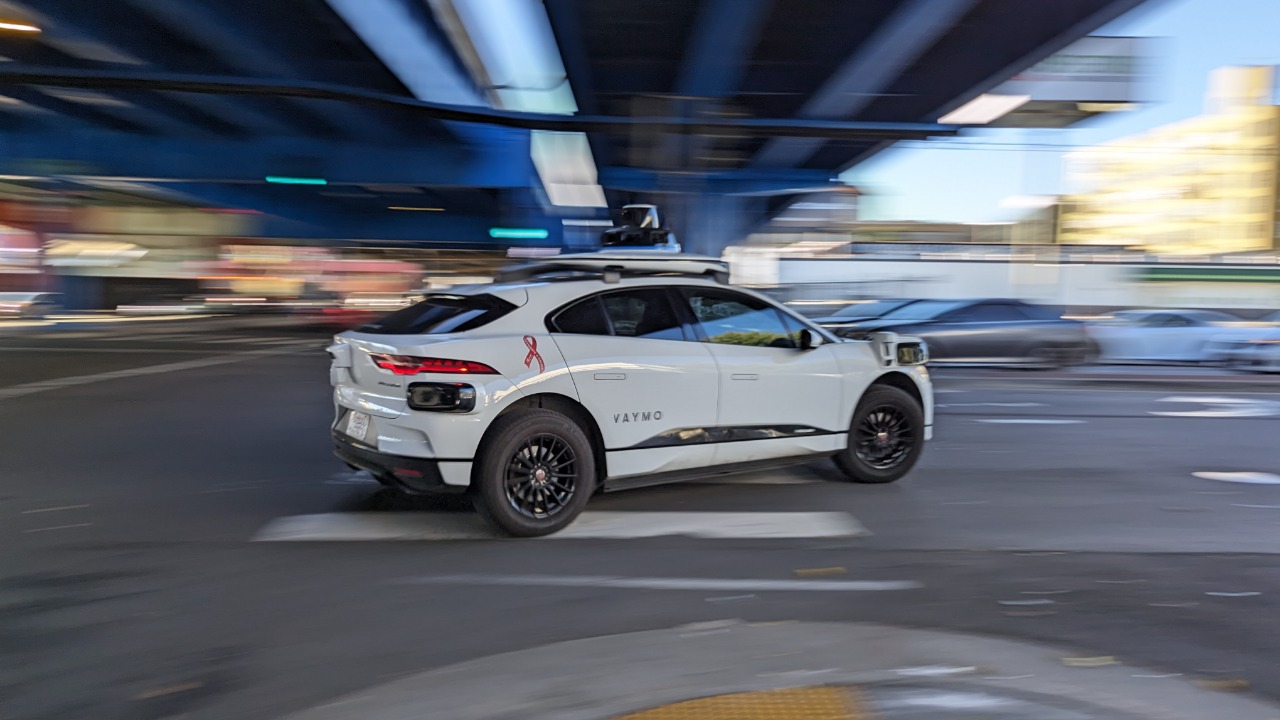
The valuation story only makes sense in light of Waymo’s expanding footprint on public roads. The company already runs commercial robotaxi services in dense urban environments such as San Francisco, where images of a Waymo autonomous taxi navigating city streets in 2025 have become shorthand for the promise and controversy of driverless cars. Coverage of the funding round repeatedly references those San Francisco operations as proof that the technology is not confined to test tracks.
Waymo’s ambitions are not limited to California and Arizona. One local report notes that the robotaxi company is “eyeing Portland,” citing the city’s transportation leadership and describing how the firm, owned by Alphabet Inc, the parent company of Google, currently operates in a handful of cities including Phoenix and Miam while scouting new markets. That same account of Waymo’s expansion notes that the company has already been in discussions with local officials, underscoring how regulatory buy‑in is now as critical as engineering prowess for any new city launch.
Fleet scale, previous rounds and the path to $110 billion
Underpinning the funding pitch is a fleet that has quietly grown into the thousands. One detailed account of the raise notes that Alphabet’s unit is already operating more than 2,500 vehicles, a figure that helps explain why the company is seeking such a large injection of capital to maintain and expand its hardware base. That same report on Waymo’s plans makes clear that the company is not just raising money for research, but for a capital‑heavy transportation network that already exists in multiple cities.
Investor‑oriented coverage has framed the new round as the culmination of a funding arc that began with smaller raises and is now converging on a $110 Billion valuation. One analysis of the deal describes how Waymo targets a $16 billion funding round with valuation that “nears 110 billion,” while another notes that the company is finalizing a $16B round at a $110 billion valuation, suggesting that negotiations are at an advanced stage. Those accounts of Waymo Nears a deal and of Waymo Closes a round at that price point both emphasize that the company is now being valued more like a mature platform than a speculative bet.
What the valuation says about robotaxis and competition
A $110 Billion price tag for a business that still loses money is a statement about where investors think urban mobility is heading. Analysts who follow the sector argue that such a valuation implies confidence that robotaxis can eventually scale beyond early markets like Phoenix and San Francisco into a network of cities, from Miami to potential new hubs such as Portland. One detailed breakdown of the funding argues that the capital will be used not only for fleet growth but also for geographic expansion and to tackle regulatory and safety challenges that have dogged Waymo and its peers.
The funding also sharpens the competitive landscape. While rivals in autonomous driving have stumbled or scaled back, Waymo is positioning itself as the standard‑bearer for fully driverless services, with images of a Waymo autonomous taxi in San Francisco in 2025 now part of the public imagination around the technology. Coverage of the raise by By Ed Ludlow and Aaron Kirchfeld notes that Waymo, Alphabet Inc.’s autonomous driving unit, is aiming to raise about $16 billion, while another account of the same process, also By Ed Ludlow and Aaron Kirchfeld, reiterates that the company is seeking about $16 billion near a $110 billion valuation, underscoring how central this figure has become to the narrative around Waymo. A separate investor note that describes “Waymo Seeking About $16 Billion Near $110 Billion Valuation” and “Waymo Seeking About $16 Billion Near $110 Billion Valuation” in its own framing further reinforces that, for now, the market is willing to treat the company as a once‑in‑a‑generation platform rather than just another ride‑hailing app, even as the hard work of turning that promise into profits still lies ahead for Waymo Seeking About.