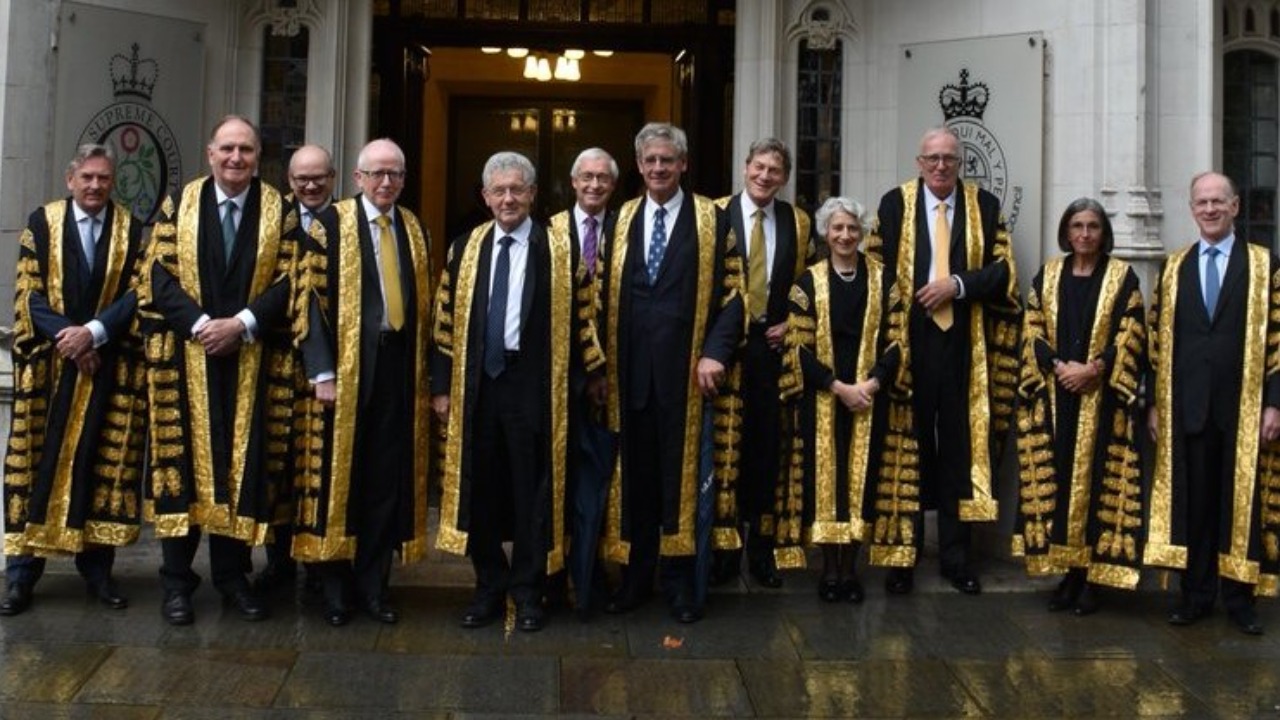

The UK Supreme Court has redrawn the line on what counts as a patentable artificial intelligence invention, and commercial lawyers are already calling it a major win for innovators. By confirming that certain AI and software systems can qualify for patents, while still keeping human inventors at the centre of the law, the judges have tried to give businesses clearer rules without opening the door to unchecked automation.
The decision has immediate consequences for how companies protect machine learning tools in areas such as media, finance and healthcare, and it may also shape where global tech groups choose to file and develop new products. It is being read as the clearest signal yet that the UK wants to be seen as friendly to AI investment while staying aligned with European patent practice.
What the Supreme Court actually decided
The case in front of the judges focused on a system that used artificial intelligence to recommend media content, a technology that sat awkwardly between pure software and physical hardware. The UK Supreme Court treated the AI system as part of a wider technical setup and held that, where an invention claims hardware as part of the system, it can get past the first hurdle of patentability instead of being rejected as a mere computer program. That approach, described by practitioners as a boost for innovation, marks a shift away from the more restrictive stance that had developed at the UK Intellectual Property Office.
Specialists have called the judgment a seismic change because it clarifies that artificial intelligence and software-based inventions that claim any hardware as part of the system cannot from now on be rejected at the outset as excluded subject matter. Instead, they must be examined on standard criteria such as novelty and inventive step, which brings UK practice closer to the European Patent Office. One analysis of the New Era for stresses that, on this point, the Supreme Court has aligned itself with EPO case law and signalled that computer programs will be assessed like any other technology when they deliver a real technical effect.
A sharp turn from earlier AI inventor rulings
The new decision sits alongside, and does not undo, a separate line of cases on who can be named as an inventor. In an earlier case, the UK Supreme Court held that an artificial intelligence system cannot be listed as the inventor under UK patent law, stating that an inventor must be a person and confirming that The UK Supreme Court would not stretch the statutory wording to cover machines. In that earlier judgment, summarised in a detailed note on how the Supreme Court Rules on the Inventor question Under UK Patent Law, the judges made clear that ownership and entitlement still flow through human applicants or their employers.
That history explains why many lawyers describe the latest ruling as a course correction rather than a wholesale rewrite of patent law. The court is effectively saying that while AI cannot be the legal inventor, inventions that use AI can and should be protected when they meet the usual tests. Commentators who followed the hearing at Emotional Perception emphasise that the judges were careful to separate the identity of the inventor from the technical nature of the claimed system, which allowed them to open the door to more AI patents without contradicting their earlier stance.
Why lawyers call the judgment “seismic”
Patent attorneys and litigators have reacted with striking enthusiasm, describing the ruling as a highly significant moment for UK patent law and a major boost for AI innovators. One practitioner quoted in a detailed report on how the UK top court opens path for AI patents called the shift seismic, arguing that many AI and software applications which previously died at the threshold now have a realistic chance of being examined on their technical merits. Commenting on the decision, Jonathan Ball of Norton Rose Fulbright described it as a highly significant moment for UK patent law and said that, for the purposes of determining patentability, AI systems should be treated like any other technology, a view set out in a milestone judgment analysis.
Commercial advisers also see clear economic stakes. The UK Supreme Court ruling that AI can be patented, as long as the claim is framed around a qualifying technical system, has been presented as a way to position the country as an AI-friendly jurisdiction that encourages research spending and protects returns on risky projects. One financial sector briefing on how UK Supreme Court has boosted innovation argues that clearer rules will help banks, insurers and fintech start-ups decide where to base machine learning teams and how to structure cross-border portfolios, especially when they are weighing the UK against rival hubs in Europe or North America.
How the decision reshapes patent practice
On the ground, the first impact will be felt at the UK Intellectual Property Office, which now has to apply the new guidance to pending and future applications. The court sent the case back to the Intellectual Property Office to decide whether to grant a patent, and practitioners expect the agency to update its examination manual and training so that examiners no longer reject AI-related claims at the first step simply because they involve software. One summary of how the ruling will filter through the system explains that, following the judgment, businesses will be watching closely to see how the IPO will interpret and the new standard in day-to-day examinations.
Patent firms are already advising clients to revisit AI and software projects that might have been written off under the old practice. Commentators on the seismic shift say that, as long as an AI-related invention is tied to hardware or delivers a concrete technical effect, it should now move forward to a full assessment of novelty and inventive step. That is likely to change how applications are drafted, with more focus on specifying the technical architecture, such as the way a neural network interacts with a sensor array in a self-driving car or the way an algorithm controls energy use in a smart grid, rather than describing the software in isolation.
Global context and what comes next
The ruling also needs to be viewed against broader global debates about AI and intellectual property. Some observers see it as part of a trend in which courts accept that AI is a tool used by human inventors, not a legal person in its own right. That view is reinforced by earlier coverage explaining that Now five Supreme Court judges have dismissed a bid to reverse the finding that an inventor must be a person, and that the IPO had warned that any change to that rule would affect the meaning of inventor across the statute, as described in a detailed account of the earlier AI inventor dispute. The new case keeps that human-centred rule in place while signalling that the law will protect complex AI systems when they meet the standard tests.
For companies deciding where to file, the judgment may make the UK more attractive compared with jurisdictions that still treat many AI inventions as unpatentable abstractions. One practitioner-focused report on how the UK top court opens path for AI patents in a seismic ruling notes that the decision has implications beyond AI and computing, influencing the ability to acquire patent rights in other technologies that rely on software control. Another commentary on how the court has opened the door to patenting AI-related inventions argues that the decision will boost commercial certainty and encourage investment in cutting-edge AI technologies, a point made clearly in a detailed briefing for patent owners.