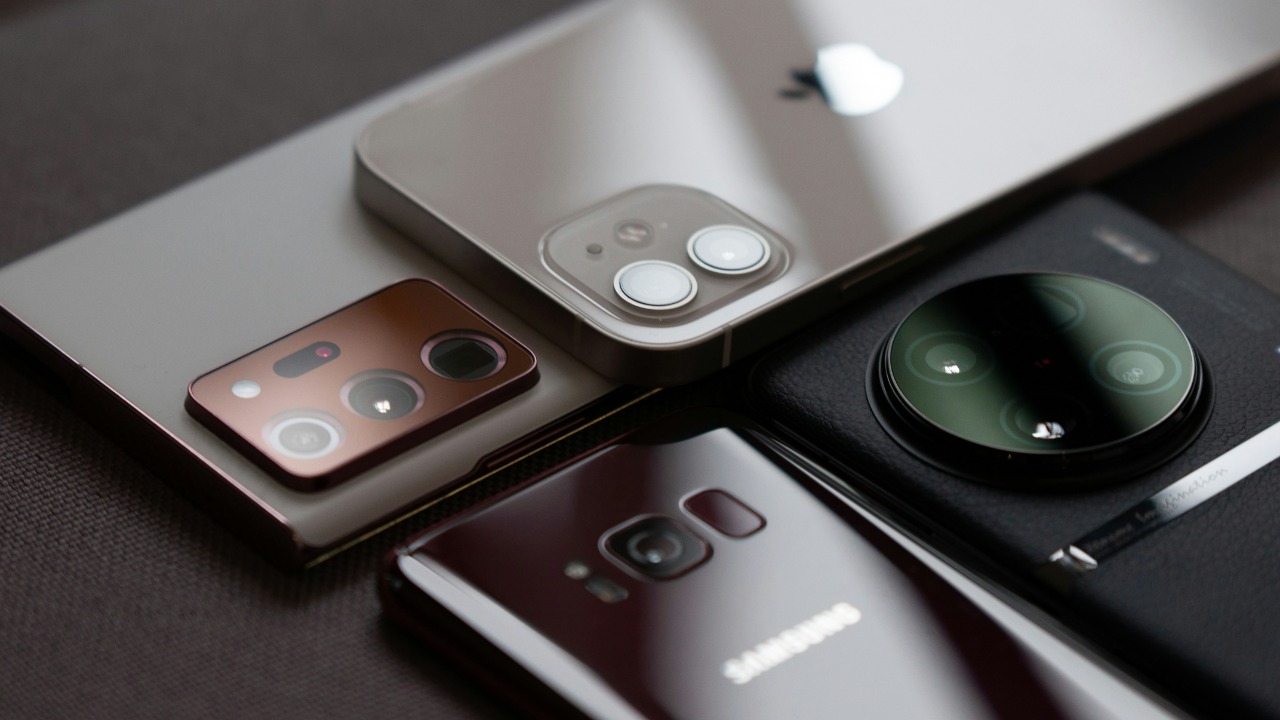

Smartphone rankings move quickly, but a few names keep resurfacing at the top of sales charts and expert shortlists. Right now, the most popular devices cluster around Apple’s latest iPhone 17 family, Samsung’s Galaxy S25 line, and a handful of aggressively priced Android rivals. Looking across sales data and current “best phone” guides, I see a market where premium flagships still dominate attention, while more affordable models quietly rack up volume.
To understand which smartphones are most popular this week, I am looking at two overlapping signals: what people are actually buying and what specialists are recommending. Global sales data highlights the momentum of Apple’s recent generations, while curated rankings show how models like iPhone 17, Samsung Galaxy S25 Ultra, and Google Pixel 10 are shaping buyer demand.
iPhone momentum from iPhone 16 to iPhone 17
Any snapshot of this week’s most popular phones has to start with Apple. Recent global data shows that Apple’s iPhone 16 remained the world’s best-selling smartphone for a second consecutive quarter, a sign that the company’s previous generation is still moving in large volumes even as newer models arrive. That kind of sustained performance gives Apple a strong base of users who are now weighing upgrades to the iPhone 17 line, which is already crowding the top of recommendation lists.
On the enthusiast side, multiple expert roundups put Apple’s latest devices at or near the top of their rankings. One widely cited guide lists Apple iPhone 17 Pro Max among “The Best Phones,” positioning it as a leading choice for buyers who want a large display, top-tier camera, and long-term software support, and it highlights how Apple’s Pro Max hardware competes with the best that the Android world can deliver. Another detailed breakdown of “The Best Phones” again singles out Apple iPhone 17 Pro Max, with clear prompts to View the device at carriers such as Visible, Straight Talk, Verizon, and Amazon, which reflects how widely it is being marketed.
iPhone 17 and iPhone 17 Pro Max as default flagships
Within Apple’s current lineup, iPhone 17 and iPhone 17 Pro Max are emerging as the default flagships for most shoppers. One influential buyer’s guide lists Apple iPhone 17 as its “Best iPhone” and features it prominently in a “Featured Products” section, with pricing that starts at $799 directly from Apple for the 256GB version and $830 at Best Buy for the same capacity. Those specific figures, $799 and $830, underline how Apple is positioning the standard iPhone 17 as a relatively accessible entry point into its latest generation, which helps explain why it is appearing so frequently in this week’s shortlists for mainstream buyers who want a high-end phone without going all the way to the Pro Max.
For users who want more screen and camera headroom, iPhone 17 Pro Max is being framed as the no-compromise option. One comprehensive ranking of “The Best Phones” starts its list with Apple iPhone 17 Pro Max and describes how the iPhone 17 Pro is designed to deliver a powerful camera system, strong performance, and a seamless voice translator, all wrapped in Apple’s latest design language. Another curated “Best Picks” overview of top phones today explicitly includes Apple iPhone 17 Pro Max alongside rivals like Xiaomi 15 Ultra and Samsung Galaxy S25 FE, signaling that the Pro Max is not just a niche enthusiast device but a mainstream recommendation that sits at the center of the current flagship conversation. In my view, that combination of strong sales heritage from iPhone 16 and front-of-list placement for iPhone 17 and Pro Max is what makes Apple’s latest phones some of the most popular devices this week.
Samsung Galaxy S25 Ultra and the rise of AI-heavy flagships
On the Android side, Samsung’s Galaxy S25 Ultra is the clearest rival for the iPhone 17 Pro Max in terms of buzz and buyer interest. The device is being marketed as a phone that makes “Staying in the moment” easier, with the all-new Galaxy S25 Ultra described as using intelligent AI that transforms into a kind of virtual assistant for photography, productivity, and everyday tasks. That pitch, which emphasizes how the Galaxy S25 Ultra and Its software can anticipate user needs, is resonating with shoppers who want their next phone to feel like a step change in intelligence rather than just another incremental camera upgrade, and it is helping the Ultra sit near the top of current popularity charts.
Expert rankings back up that perception. A detailed list of the best phones to buy right now includes Samsung Galaxy S25 Ultra in its upper tier, placing it alongside Apple iPhone 17, Google Pixel 10, Google Pixel 9a, OnePlus 15, and iPhone 17 Pro Max. Another “Best Picks” style guide that surveys the top 10 Android and iPhone mobile phones today also reviews Xiaomi 15 Ultra, Samsung Galaxy S25 FE, Apple iPhone 17 Pro Max, Nothing Phone (3a), and CMF P devices, which shows how Samsung’s Galaxy S25 family is competing in a crowded but clearly defined flagship field. When I look at those lists together, Galaxy S25 Ultra stands out as the Android phone most consistently mentioned in the same breath as Apple’s latest flagships, which is a strong indicator of its popularity this week.
Foldables, value phones, and the Google Pixel effect
Beyond the traditional slab flagships, foldables and value-focused phones are carving out their own pockets of popularity. Samsung’s Galaxy Z Fold7 is being promoted as a device that lets users “Expand what’s possible,” with a foldable design that is “designed to do so much more than before” and an expanded 6.5 inch cover display that makes it easier to use when closed. That 6.5 figure is important because it signals that the Fold7 is trying to behave like a normal phone on the outside while still offering tablet-like space inside, a combination that appeals to power users and early adopters who want their next phone to feel genuinely different. While foldables like the Galaxy Z Fold7 are still niche compared with iPhone 17 or Galaxy S25 Ultra, their presence in current recommendation lists shows that they are becoming a more routine part of the weekly buying conversation.
At the same time, value-oriented models are quietly winning over a large share of buyers who care more about price than headline features. One influential ranking of the best phones highlights Google Pixel 10 and Google Pixel 9a near the top of its “Jump to” navigation, alongside Apple iPhone 17, OnePlus 15, iPhone 17 Pro Max, and Samsung Galaxy S25 Ultra, which signals that Google Pixel devices are now seen as default options for people who want clean software and strong cameras without paying Pro Max or Ultra prices. Another set of Editors Choice picks singles out Apple iPhone 17 for its mix of features and performance and also praises Google Pixel 9a for its superb value, reinforcing the idea that midrange phones are central to what people are buying this week, even if they do not always dominate the marketing headlines.
Apple Intelligence, midrange iPhones, and the crowded middle
Apple is also pushing deeper into the midrange with devices built specifically for its new AI features. The iPhone 16e is described as being built for Apple Intelligence and powered by the A18 chip, with marketing that emphasizes how Apple Intelligence and system-level integration can make everyday tasks feel more fluid. The same description highlights that users can Shoot super-high-resolution photos with the 48MP Fusion camera system, which brings some of Apple’s premium imaging capabilities into a more affordable package. In my view, that combination of Apple Intelligence and Fusion camera branding is designed to pull cost-conscious buyers into the ecosystem without making them feel like they are settling for outdated technology.