
SpaceX is quietly preparing a new kind of launch infrastructure on the ground, and it has nothing to do with rockets. The company is building its own particle accelerator, a proton cyclotron designed to blast electronics with radiation before they ever leave Earth. In a space race that now runs on satellites, AI chips, and reusable spacecraft, this is the test stand that could decide who actually survives orbit.
Rather than renting time at national labs or university facilities, SpaceX wants a dedicated machine it can tune to the exact conditions its hardware will face in deep space and high orbits. The move from outsourcing to in-house testing signals a strategic bet: the next competitive edge will come from how well companies understand and harden their electronics against a constant bombardment of high-energy particles.
Inside SpaceX’s Florida cyclotron gambit
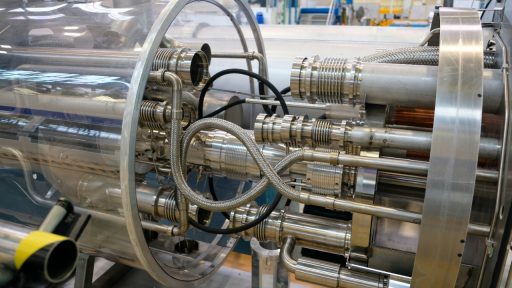
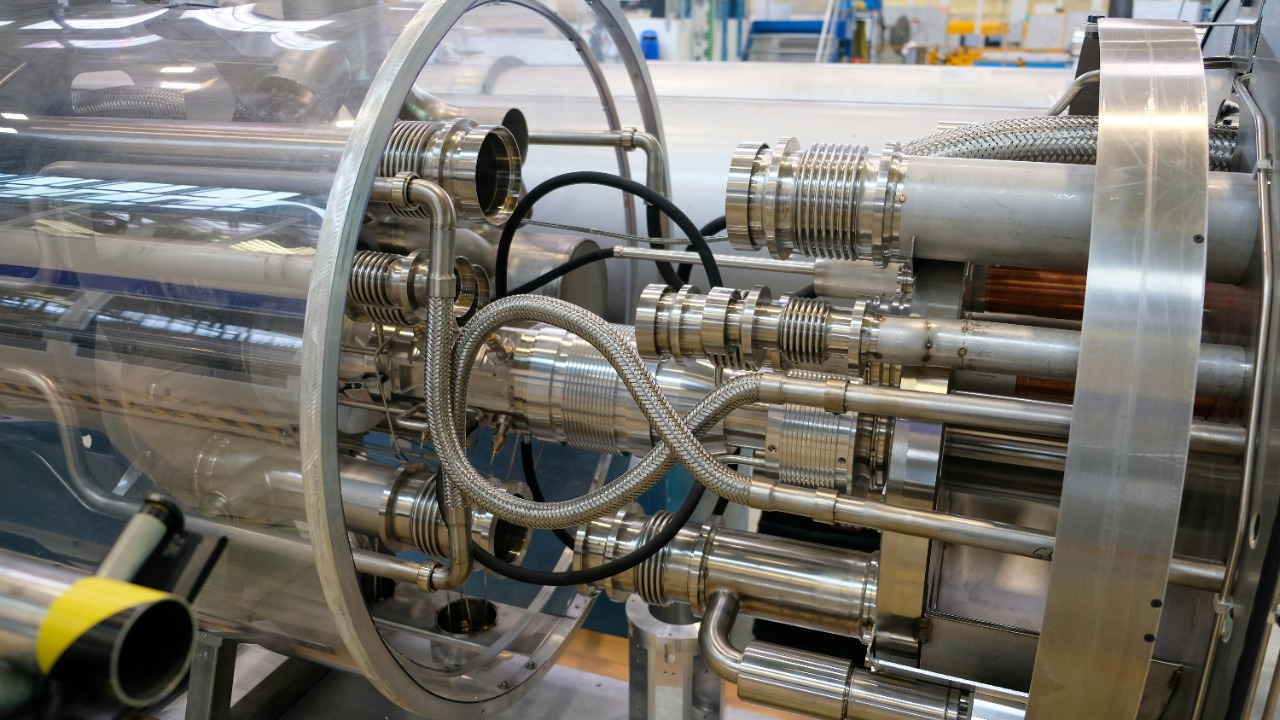
The company is planning a particle accelerator facility in Florida that will house a cyclotron similar in concept to the K150 Cyclotron at Texas A&M, which is shown in a Photo credited to CERN and used as a reference point in early reporting on the project. SpaceX intends to use this machine to fire protons at spacecraft hardware, recreating the radiation environments that satellites and crewed vehicles experience in orbit and beyond, an effort that has been described in early coverage of own particle accelerator. By putting the accelerator in Florida, near its existing launch and manufacturing hubs, the company can fold radiation testing into the normal development loop instead of treating it as a rare, off-site milestone.
Local reporting from Titusville describes the project explicitly as a cyclotron particle accelerator in Florida and links it to SpaceX’s broader push to control key parts of its supply chain and test infrastructure. That same coverage references the K150 Cyclotron at Texas A&M and the CERN Photo to explain the kind of machine SpaceX wants to replicate, highlighting how the company is borrowing a proven scientific workhorse for industrial use. In that account, SpaceX frames the facility as a way to support development across all SpaceX vehicles, a goal tied directly to the new cyclotron facility planned near its coastal operations.
Radiation, AI, and why SpaceX wants its own beam
Space is a harsh place for modern chips, especially the dense processors that power AI and high-throughput communications. Beyond the vacuum and temperature swings, orbital hardware faces constant exposure to cosmic radiation that degrades chips over time and can flip bits in memory or logic, a problem that has become more pressing as companies put AI accelerators into satellites. Reporting on the economics of orbital AI notes that cosmic rays can quietly ruin performance and reliability, which is why SpaceX is investing in a dedicated accelerator for just that purpose to study how cosmic radiation affects its electronics.
The company has already signaled that this is not a theoretical exercise but a concrete engineering program. A job listing for an Electronics Test Engineer describes a role embedded in a fast-paced Radiation Effects team, responsible for ensuring avionics hardware performance across all vehicles as conditions get even more extreme, language that appears in a detailed description of the company’s Radiation Effects team. That same listing ties the job directly to the new accelerator, making clear that SpaceX wants specialists who can design tests, interpret radiation data, and feed the results back into the design of satellites, crew capsules, and Starship systems.
Proton beams for Starship, Starlink, and Dragon
SpaceX is not building a general-purpose physics lab; it is building a proton particle accelerator tailored to its own fleet. Coverage of the project explains that the facility is meant to test how radiation impacts spacecraft electronics, with a focus on improving the durability and performance of systems used on Starship and the broadband-beaming Starlink satellites. By firing controlled proton beams at components on the ground, SpaceX can simulate years of high-energy particle bombardment in hours and then redesign boards, shielding, or software to handle that punishment, a capability described in detail in reports on its proton accelerator.
This testing regime is expected to cover Dragon crew and cargo missions as well, which rely on avionics that must stay reliable for astronauts and critical supplies. Local reporting from Florida ties the accelerator directly to Dragon, Starship, and Starlink, describing how the facility will support Dragon crew and cargo missions alongside the rest of the fleet. That account also references a job posting on ZipRecruiter for an Electronics Test Engineer that spells out how the new hire will help develop radiation test campaigns for these vehicles, reinforcing that SpaceX wants to bake radiation resilience into every generation of its hardware through the planned Dragon-focused testing.
The Starlink connection and the next orbital competition
Starlink is central to why this accelerator matters. SpaceX’s broadband-beaming Starlink satellites form a massive constellation that depends on cheap, mass-produced electronics, and any radiation weakness can scale into thousands of failures. Reporting on the accelerator project explains that SpaceX is bringing the study and testing of radiation effects in-house, in part to protect this constellation from bombardment of highly energetic particles, and that the new facility is intended to serve Starlink as much as deep-space missions, a strategy described in coverage of in-house radiation testing.
SpaceX’s VP of Starlink, Michael Nicolls, has publicly confirmed the project and said the company is hiring elite engineers to build and run the facility, including the Electronics Test Engineer role tied to the accelerator. That comment, shared alongside the job listing, shows how closely the Starlink program is linked to this beamline and how much leadership views radiation testing as a core part of the constellation’s future. In the same context, coverage notes that SpaceX Is Building Its Own Particle Accelerator as part of a broader effort to harden its broadband-beaming Starlink satellites, and that Michael Nicolls is using that hiring push to attract specialists who can connect Starlink leadership with cutting-edge radiation science.
From ground labs to a new space race for radiation-hard tech
In building its own accelerator, SpaceX is following a path already proven at national labs, but it is doing so with a commercial twist. Facilities like the cyclotron described by Lawrence Berkeley National Laboratory have long been used to replicate challenging radiation environments and to test essential technologies such as satellites, avionics, and medical devices. That lab notes that by recreating these conditions on the ground, the cyclotron helps ensure systems remain reliable under stress, and that even modest changes in chip design can have large effects on radiation tolerance, a point made in a detailed description of cyclotron testing. SpaceX is effectively bringing that kind of facility inside its own walls so it can run those experiments at the speed of its hardware iterations.
There is also a longer-term strategic layer. Coverage of orbital AI economics notes that Now Musk sees an opportunity to realize a version of his long-standing vision of industrial infrastructure in space, with his company SpaceX requesting regulatory permission to build a particle accelerator for radiation testing and with some in the field speculating about future accelerators that might be built on the moon. That report connects the current Florida project to a broader contest over who will own the key tools for designing hardware that can survive in orbit and beyond, framing the accelerator as one more piece of that vision from Now Musk.